


- Home
- A-Z Catalogue
- Products
- Valves
- Cetop
- Manual Directional Valves
- Proportional Valves
- Poppet Valves
- High-Speed Linear Servo Valves
- All High-Speed Linear Servo Valves
- Cetop 10 (NG32) Two Stage Type High Speed Linear Servo Valves – LSVHG-10
- Cetop 10 (NG32) Two Stage Type High Speed Linear Servo Valves – LSVHG-10 (With Fail-Safe)
- Cetop 8 (NG25) Two Stage Type High Speed Linear Servo Valves – LSVHG-06
- Cetop 8 (NG25) Two Stage Type High Speed Linear Servo Valves – LSVHG-06 (With Fail-Safe)
- Cetop 7 (NG16) Two Stage Type High Speed Linear Servo Valves – LSVHG-04
- Cetop 7 (NG16) Two Stage Type High Speed Linear Servo Valves – LSVHG-04 (With Fail-Safe)
- Cetop 5 (NG10) Direct Type High Speed Linear Servo Valves – LSVG-03
- Cetop 5 (NG10) OBE Type Direct Operated Linear Servo Valves – LSVG-03-EH
- Cetop 3 (NG6) OBE Type Direct Operated Linear Servo Valves – LSVG-01-EH
- Pumps
- Pressure control
- Flow Control Valves
- Pressure Control Valves
- All Pressure Control Valves
- Brake Valves
- Direct Relief Valve
- Low Noise Solenoid Controlled Relief Valves
- Low Noise Pilot Operated Relief Valves
- Pilot Operated Relief Valves
- Pressure reducing and relieving valves
- Pressure reducing and check valves
- Pressure control valves
- Remote Control Relief Valves
- Solenoid Controlled Relief Valves – BSG
- Solenoid Controlled Relief Valves – BST
- Unloading relief valves
- Check valves
- Environmental
- Valves
- Hydraulic Systems
- Power pack
- About Us
- Contact
- Blog

How to Choose EMC Standards for Global Markets in 2026?
Choosing Emc Standards for global markets in 2026 is not a matter of picking one familiar test and applying it everywhere. Requirements can differ by destination, product category, operating environment, and the way a device connects to power or communications networks. A compact sensor, for example, may face different emissions and immunity considerations from a motor controller. Small design details matter. EMC engineer and author Henry Ott captured the preventive approach. “The best way to solve an EMC problem is to prevent it from occurring in the first place.”
That principle makes market planning part of engineering, not a task saved for the final weeks before launch. Start by listing intended countries, product variants, power supplies, cables, radio functions, and installation settings. Then identify the applicable regulations and standards for each market, checking current editions and product-specific requirements with qualified compliance professionals or test laboratories. A standard used for one product family may not fit another. Nor does a successful test in one region automatically establish acceptance elsewhere.
This guide explains how to build a practical standards plan for international sales in 2026. It considers product classification, emissions and immunity testing, regional differences, documentation, and the value of early pre-compliance checks. Picture a long cable on a crowded test bench: its routing can change a result, even when the electronics stay the same. Real projects are messier than comparison charts suggest. A checklist can miss a variant, and requirements can change. Treat the selection as a reasoned decision, record its assumptions, and confirm them before testing and shipment.
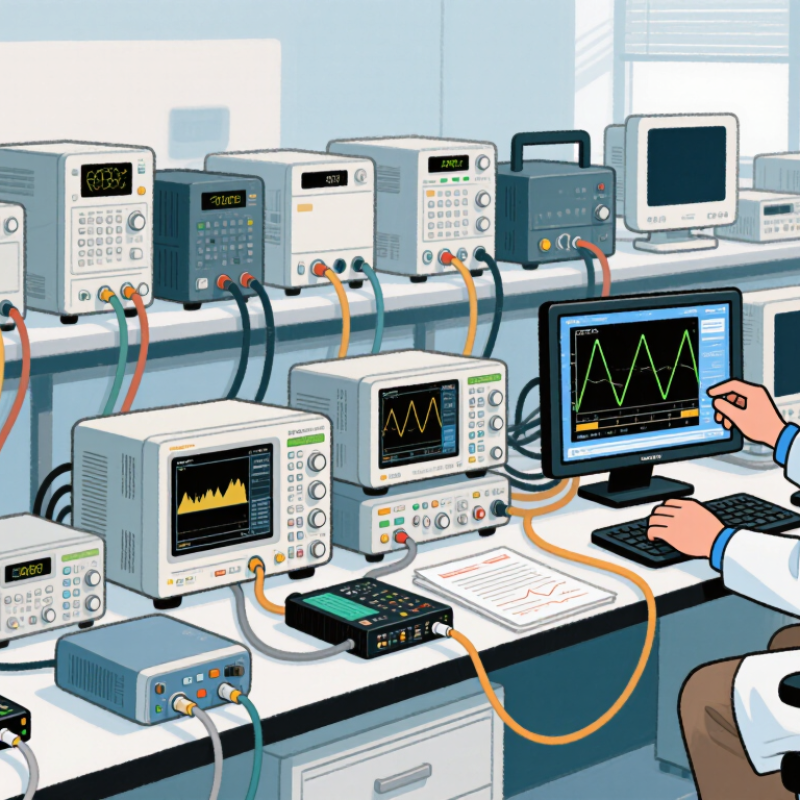
Table of Contents [Hide]
Understanding EMC Standards and Their Role in Product Compliance
EMC standards define common methods for measuring unwanted emissions and resistance to electromagnetic disturbances. They help demonstrate that a product can operate without disrupting nearby equipment. That is the practical core of compliance. CISPR publications address emissions, while the IEC 61000 series includes immunity test methods. Small details matter. Cable length, enclosure seams, and power supplies can all affect test results. In practice, a late hardware change may mean retesting.
The ITU’s Facts and Figures 2024 estimated that 5.5 billion people were online, around 68% of the global population. This connected landscape makes dependable product performance important, but internet access alone does not determine EMC risk. A motor, switching power supply, and radio module create different interference questions. Standards should match the product’s functions, operating environment, and destination market. One size rarely fits.
For a 2026 launch, identify each market’s recognized standards and evidence requirements before design freeze. An EMC test report supports a compliance case; it does not automatically authorize sale everywhere. Check the applicable editions and national deviations, since accepted routes can change. Even careful teams can overlook a small market-specific detail.





