


- Home
- A-Z Catalogue
- Products
- Valves
- Cetop
- Manual Directional Valves
- Proportional Valves
- Poppet Valves
- High-Speed Linear Servo Valves
- All High-Speed Linear Servo Valves
- Cetop 10 (NG32) Two Stage Type High Speed Linear Servo Valves – LSVHG-10
- Cetop 10 (NG32) Two Stage Type High Speed Linear Servo Valves – LSVHG-10 (With Fail-Safe)
- Cetop 8 (NG25) Two Stage Type High Speed Linear Servo Valves – LSVHG-06
- Cetop 8 (NG25) Two Stage Type High Speed Linear Servo Valves – LSVHG-06 (With Fail-Safe)
- Cetop 7 (NG16) Two Stage Type High Speed Linear Servo Valves – LSVHG-04
- Cetop 7 (NG16) Two Stage Type High Speed Linear Servo Valves – LSVHG-04 (With Fail-Safe)
- Cetop 5 (NG10) Direct Type High Speed Linear Servo Valves – LSVG-03
- Cetop 5 (NG10) OBE Type Direct Operated Linear Servo Valves – LSVG-03-EH
- Cetop 3 (NG6) OBE Type Direct Operated Linear Servo Valves – LSVG-01-EH
- Pumps
- Pressure control
- Flow Control Valves
- Pressure Control Valves
- All Pressure Control Valves
- Brake Valves
- Direct Relief Valve
- Low Noise Solenoid Controlled Relief Valves
- Low Noise Pilot Operated Relief Valves
- Pilot Operated Relief Valves
- Pressure reducing and relieving valves
- Pressure reducing and check valves
- Pressure control valves
- Remote Control Relief Valves
- Solenoid Controlled Relief Valves – BSG
- Solenoid Controlled Relief Valves – BST
- Unloading relief valves
- Check valves
- Environmental
- Valves
- Hydraulic Systems
- Power pack
- About Us
- Contact
- Blog

How to Choose a Corrosion Resistant Metal Cable Gland in 2026
Choosing a Corrosion-Resistant Metal Cable Gland in 2026 starts with the environment, not the product label. Will it face coastal salt spray, chemical washdown, standing water, or only occasional rain? Each condition changes the risks. Mars G. Fontana, author of Corrosion Engineering, defined corrosion as “the destructive attack of a metal by chemical or electrochemical reaction with its environment.” That definition is a useful reminder: even robust hardware can fail when its materials, seals, and surroundings do not match.
Look closely at the gland body, entry thread, sealing surfaces, and cable jacket. Stainless steel grades such as 316 are common choices in aggressive environments, but the grade alone cannot guarantee service life. Dissimilar metals can create galvanic corrosion, while a poorly compressed seal can let moisture track inside. Check the enclosure’s required ingress protection, operating temperature, thread compatibility, and the manufacturer’s documented test conditions. A salt-spray result may help compare products, but it does not perfectly predict years of field exposure. Details matter.
Installation matters too. A sound gland can still perform poorly if the cable is undersized or the seal is overtightened. Keep records of material specifications and inspection intervals. This is practical, not glamorous. No single metal suits every site, and “corrosion resistant” is not the same as corrosion proof. A careful choice balances exposure, compatibility, maintenance, and cost—and leaves room to review assumptions when real operating conditions differ.
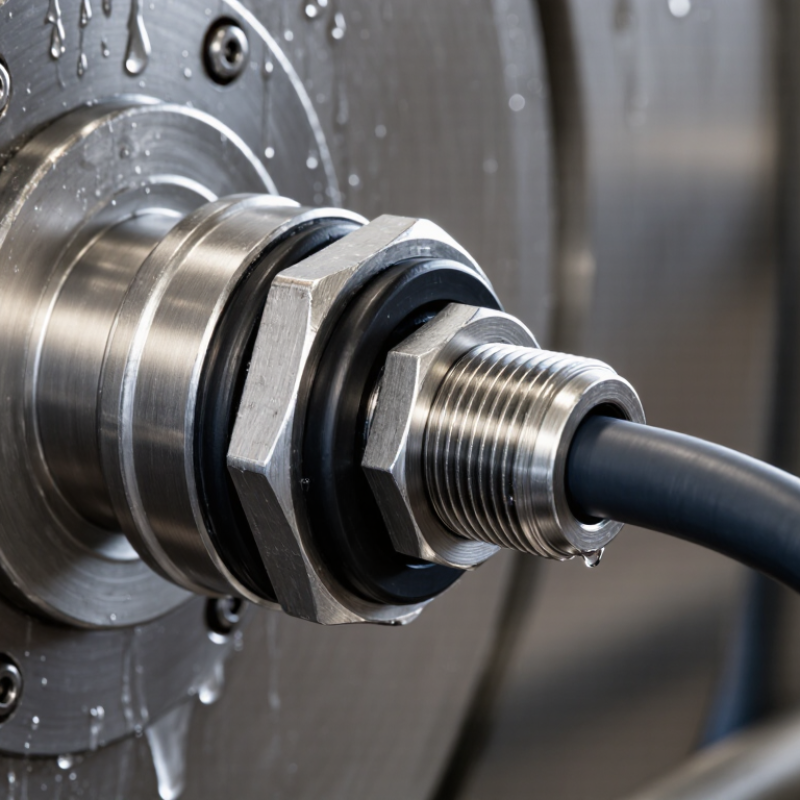
Table of Contents [Hide]
What a Corrosion-Resistant Metal Cable Gland Does
A corrosion-resistant metal cable gland protects the point where a cable enters an enclosure. It grips the cable, limits movement, and helps keep water, dust, and corrosive substances away from sensitive components. The metal body also provides a durable connection to the enclosure; conductive designs can support electrical bonding when correctly selected and installed. That matters near vibrating pumps, outdoor control panels, and equipment exposed to salt spray.
Material choice depends on the actual environment. Nickel-plated brass suits many general industrial settings, while stainless steel may be preferable where moisture or cleaning chemicals are common. But “stainless” is not a complete specification. Chlorides, temperature, and contact with dissimilar metals can still cause corrosion. Check the gland’s material, seal compatibility, and stated protection rating against the enclosure and cable. Details matter.
Installation counts too. A gland that is too large may not seal; one that is overtightened can damage the cable jacket or seal. Keep the cable entry clean, use the specified components, and inspect the seal after fitting. A datasheet cannot predict every site condition. Sometimes the overlooked issue is the cleaning fluid used each week.





