


- Home
- A-Z Catalogue
- Products
- Valves
- Cetop
- Manual Directional Valves
- Proportional Valves
- Poppet Valves
- High-Speed Linear Servo Valves
- All High-Speed Linear Servo Valves
- Cetop 10 (NG32) Two Stage Type High Speed Linear Servo Valves – LSVHG-10
- Cetop 10 (NG32) Two Stage Type High Speed Linear Servo Valves – LSVHG-10 (With Fail-Safe)
- Cetop 8 (NG25) Two Stage Type High Speed Linear Servo Valves – LSVHG-06
- Cetop 8 (NG25) Two Stage Type High Speed Linear Servo Valves – LSVHG-06 (With Fail-Safe)
- Cetop 7 (NG16) Two Stage Type High Speed Linear Servo Valves – LSVHG-04
- Cetop 7 (NG16) Two Stage Type High Speed Linear Servo Valves – LSVHG-04 (With Fail-Safe)
- Cetop 5 (NG10) Direct Type High Speed Linear Servo Valves – LSVG-03
- Cetop 5 (NG10) OBE Type Direct Operated Linear Servo Valves – LSVG-03-EH
- Cetop 3 (NG6) OBE Type Direct Operated Linear Servo Valves – LSVG-01-EH
- Pumps
- Pressure control
- Flow Control Valves
- Pressure Control Valves
- All Pressure Control Valves
- Brake Valves
- Direct Relief Valve
- Low Noise Solenoid Controlled Relief Valves
- Low Noise Pilot Operated Relief Valves
- Pilot Operated Relief Valves
- Pressure reducing and relieving valves
- Pressure reducing and check valves
- Pressure control valves
- Remote Control Relief Valves
- Solenoid Controlled Relief Valves – BSG
- Solenoid Controlled Relief Valves – BST
- Unloading relief valves
- Check valves
- Environmental
- Valves
- Hydraulic Systems
- Power pack
- About Us
- Contact
- Blog

How to Choose an Android Rugged Tablet PC in 2026?
Choosing an Android Rugged Tablet PC in 2026 requires more than comparing screen size and processor speed. Field conditions expose weak designs quickly. A warehouse worker may scan barcodes with gloves, while a technician works beside dust, rain, or vibrating machinery. The right tablet must remain dependable when clean office assumptions disappear.
This guide examines the practical details that influence long-term performance. It considers IP protection, drop resistance, sunlight readability, battery capacity, charging options, and Android update support. It also looks at ports, barcode scanning, camera quality, and accessory compatibility. A bright 10-inch display may look impressive, but it can drain power quickly. A large battery may help, yet it can increase weight during an eight-hour shift.
Reliable selection depends on evidence, not confident marketing claims. Check independent test reports, published specifications, warranty terms, and the manufacturer’s update policy. Ask whether the stated drop rating applies to the complete device or only controlled laboratory testing. Confirm operating temperatures before using the tablet in cold storage or hot vehicles. A high benchmark score can mislead. It says little about charging reliability or screen visibility under direct sunlight.
Even experienced buyers can miss small operational costs. Replacing a damaged charging port, for example, may interrupt an entire worksite. Some rugged models also feel uncomfortable after prolonged handheld use. This guide therefore balances technical capability with human experience, verified documentation, and realistic workplace demands. The best choice is not always the toughest-looking tablet. It is the device that performs consistently, remains supportable, and fits the people using it every day.
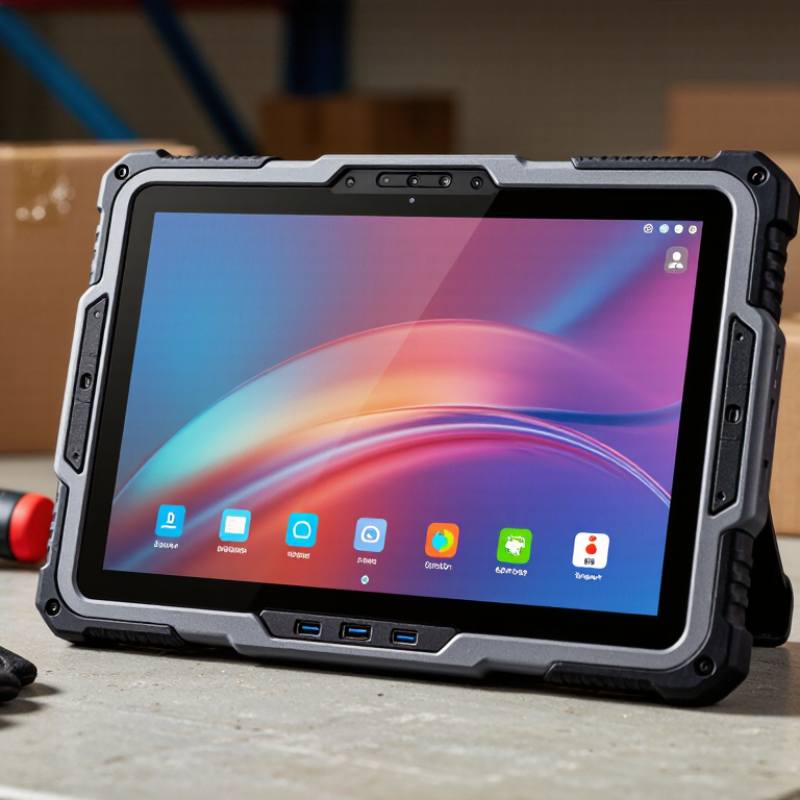
Table of Contents [Hide]
Define the Workload: Match Android OS, CPU, RAM, and Storage
Define the workload before comparing specifications. A warehouse tablet scans labels, runs inventory software, and survives cold hands. A field engineer may need offline maps, camera input, and continuous GPS. Those tasks need different Android versions and processors.
Android remains a practical enterprise platform. Counterpoint Research reported Android held about 79% of global smartphone shipments in 2024. That broad ecosystem supports many business applications, but compatibility still requires testing.
Choose a supported Android Enterprise release, not simply the newest version. Older applications may behave unpredictably. I have seen teams overlook this detail.
CPU selection should follow application behavior. Quad-core processors suit scanning and forms. Octa-core chips are safer for mapping, video, and multiple applications. RAM matters during shift changes. Four gigabytes can handle focused tasks, while eight gigabytes offers more breathing room.
According to Statista Market Insights, global data creation continues rising sharply, making local storage planning less trivial. Start with 128GB when photos, maps, or inspection records stay offline. Add expandable storage only after checking security and reliability requirements.
More memory is not always better. Battery drain can increase, and budgets tighten. Test the exact workflow under sunlight, gloves, weak connectivity, and repeated drops before approval.





