


- Home
- A-Z Catalogue
- Products
- Valves
- Cetop
- Manual Directional Valves
- Proportional Valves
- Poppet Valves
- High-Speed Linear Servo Valves
- All High-Speed Linear Servo Valves
- Cetop 10 (NG32) Two Stage Type High Speed Linear Servo Valves – LSVHG-10
- Cetop 10 (NG32) Two Stage Type High Speed Linear Servo Valves – LSVHG-10 (With Fail-Safe)
- Cetop 8 (NG25) Two Stage Type High Speed Linear Servo Valves – LSVHG-06
- Cetop 8 (NG25) Two Stage Type High Speed Linear Servo Valves – LSVHG-06 (With Fail-Safe)
- Cetop 7 (NG16) Two Stage Type High Speed Linear Servo Valves – LSVHG-04
- Cetop 7 (NG16) Two Stage Type High Speed Linear Servo Valves – LSVHG-04 (With Fail-Safe)
- Cetop 5 (NG10) Direct Type High Speed Linear Servo Valves – LSVG-03
- Cetop 5 (NG10) OBE Type Direct Operated Linear Servo Valves – LSVG-03-EH
- Cetop 3 (NG6) OBE Type Direct Operated Linear Servo Valves – LSVG-01-EH
- Pumps
- Pressure control
- Flow Control Valves
- Pressure Control Valves
- All Pressure Control Valves
- Brake Valves
- Direct Relief Valve
- Low Noise Solenoid Controlled Relief Valves
- Low Noise Pilot Operated Relief Valves
- Pilot Operated Relief Valves
- Pressure reducing and relieving valves
- Pressure reducing and check valves
- Pressure control valves
- Remote Control Relief Valves
- Solenoid Controlled Relief Valves – BSG
- Solenoid Controlled Relief Valves – BST
- Unloading relief valves
- Check valves
- Environmental
- Valves
- Hydraulic Systems
- Power pack
- About Us
- Contact
- Blog

How to Choose a Wheel Diamond Cutting Machine in 2026
Choosing a Wheel Diamond Cutting Machine in 2026 is less about buying the fastest model and more about matching its capabilities to real production needs. A machine that cuts thin wheel sections may not suit thick, abrasive materials or long shifts. Start with the workpiece: note its material, diameter, thickness, and required edge quality. Then compare cutting capacity, spindle speed, feed control, and machine stability. Small details matter. A vibration felt through the table can become a rough edge or inconsistent cut.
Ask suppliers how the machine performs under conditions close to yours. Request sample cuts, and inspect the finish under good lighting. Check how coolant is delivered, how dust and debris are managed, and how quickly routine components can be reached for maintenance. Confirm that guards, emergency stops, and operating instructions are clear. These are practical checks, not brochure extras. A specification sheet can look reassuring and still leave questions about daily use.
The right choice also depends on operator experience, available floor space, service access, and the cost of consumables. Compare total operating costs, not only the purchase price. If possible, test the machine with your own material and record cycle time, cut consistency, and setup effort. Results may differ from a supplier’s demonstration. That is worth remembering. This guide outlines the key checks, questions, and trade-offs to consider before selecting a Wheel Diamond Cutting Machine for your workshop or production line.
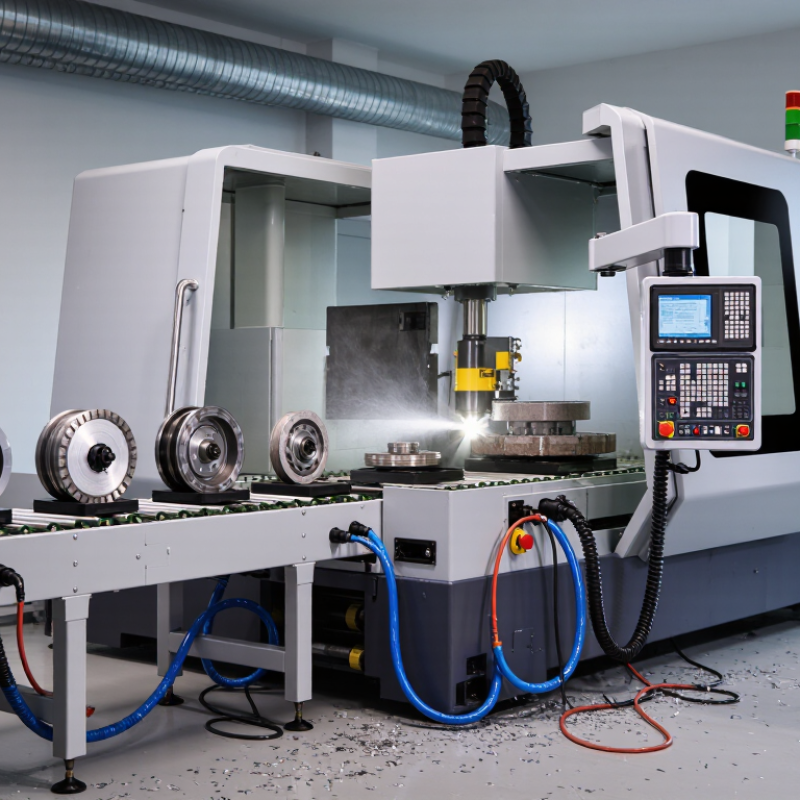
Table of Contents [Hide]
Identify the Materials, Wheel Types, and Cutting Tasks You Need to Handle
A wheel diamond cutting machine should be chosen around the material on your bench, not just its advertised cutting depth. Granite and dense ceramics need a wheel suited to hard, brittle stock. Glass usually calls for a finer edge and careful control to limit chipping. Check the wheel maker’s material guidance; diamond wheels are not automatically suitable for every metal, especially ferrous alloys, where heat can shorten wheel life. Small detail, big difference.
Next, match the wheel type to the finish and pace you need. A continuous rim often gives a cleaner edge on tile or glass, while segmented rims help move heat and debris during heavier stone cutting. Turbo rims can balance speed and finish, though results vary with the material. Bond matters too: metal, resin, and vitrified bonds wear differently. A wheel that lasts longer may cut more slowly.
Think through the actual task: straight cuts, repeated production, deep passes, or delicate trimming. Confirm wheel diameter, arbor size, machine speed range, and permitted wet or dry use before buying. For dusty or heat-sensitive work, water delivery can improve cooling and help control dust, if the machine is designed for it. Test on a scrap piece first. I have seen a technically suitable wheel leave a rough edge when feed pressure was too high. Let the cut stay steady, and inspect the edge under good light.





