- Home
- A-Z Catalogue
- Products
- Valves
- Cetop
- Manual Directional Valves
- Proportional Valves
- Poppet Valves
- High-Speed Linear Servo Valves
- All High-Speed Linear Servo Valves
- Cetop 10 (NG32) Two Stage Type High Speed Linear Servo Valves – LSVHG-10
- Cetop 10 (NG32) Two Stage Type High Speed Linear Servo Valves – LSVHG-10 (With Fail-Safe)
- Cetop 8 (NG25) Two Stage Type High Speed Linear Servo Valves – LSVHG-06
- Cetop 8 (NG25) Two Stage Type High Speed Linear Servo Valves – LSVHG-06 (With Fail-Safe)
- Cetop 7 (NG16) Two Stage Type High Speed Linear Servo Valves – LSVHG-04
- Cetop 7 (NG16) Two Stage Type High Speed Linear Servo Valves – LSVHG-04 (With Fail-Safe)
- Cetop 5 (NG10) Direct Type High Speed Linear Servo Valves – LSVG-03
- Cetop 5 (NG10) OBE Type Direct Operated Linear Servo Valves – LSVG-03-EH
- Cetop 3 (NG6) OBE Type Direct Operated Linear Servo Valves – LSVG-01-EH
- Pumps
- Pressure control
- Flow Control Valves
- Pressure Control Valves
- All Pressure Control Valves
- Brake Valves
- Direct Relief Valve
- Low Noise Solenoid Controlled Relief Valves
- Low Noise Pilot Operated Relief Valves
- Pilot Operated Relief Valves
- Pressure reducing and relieving valves
- Pressure reducing and check valves
- Pressure control valves
- Remote Control Relief Valves
- Solenoid Controlled Relief Valves – BSG
- Solenoid Controlled Relief Valves – BST
- Unloading relief valves
- Check valves
- Environmental
- Valves
- Hydraulic Systems
- Power pack
- About Us
- Contact
- Blog

Why Choose a Reliable Galvanized Steel Wire Supplier?
A galvanized wire may look uniform on a warehouse pallet, yet small differences can affect how it performs in service. Coating consistency, wire diameter, tensile strength, and surface condition all matter. Small differences matter. A dependable Galvanized Steel Wire Supplier can explain how these properties are checked and provide product information that matches the buyer’s application. That evidence is more useful than a polished sales promise.
Reliability also shows up in practical details. Does the supplier confirm specifications in writing, identify batches, and protect coils from moisture or damage during storage and transit? Can it discuss delivery schedules clearly and flag possible delays early? Ask for relevant test reports or certificates, and check that they refer to the product and batch being purchased. Requirements vary by application, so no single document proves suitability for every use.
Price deserves attention, but it should not carry the whole decision. A lower quote may be reasonable; it may also leave questions about coating requirements, inspection, or packaging unanswered. Compare offers on the same specifications, then request samples or clarification where appropriate. Even a careful process cannot prevent every issue. That is worth remembering. The goal is not to find a supplier that makes no mistakes, but one that communicates openly, responds to concerns, and supports consistent quality over time. This guide examines the checks buyers can use to make that choice with greater confidence.
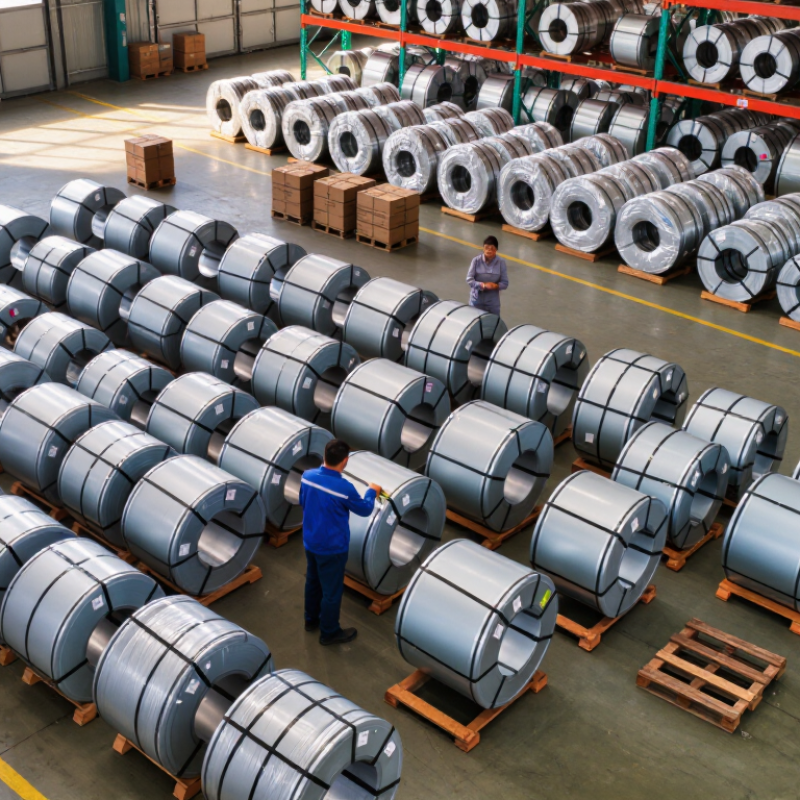
Table of Contents [Hide]
What Galvanized Steel Wire Is and How It Is Made
Galvanized steel wire is steel wire coated with zinc to help slow corrosion. The zinc layer shields the steel from moisture and can provide protection even when a small area is scratched. Its performance depends on the coating, wire diameter, steel grade, and conditions in use. It is not immune to rust.
Production usually begins with steel rod. The rod is cleaned to remove scale, oil, and other residue, then drawn through dies to reach the required diameter. Depending on the product, galvanizing happens before or after drawing. In hot-dip galvanizing, the wire passes through molten zinc; electrogalvanizing uses an electric current to deposit zinc. The wire is then cooled and checked. Details matter.
A dependable supplier can explain its process and provide clear specifications for coating weight, diameter tolerance, and tensile strength. Useful checks may include coating uniformity, adhesion, and visual inspection for bare spots or rough patches. On a coil, uneven color can prompt a closer look, but appearance alone does not prove coating quality. No production line is perfect, so consistent testing and honest reporting matter as much as the process itself. When comparing wire, ask how results are measured and recorded.
Why Choose a Reliable Galvanized Steel Wire Supplier? — What Galvanized Steel Wire Is and How It Is Made
| Topic | What It Means | Typical Process or Checks | Why It Matters When Choosing a Supplier |
|---|---|---|---|
| What galvanized steel wire is | Steel wire protected by a zinc coating. The zinc acts as a barrier against moisture and can provide sacrificial protection if the coating is locally damaged. | Coating type and mass are specified according to the wire’s intended use, diameter, and applicable product standard. | A reliable supplier should state the coating type and provide documentation showing that the supplied wire matches the agreed specification. |
| Steel wire rod preparation | Wire production commonly begins with steel rod selected for the required strength, ductility, and end use. | Rod is inspected and descaled before drawing. Surface condition and chemical composition can affect processing and final performance. | Traceable raw-material records help support consistent quality from batch to batch. |
| Wire drawing | The rod is pulled through progressively smaller dies to reduce its diameter and form wire. | Drawing schedules, lubrication, and intermediate heat treatment are selected to achieve the specified diameter and mechanical properties. | Accurate diameter control helps the wire run properly in downstream processes and fit its intended application. |
| Cleaning before galvanizing | Oil, dirt, and oxide must be removed so zinc can bond effectively to the steel surface. | Depending on the production route, preparation may include degreasing, pickling, rinsing, and fluxing. | Incomplete surface preparation can lead to poor coating coverage or adhesion. |
| Hot-dip galvanizing | Prepared wire passes through molten zinc, forming a metallurgically bonded zinc coating. | Industrial zinc baths are commonly operated around 440–460°C; actual settings depend on the process and product requirements. | Ask how coating mass, surface condition, and process consistency are monitored and recorded. |
| Electrogalvanizing | Zinc is deposited on the wire using an electrolytic process rather than immersion in a molten zinc bath. | Coating thickness and appearance depend on the specified product and production controls. | Confirm that the coating route is suitable for the application; coating types are not automatically interchangeable. |
| Coating mass and coverage | Coating mass is commonly expressed in grams per square metre (g/m²). Requirements vary by standard, wire size, and use. | Coating may be assessed by a specified test method, along with checks for continuity, adhesion, and visible defects. | Request test results against the purchase specification instead of relying on a general claim such as “heavy galvanized.” |
| Diameter and tolerances | Wire diameter is normally stated in millimetres or another agreed unit, with permitted tolerances defined by the relevant specification. | Measurements should be taken using suitable calibrated equipment and recorded at the required sampling frequency. | Consistent diameter helps avoid feeding, forming, and assembly problems. |
| Tensile properties and ductility | Strength and elongation depend on steel grade, drawing reduction, heat treatment, and product requirements. | Mechanical testing is performed using the method and acceptance limits specified for the order. | A dependable supplier can identify the applicable test method and provide batch-level results when required. |
| Packaging and traceability | Wire may be supplied in coils or other agreed formats. Packaging should protect it from handling damage and contamination. | Labels typically identify product details such as diameter, grade or specification, batch or coil number, and net weight. | Clear identification supports inspection, inventory control, and investigation if a quality issue arises. |
| Supplier reliability | Reliability combines product conformity, repeatable production, responsive communication, and dependable delivery. | Review the supplier’s inspection records, certifications where applicable, test documentation, packaging practices, and ability to meet agreed lead times. | These checks help reduce the risk of inconsistent material, production delays, and avoidable rework. |
Note: Values and test requirements depend on the product standard, wire diameter, coating type, and intended application. Confirm the applicable specification and acceptance criteria before ordering.