


- Home
- A-Z Catalogue
- Products
- Valves
- Cetop
- Manual Directional Valves
- Proportional Valves
- Poppet Valves
- High-Speed Linear Servo Valves
- All High-Speed Linear Servo Valves
- Cetop 10 (NG32) Two Stage Type High Speed Linear Servo Valves – LSVHG-10
- Cetop 10 (NG32) Two Stage Type High Speed Linear Servo Valves – LSVHG-10 (With Fail-Safe)
- Cetop 8 (NG25) Two Stage Type High Speed Linear Servo Valves – LSVHG-06
- Cetop 8 (NG25) Two Stage Type High Speed Linear Servo Valves – LSVHG-06 (With Fail-Safe)
- Cetop 7 (NG16) Two Stage Type High Speed Linear Servo Valves – LSVHG-04
- Cetop 7 (NG16) Two Stage Type High Speed Linear Servo Valves – LSVHG-04 (With Fail-Safe)
- Cetop 5 (NG10) Direct Type High Speed Linear Servo Valves – LSVG-03
- Cetop 5 (NG10) OBE Type Direct Operated Linear Servo Valves – LSVG-03-EH
- Cetop 3 (NG6) OBE Type Direct Operated Linear Servo Valves – LSVG-01-EH
- Pumps
- Pressure control
- Flow Control Valves
- Pressure Control Valves
- All Pressure Control Valves
- Brake Valves
- Direct Relief Valve
- Low Noise Solenoid Controlled Relief Valves
- Low Noise Pilot Operated Relief Valves
- Pilot Operated Relief Valves
- Pressure reducing and relieving valves
- Pressure reducing and check valves
- Pressure control valves
- Remote Control Relief Valves
- Solenoid Controlled Relief Valves – BSG
- Solenoid Controlled Relief Valves – BST
- Unloading relief valves
- Check valves
- Environmental
- Valves
- Hydraulic Systems
- Power pack
- About Us
- Contact
- Blog

How to Choose a Double Spiral Twin Shaft Mixer in 2026
Choosing a mixer in 2026 means balancing output, mix quality, energy use, and maintenance—not simply comparing advertised capacity. The Global Cement and Concrete Association estimates that roughly 10 billion tonnes of concrete are produced worldwide each year. The International Energy Agency’s cement-sector tracking reports place cement production at about 7% of global energy-related CO₂ emissions. These figures describe the industry, not the savings any single mixer can guarantee. Still, they show why efficient, dependable batching matters.
A Double Spiral Twin Shaft Concrete Mixer may suit plants that need rapid, uniform mixing across demanding recipes. But performance depends on more than the twin shafts. Check rated batch volume, usable filling level, blade and liner materials, discharge time, motor power, and access for maintenance. Ask suppliers for test results using your actual aggregates, moisture levels, and admixtures. A brochure cannot reproduce a wet Tuesday shift.
Listen for uneven loading. Inspect how easily a worker can reach wear parts. Request references from plants with similar production demands, and verify service response times before purchase. Also compare energy consumption per cubic metre, not just motor nameplate ratings. Small differences can compound over thousands of batches. No mixer is perfect. A high-speed design may shorten mixing, yet poor recipe control can still produce inconsistent concrete. The best choice is the one your team can operate, clean, and maintain reliably. Use measurable trials, not assumptions, to make the final decision.
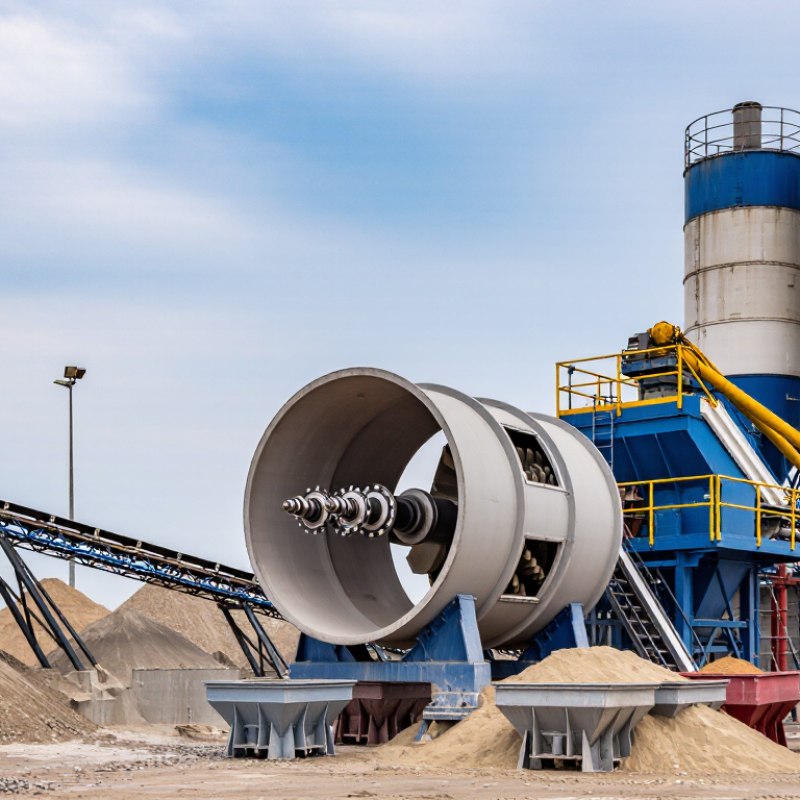
Table of Contents [Hide]
Define Your Mixing Requirements and Production Goals
Before choosing a double spiral twin shaft mixer, describe the material and the job it must do. Record each ingredient’s particle size, bulk density, moisture, and flow behavior. A free-flowing powder behaves differently from a damp, cohesive blend. Small details matter. Note the target batch weight, desired mixing time, and how often the mixer will run. Also specify how the finished blend must discharge and what cleaning between batches requires.
Set measurable production goals rather than relying on a mixer’s nominal capacity. Estimate batches per shift, loading and discharge time, and expected downtime. Then define an acceptable homogeneity range and test it using samples from different points in a representative batch. There is no universal mixing-time figure; formulation and fill level can change the result. This is where plans often get optimistic. If ingredients are heat-sensitive or fragile, ask how operating speed and mixing duration affect them. A trial with actual materials can reveal sticking, segregation, or slow discharge that a specification sheet may not show. Record the conditions and results, even when they are imperfect.
How to Choose a Double Spiral Twin Shaft Mixer in 2026 - Define Your Mixing Requirements and Production Goals
| Selection factor | Information to define | Illustrative production target | How it guides mixer selection |
|---|---|---|---|
| Product and ingredients | List every component, its physical form, particle-size distribution, moisture content, and any sensitivity to heat, shear, or contamination. | Example: three dry powder ingredients, with one minor ingredient requiring even distribution. | Ingredient properties affect mixing behavior, charging order, dust control, and the need for liquid addition or temperature monitoring. Confirm performance using representative materials. |
| Bulk density and batch mass | Measure loose bulk density and specify the required batch mass. Use the lowest expected bulk density when checking volume capacity. | Example: 500 kg per batch at a measured bulk density of 650 kg/m³. | Estimated material volume = batch mass ÷ bulk density. In this example, 500 ÷ 650 ≈ 0.77 m³ of material; vessel working volume must be larger and confirmed for the selected mixer. |
| Working volume and fill level | Specify minimum, normal, and maximum batch sizes. Ask for the mixer’s validated working-volume range; do not equate vessel capacity with usable batch volume. | Example: one 500 kg batch, with a future requirement for smaller development batches. | A mixer must mix effectively across the required operating range. Confirm minimum fill, maximum fill, and performance at both ends with the equipment supplier. |
| Throughput and schedule | Define required output per hour or shift and include charging, mixing, discharge, and routine changeover time in the cycle. | Example: a 40-minute total cycle allows 1.5 batches per hour, or 750 kg/hour at 500 kg per batch, before downtime. | Calculate practical output from batch mass and the complete cycle time—not mixing time alone. Allow for cleaning, inspection, and production interruptions. |
| Mixing quality | Set a measurable acceptance criterion, such as a specified coefficient of variation (CV) from representative samples or a product-specific assay limit. | Example: define the allowable CV and sampling locations in the product specification before testing. | The required uniformity depends on the product and test method. Validate mixing time and sampling procedure with production-representative ingredients and batch sizes. |
| Liquid addition, if required | Specify liquid type, dose per batch, addition time, viscosity, and whether spray distribution is needed. | Example: a controlled spray addition during mixing, with the required dose established by the formulation. | Discuss spray nozzles, feed location, liquid-flow control, and cleanability. Confirm that liquid addition will not cause unwanted agglomeration or wall buildup. |
| Discharge and downstream handling | Define the receiving equipment, discharge time, outlet arrangement, and acceptable residual material after emptying. | Example: discharge directly into a correctly sized hopper or conveying system within the planned cycle. | Outlet size and layout should suit the product’s flow properties and downstream equipment. Verify discharge performance with the actual material where possible. |
| Cleaning and product changeover | State cleaning method, changeover frequency, allowable carryover, access requirements, and whether wet cleaning is permitted. | Example: frequent product changes require documented inspection and cleaning access between batches. | Review access doors, seals, shaft areas, internal surfaces, and drainability where relevant. Confirm the cleaning procedure is compatible with the product and site standards. |
| Materials, environment, and safety | Identify corrosion risks, operating temperature, dust hazards, exposure controls, and applicable site or regulatory requirements. | Example: combustible dust or corrosive ingredients require a documented hazard and materials review. | Specify suitable construction materials, seals, guarding, dust extraction interfaces, and any required protection or certification with qualified safety and engineering personnel. |
| Utilities and installation | Check available electrical supply, installed power, compressed air if needed, floor loading, access, and connection points. | Example: confirm the planned installation area and utility capacity before finalizing the equipment layout. | Motor power and drive selection depend on the product, batch size, operating conditions, and mixer design; obtain a project-specific load and utility specification. |
Planning note: Numerical examples are illustrative calculations, not universal mixer specifications. Verify working volume, mixing performance, cycle time, power, and safety requirements for the actual product and operating conditions.





