


- Home
- A-Z Catalogue
- Products
- Valves
- Cetop
- Manual Directional Valves
- Proportional Valves
- Poppet Valves
- High-Speed Linear Servo Valves
- All High-Speed Linear Servo Valves
- Cetop 10 (NG32) Two Stage Type High Speed Linear Servo Valves – LSVHG-10
- Cetop 10 (NG32) Two Stage Type High Speed Linear Servo Valves – LSVHG-10 (With Fail-Safe)
- Cetop 8 (NG25) Two Stage Type High Speed Linear Servo Valves – LSVHG-06
- Cetop 8 (NG25) Two Stage Type High Speed Linear Servo Valves – LSVHG-06 (With Fail-Safe)
- Cetop 7 (NG16) Two Stage Type High Speed Linear Servo Valves – LSVHG-04
- Cetop 7 (NG16) Two Stage Type High Speed Linear Servo Valves – LSVHG-04 (With Fail-Safe)
- Cetop 5 (NG10) Direct Type High Speed Linear Servo Valves – LSVG-03
- Cetop 5 (NG10) OBE Type Direct Operated Linear Servo Valves – LSVG-03-EH
- Cetop 3 (NG6) OBE Type Direct Operated Linear Servo Valves – LSVG-01-EH
- Pumps
- Pressure control
- Flow Control Valves
- Pressure Control Valves
- All Pressure Control Valves
- Brake Valves
- Direct Relief Valve
- Low Noise Solenoid Controlled Relief Valves
- Low Noise Pilot Operated Relief Valves
- Pilot Operated Relief Valves
- Pressure reducing and relieving valves
- Pressure reducing and check valves
- Pressure control valves
- Remote Control Relief Valves
- Solenoid Controlled Relief Valves – BSG
- Solenoid Controlled Relief Valves – BST
- Unloading relief valves
- Check valves
- Environmental
- Valves
- Hydraulic Systems
- Power pack
- About Us
- Contact
- Blog

How to Choose the Right Electric Forklift Battery?
Choosing the right Electric Forklift Battery affects productivity, safety, operating costs, and equipment life. A battery that fits the truck may still perform poorly in demanding warehouse conditions. Capacity, voltage, dimensions, connector type, charging method, and weight must match the forklift manufacturer’s specifications. Small mismatches can create charging problems, unstable handling, or unexpected downtime.
Real operating experience often reveals what a specification sheet misses. A busy distribution center may need a battery that supports several shifts, while a smaller warehouse may value lower purchase cost. Lead-acid batteries remain practical for many facilities because they are familiar and widely supported. Lithium-ion options can offer faster charging, consistent power, and reduced maintenance. However, they may require a higher initial investment and compatible charging equipment. Temperature, ventilation, daily usage, and available charging space also deserve careful attention.
Details matter.
A reliable decision begins with verified data, not assumptions. Review the forklift manual, battery identification plate, charging records, and manufacturer recommendations. Compare usable capacity rather than relying only on advertised ratings. Check warranty coverage, service support, expected cycle life, and replacement availability. Experienced technicians can also identify issues caused by poor charging habits or aging connectors. No guide is flawless. Actual energy demand can differ from planned estimates, especially during seasonal production peaks. For that reason, buyers should measure real usage, question attractive claims, and leave room for operational changes. The best Electric Forklift Battery is not simply the most powerful or newest option. It is the safest, most compatible, and economically sensible choice for the specific workplace.
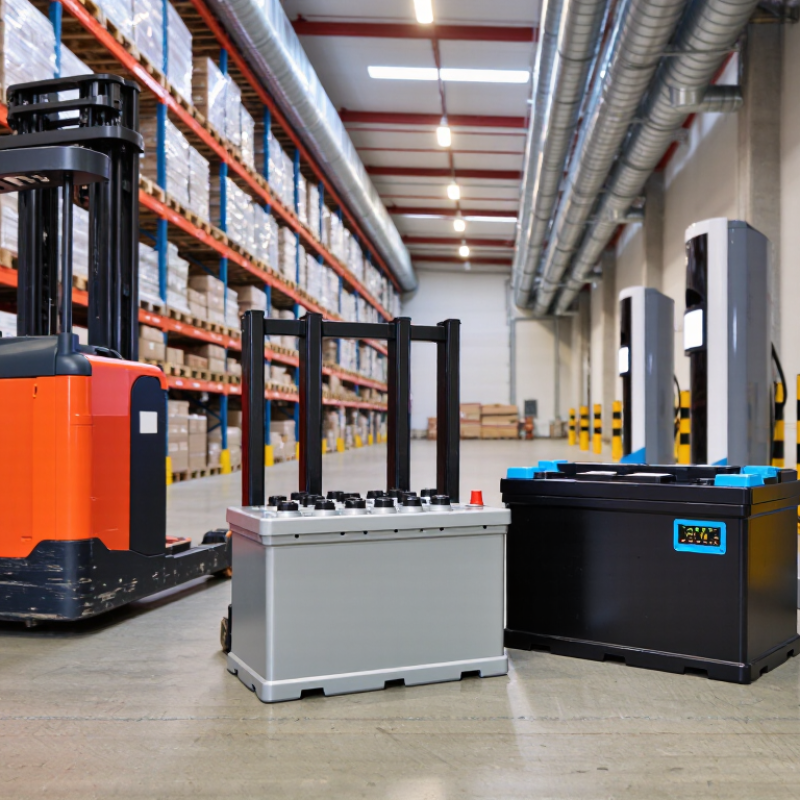
Table of Contents [Hide]
Electric Forklift Battery Types and Their Key Differences
Electric forklift batteries differ in chemistry, charging needs, working time, and maintenance. The common choice is a flooded lead-acid battery. It usually costs less initially and handles demanding warehouse work well. However, it needs regular watering, ventilation, and cleaning. Charging can also take several hours.
Lithium-ion batteries charge faster and support opportunity charging during short breaks. They usually require less maintenance and deliver steady power as the charge falls. Their higher purchase price may be difficult for smaller operations. Battery temperature, charger compatibility, and daily operating hours still require careful checking. I have seen simple comparisons fail because they ignored charging schedules.
Tips: Match the battery to your shift pattern. Measure daily energy use. Check the forklift manufacturer’s specifications. Keep charging areas clean and dry. Do not assume a larger battery is always better.
Absorbed glass mat batteries offer a sealed lead-acid option with fewer spill concerns. They can suit lighter applications, but they may cost more than flooded batteries and still charge slowly. Lead-acid batteries are often practical for single-shift operations with overnight charging. Lithium-ion can be more efficient for multi-shift fleets with limited downtime. The right decision depends on total operating cost, not only the purchase price. A basic energy audit can reveal surprising results. Consider labor, electricity, replacement timing, and charging space before choosing.





