


- Home
- A-Z Catalogue
- Products
- Valves
- Cetop
- Manual Directional Valves
- Proportional Valves
- Poppet Valves
- High-Speed Linear Servo Valves
- All High-Speed Linear Servo Valves
- Cetop 10 (NG32) Two Stage Type High Speed Linear Servo Valves – LSVHG-10
- Cetop 10 (NG32) Two Stage Type High Speed Linear Servo Valves – LSVHG-10 (With Fail-Safe)
- Cetop 8 (NG25) Two Stage Type High Speed Linear Servo Valves – LSVHG-06
- Cetop 8 (NG25) Two Stage Type High Speed Linear Servo Valves – LSVHG-06 (With Fail-Safe)
- Cetop 7 (NG16) Two Stage Type High Speed Linear Servo Valves – LSVHG-04
- Cetop 7 (NG16) Two Stage Type High Speed Linear Servo Valves – LSVHG-04 (With Fail-Safe)
- Cetop 5 (NG10) Direct Type High Speed Linear Servo Valves – LSVG-03
- Cetop 5 (NG10) OBE Type Direct Operated Linear Servo Valves – LSVG-03-EH
- Cetop 3 (NG6) OBE Type Direct Operated Linear Servo Valves – LSVG-01-EH
- Pumps
- Pressure control
- Flow Control Valves
- Pressure Control Valves
- All Pressure Control Valves
- Brake Valves
- Direct Relief Valve
- Low Noise Solenoid Controlled Relief Valves
- Low Noise Pilot Operated Relief Valves
- Pilot Operated Relief Valves
- Pressure reducing and relieving valves
- Pressure reducing and check valves
- Pressure control valves
- Remote Control Relief Valves
- Solenoid Controlled Relief Valves – BSG
- Solenoid Controlled Relief Valves – BST
- Unloading relief valves
- Check valves
- Environmental
- Valves
- Hydraulic Systems
- Power pack
- About Us
- Contact
- Blog

How to Choose the Best PVC Steel Wire Hose?
Choosing the right Pvc Steel Wire Hose starts with understanding the job it must perform. A hose moving water through a workshop has different demands from one drawing liquids from a storage tank. The embedded steel spiral helps the hose resist collapse during suction and maintain its shape around bends. It does not make every hose suitable for every pressure, fluid, or temperature. Details matter.
Before comparing products, note the fluid, operating pressure, temperature range, required inner diameter, and expected bend radius. Check the manufacturer’s specifications against those conditions, including any limits for suction or intermittent use. A hose that fits the connector may still restrict flow if its bore is too small. That is easy to miss. Also inspect the wire spacing and wall construction, since reinforcement and flexibility can vary between models.
This guide explains how to weigh those practical factors without treating one specification as the whole answer. Look for clear product data, stated test conditions, and guidance on compatible applications. If those details are missing, ask the supplier rather than guessing. A lower price can be attractive, but replacement costs and downtime deserve attention too. There is no universal “best” choice; the right option depends on the system and how carefully its limits are observed. Even a well-matched hose needs regular inspection for cracks, soft spots, exposed wire, or loose connections. These checks are simple, though they are sometimes postponed. A little caution goes a long way.
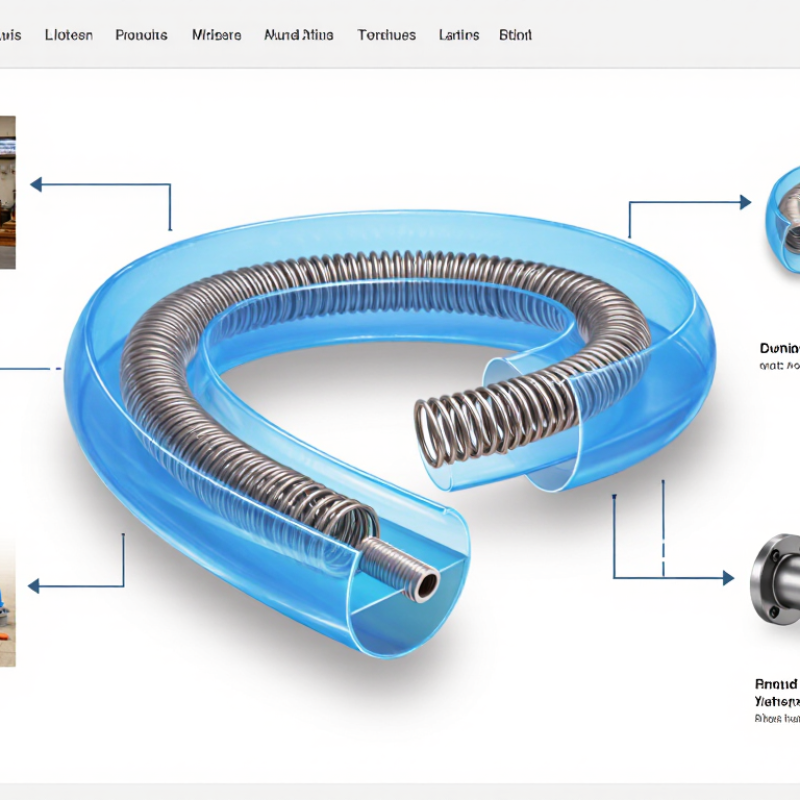
Table of Contents [Hide]
Identify the Hose’s Intended Application and Operating Conditions
A PVC steel wire hose should be matched to the job, not chosen by appearance alone. Start with the material it will carry: water, oil, slurry, or another fluid. PVC formulations differ, so confirm chemical compatibility with the hose supplier’s technical data. Looks can mislead. A clear wall and visible steel spiral do not prove that a hose suits every liquid or duty.
Next, map the real operating conditions. Record normal and peak pressure, suction or vacuum, fluid temperature, and ambient heat. Include pressure surges, because a pump starting or stopping can stress the hose more than steady flow. Measure the route, too: tight bends, dragging over concrete, and frequent movement can cause wear or kinking. Check the required bend radius and abrasion resistance. A hose that fits on paper may still be awkward beside a machine. Check the details.
Finally, inspect connection size and fitting type, and confirm the hose’s rated working pressure at the expected temperature. Do not rely on burst pressure as a working limit. It is easy to focus on diameter and overlook temperature or vacuum; that shortcut can lead to early failure. If conditions vary, share the full operating range with a qualified supplier before installation, and inspect the hose regularly for cracks, flattening, loose wire, or leaks.





