


- Home
- A-Z Catalogue
- Products
- Valves
- Cetop
- Manual Directional Valves
- Proportional Valves
- Poppet Valves
- High-Speed Linear Servo Valves
- All High-Speed Linear Servo Valves
- Cetop 10 (NG32) Two Stage Type High Speed Linear Servo Valves – LSVHG-10
- Cetop 10 (NG32) Two Stage Type High Speed Linear Servo Valves – LSVHG-10 (With Fail-Safe)
- Cetop 8 (NG25) Two Stage Type High Speed Linear Servo Valves – LSVHG-06
- Cetop 8 (NG25) Two Stage Type High Speed Linear Servo Valves – LSVHG-06 (With Fail-Safe)
- Cetop 7 (NG16) Two Stage Type High Speed Linear Servo Valves – LSVHG-04
- Cetop 7 (NG16) Two Stage Type High Speed Linear Servo Valves – LSVHG-04 (With Fail-Safe)
- Cetop 5 (NG10) Direct Type High Speed Linear Servo Valves – LSVG-03
- Cetop 5 (NG10) OBE Type Direct Operated Linear Servo Valves – LSVG-03-EH
- Cetop 3 (NG6) OBE Type Direct Operated Linear Servo Valves – LSVG-01-EH
- Pumps
- Pressure control
- Flow Control Valves
- Pressure Control Valves
- All Pressure Control Valves
- Brake Valves
- Direct Relief Valve
- Low Noise Solenoid Controlled Relief Valves
- Low Noise Pilot Operated Relief Valves
- Pilot Operated Relief Valves
- Pressure reducing and relieving valves
- Pressure reducing and check valves
- Pressure control valves
- Remote Control Relief Valves
- Solenoid Controlled Relief Valves – BSG
- Solenoid Controlled Relief Valves – BST
- Unloading relief valves
- Check valves
- Environmental
- Valves
- Hydraulic Systems
- Power pack
- About Us
- Contact
- Blog

How to Choose the Best Fishing Tackle for Your Business?
Choosing the right FISHING TACKLES is a commercial decision, not just a product decision. A crowded wall of lures may look impressive, but slow-moving stock ties up cash and leaves customers searching for reliable basics. Start with the customer. Local fishing habits, seasonal demand, price expectations, and skill levels should shape every buying list.
The American Sportfishing Association’s 2022 economic report estimated that recreational fishing generated $230.5 billion in U.S. economic output and supported 1.3 million jobs. Its 2022 Special Report on Fishing also counted 54.5 million U.S. participants. These figures point to a substantial market, but they do not guarantee sales for any single shop. Product fit still matters. A small retailer near a stocked lake may need dependable hooks, line, and beginner-friendly kits; a specialist store may require premium rods and carefully chosen technical gear.
Glenn Hughes, president of the American Sportfishing Association, is an important industry voice on recreational fishing’s economic value. I cannot verify a verbatim quote from him about tackle selection, so this guide will not invent one. The practical takeaway is clear: match inventory to real angler demand, and review sell-through before reordering. Keep records. Ask customers what they could not find. Even experienced buyers can misjudge a season. This guide explores product quality, supplier reliability, margins, and assortment planning to help businesses make better-informed choices.
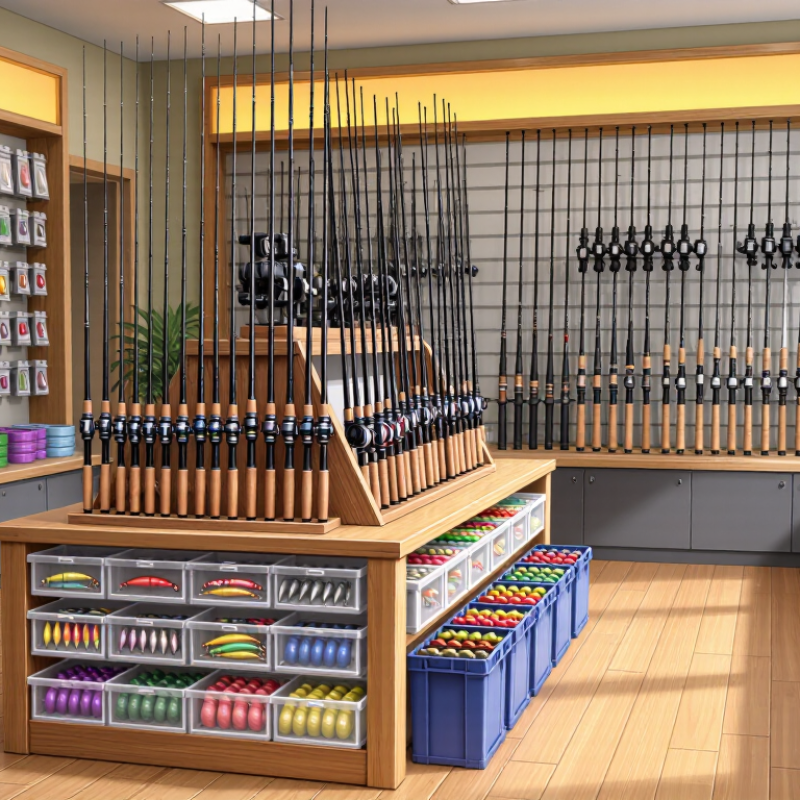
Table of Contents [Hide]
Assess Your Business Model and Target Anglers
Your tackle selection should reflect how your business earns revenue and whom it serves. A neighborhood shop near a lake may need dependable hooks, line, and basic rigs for weekend anglers. A coastal outfitter may need corrosion-resistant components and heavier leaders, while an online seller could prioritize compact, easy-to-ship assortments. Match stock to actual buying patterns, not a broad idea of what anglers might want.
Talk with customers about where they fish, what species they pursue, and how experienced they are. Beginners often value simple kits, clear sizing, and practical setup advice. Experienced anglers may ask for specialized weights, hook shapes, or line strengths. Review seasonal sales and ask staff to note repeated requests. A spreadsheet helps, though it will not explain every missed sale. That assumption can be costly. Start with a focused range, then adjust based on customer questions, returns, and slow-moving stock.
Tips: Keep a small feedback log at the counter. Record fishing location, target species, skill level, and requested items. Check the notes monthly against sales. Test small. Avoid buying deep inventory after one busy weekend; weather and local conditions can distort demand. If uncertain, ask a knowledgeable local guide or fisheries educator to review your assortment, then document why each category fits your customers.





