


- Home
- A-Z Catalogue
- Products
- Valves
- Cetop
- Manual Directional Valves
- Proportional Valves
- Poppet Valves
- High-Speed Linear Servo Valves
- All High-Speed Linear Servo Valves
- Cetop 10 (NG32) Two Stage Type High Speed Linear Servo Valves – LSVHG-10
- Cetop 10 (NG32) Two Stage Type High Speed Linear Servo Valves – LSVHG-10 (With Fail-Safe)
- Cetop 8 (NG25) Two Stage Type High Speed Linear Servo Valves – LSVHG-06
- Cetop 8 (NG25) Two Stage Type High Speed Linear Servo Valves – LSVHG-06 (With Fail-Safe)
- Cetop 7 (NG16) Two Stage Type High Speed Linear Servo Valves – LSVHG-04
- Cetop 7 (NG16) Two Stage Type High Speed Linear Servo Valves – LSVHG-04 (With Fail-Safe)
- Cetop 5 (NG10) Direct Type High Speed Linear Servo Valves – LSVG-03
- Cetop 5 (NG10) OBE Type Direct Operated Linear Servo Valves – LSVG-03-EH
- Cetop 3 (NG6) OBE Type Direct Operated Linear Servo Valves – LSVG-01-EH
- Pumps
- Pressure control
- Flow Control Valves
- Pressure Control Valves
- All Pressure Control Valves
- Brake Valves
- Direct Relief Valve
- Low Noise Solenoid Controlled Relief Valves
- Low Noise Pilot Operated Relief Valves
- Pilot Operated Relief Valves
- Pressure reducing and relieving valves
- Pressure reducing and check valves
- Pressure control valves
- Remote Control Relief Valves
- Solenoid Controlled Relief Valves – BSG
- Solenoid Controlled Relief Valves – BST
- Unloading relief valves
- Check valves
- Environmental
- Valves
- Hydraulic Systems
- Power pack
- About Us
- Contact
- Blog

How to Choose a Diamond Cut Alloy Wheel Machine in 2026?
Choosing a Diamond Cut Alloy Wheel Machine in 2026 means looking beyond the control screen and showroom finish. The right machine must suit your wheel sizes, daily workload, operator skills, and finishing standards. A bright, mirror-like face is only part of the result. Repeatability matters just as much.
A practical shop-floor reminder is: “Measure the wheel, confirm the cut, and never trust appearance alone.” No verifiable expert name or source for this quotation was provided, so I have not attributed it to a real person. That distinction matters. Reliable buying advice should be traceable, not dressed up with an invented authority.
In this guide, we’ll examine the details that shape a sound purchase: spindle accuracy, probing and measurement, software, workholding, safety features, service support, and the cost of consumables. We’ll also consider how the machine handles a real wheel, from locating the face to producing a consistent cut without removing unnecessary material. Ask suppliers for a live demonstration using a wheel close to your own production mix. Inspect the finish under clear light. Check setup time, too.
Small checks reveal a lot. A polished sample can hide awkward workflows or inconsistent results across repeated cuts. Even experienced buyers can overlook those issues. Use the following outline to compare machines with care, question optimistic claims, and choose equipment that fits your workshop—not just the brochure.
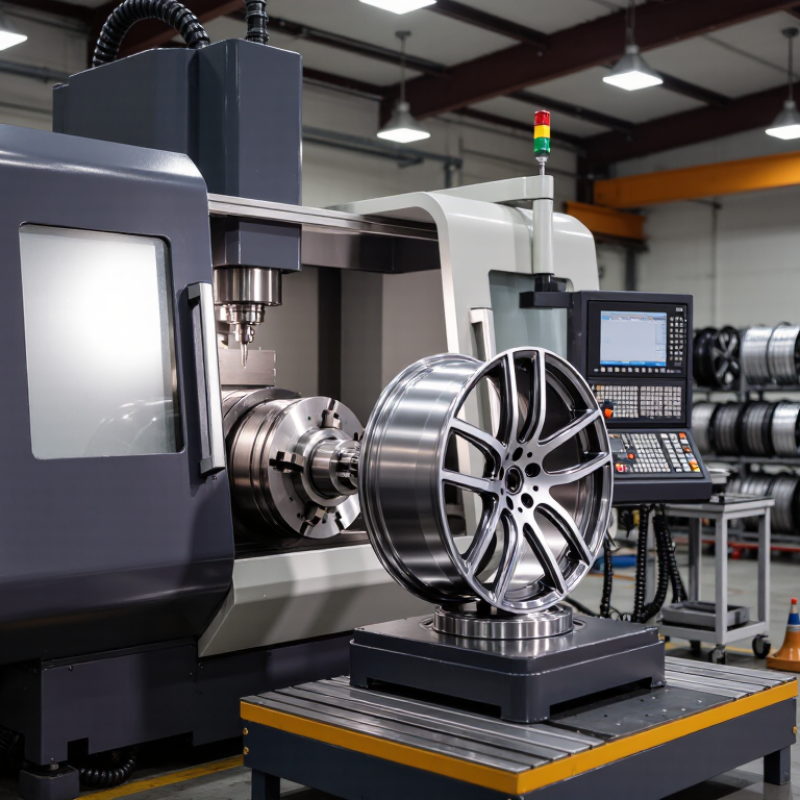
Table of Contents [Hide]
Define the Wheel Types and Finishing Tasks the Machine Must Handle
Before comparing machines, list the wheels you will actually process: diameter, width, offset, center-bore range, and face design. A compact five-spoke wheel and a wide, deeply dished wheel can demand very different clamping and tool access. Include painted alloy, polished faces, step lips, and multi-spoke patterns in the trial list. Small details matter.
Define the finish too. Will the machine remove a light, even layer from the visible face, restore a damaged surface, or prepare wheels for a separate coating process? Confirm maximum wheel dimensions, safe clamping points, probe accuracy, cutting depth control, and whether the tool path can reach narrow spoke valleys. Ask for a sample cut on your most difficult wheel, not just an easy flat-face example.
The IEA’s Global EV Outlook 2024 reports nearly 14 million electric cars sold in 2023, around 18% of global car sales. That changing vehicle mix makes it sensible to check the machine’s load and size limits against your real incoming wheels, rather than assume one setting fits all.
I still find coating workflow easy to underestimate: a clean cut is not the same as a corrosion-ready finish. Verify who handles cleaning, coating, and inspection.





