


- Home
- A-Z Catalogue
- Products
- Valves
- Cetop
- Manual Directional Valves
- Proportional Valves
- Poppet Valves
- High-Speed Linear Servo Valves
- All High-Speed Linear Servo Valves
- Cetop 10 (NG32) Two Stage Type High Speed Linear Servo Valves – LSVHG-10
- Cetop 10 (NG32) Two Stage Type High Speed Linear Servo Valves – LSVHG-10 (With Fail-Safe)
- Cetop 8 (NG25) Two Stage Type High Speed Linear Servo Valves – LSVHG-06
- Cetop 8 (NG25) Two Stage Type High Speed Linear Servo Valves – LSVHG-06 (With Fail-Safe)
- Cetop 7 (NG16) Two Stage Type High Speed Linear Servo Valves – LSVHG-04
- Cetop 7 (NG16) Two Stage Type High Speed Linear Servo Valves – LSVHG-04 (With Fail-Safe)
- Cetop 5 (NG10) Direct Type High Speed Linear Servo Valves – LSVG-03
- Cetop 5 (NG10) OBE Type Direct Operated Linear Servo Valves – LSVG-03-EH
- Cetop 3 (NG6) OBE Type Direct Operated Linear Servo Valves – LSVG-01-EH
- Pumps
- Pressure control
- Flow Control Valves
- Pressure Control Valves
- All Pressure Control Valves
- Brake Valves
- Direct Relief Valve
- Low Noise Solenoid Controlled Relief Valves
- Low Noise Pilot Operated Relief Valves
- Pilot Operated Relief Valves
- Pressure reducing and relieving valves
- Pressure reducing and check valves
- Pressure control valves
- Remote Control Relief Valves
- Solenoid Controlled Relief Valves – BSG
- Solenoid Controlled Relief Valves – BST
- Unloading relief valves
- Check valves
- Environmental
- Valves
- Hydraulic Systems
- Power pack
- About Us
- Contact
- Blog

China Top 10 Hardox Liner Manufacturers for Global Buyers
Choosing a Hardox Liner is not simply a matter of selecting the hardest plate. Buyers need to match wear resistance, toughness, thickness, and fabrication requirements to the actual job. A chute carrying sharp iron ore faces different wear from a truck body hauling rounded gravel. The difference shows up in service life, repair intervals, and downtime.
Professor Lars Bergström’s research in abrasive wear offers a useful engineering perspective: wear depends on the interaction between material, particles, and operating conditions. The following line is an editorial summary, not a verbatim quotation: “Choose the liner for the wear mechanism, not the name on the plate.” That distinction matters. A supplier’s claims should be checked against grade certificates, technical data, processing guidance, and evidence from comparable applications.
This guide examines ten China-based manufacturers serving global buyers. It considers product range, customization, quality controls, export experience, and the clarity of technical support. A low quoted price can look attractive. But an unclear grade, inconsistent thickness, or weak inspection records may cost more after installation. Ask how plates are identified, how dimensions are verified, and whether the supplier can explain its recommendations in writing. Small details count.
No shortlist can replace application-specific engineering. Some information may still be hard to verify from public materials. Buyers should treat that as a reason to ask better questions, not as proof of poor quality. The aim is practical: compare suppliers carefully and select a Hardox Liner that fits the real working conditions.
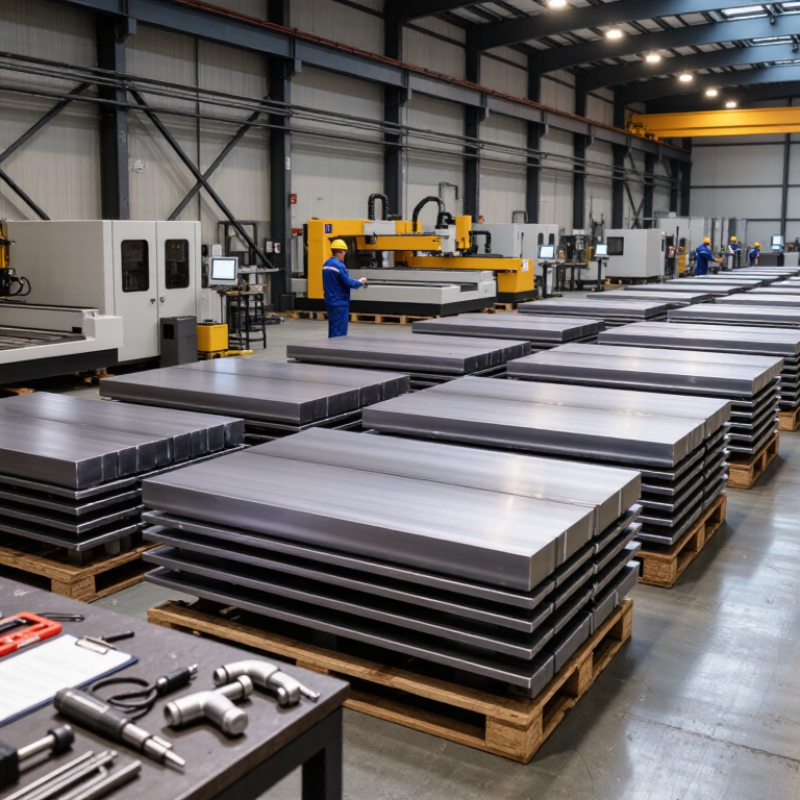
Table of Contents [Hide]
Hardox Liners Explained: 400–600 HBW Grades and Wear Applications
Abrasion-resistant liners in the 400–600 HBW range are selected to slow material loss where rock, ore, or aggregate repeatedly scrapes steel surfaces. Around 400 HBW, a plate may offer a useful balance of wear resistance and toughness for chutes, hoppers, and truck bodies. Grades closer to 600 HBW can suit severe sliding abrasion, but hardness alone does not predict service life. It matters.
A liner exposed to large, falling stones faces impact as well as abrasion. In that setting, a very hard plate may not be the best choice; thickness, support, and operating conditions matter too. Check the material’s hardness certificate, plate thickness, and recommended welding procedure before fabrication. On site, inspect high-wear zones near feed points and corners, where material often strikes or changes direction. Small details count.
There is no universal grade for every application. Compare actual failure patterns, not just purchase price or a headline hardness figure. A liner that wears more slowly can still perform poorly if it cracks, distorts, or is difficult to replace. One limitation is that wear conditions vary widely, so laboratory figures cannot fully predict field results. Regular inspection helps refine the selection over time.





