


- Home
- A-Z Catalogue
- Products
- Valves
- Cetop
- Manual Directional Valves
- Proportional Valves
- Poppet Valves
- High-Speed Linear Servo Valves
- All High-Speed Linear Servo Valves
- Cetop 10 (NG32) Two Stage Type High Speed Linear Servo Valves – LSVHG-10
- Cetop 10 (NG32) Two Stage Type High Speed Linear Servo Valves – LSVHG-10 (With Fail-Safe)
- Cetop 8 (NG25) Two Stage Type High Speed Linear Servo Valves – LSVHG-06
- Cetop 8 (NG25) Two Stage Type High Speed Linear Servo Valves – LSVHG-06 (With Fail-Safe)
- Cetop 7 (NG16) Two Stage Type High Speed Linear Servo Valves – LSVHG-04
- Cetop 7 (NG16) Two Stage Type High Speed Linear Servo Valves – LSVHG-04 (With Fail-Safe)
- Cetop 5 (NG10) Direct Type High Speed Linear Servo Valves – LSVG-03
- Cetop 5 (NG10) OBE Type Direct Operated Linear Servo Valves – LSVG-03-EH
- Cetop 3 (NG6) OBE Type Direct Operated Linear Servo Valves – LSVG-01-EH
- Pumps
- Pressure control
- Flow Control Valves
- Pressure Control Valves
- All Pressure Control Valves
- Brake Valves
- Direct Relief Valve
- Low Noise Solenoid Controlled Relief Valves
- Low Noise Pilot Operated Relief Valves
- Pilot Operated Relief Valves
- Pressure reducing and relieving valves
- Pressure reducing and check valves
- Pressure control valves
- Remote Control Relief Valves
- Solenoid Controlled Relief Valves – BSG
- Solenoid Controlled Relief Valves – BST
- Unloading relief valves
- Check valves
- Environmental
- Valves
- Hydraulic Systems
- Power pack
- About Us
- Contact
- Blog

China Top 10 Vacuum Hydrocarbon Cleaning Machine Makers
China’s manufacturing scale makes it an important place to evaluate suppliers of precision-cleaning equipment. Vacuum hydrocarbon cleaning machines remove oils and residues from metal components inside enclosed chambers. Depending on the system, vacuum processing can support solvent circulation, drying, and recovery. Results still depend on the machine design, solvent choice, load arrangement, and process controls.
The National Bureau of Statistics of China reported that manufacturing value added grew 5.0% in 2023. UNIDO’s International Yearbook of Industrial Statistics 2024 also places China among the world’s leading manufacturing economies. These reports provide useful industrial context, but they do not measure this machine category specifically. Not the whole story. Public, comparable figures for China’s vacuum hydrocarbon cleaning machine shipments and market shares are limited, so rankings should be treated cautiously. A polished brochure cannot replace a process trial.
This guide introduces China Top 10 Vacuum Hydrocarbon Cleaning Machine Makers and the criteria buyers can use to assess them. Look beyond chamber size. Compare cleaning consistency, drying performance, solvent recovery, automation, maintenance access, and documented testing. Ask how the supplier handles representative parts, including blind holes and narrow channels. Request operating data for your own soil and material conditions. The right shortlist depends on the application, not a headline claim. Vacuum Hydrocarbon Cleaning Machine Manufacturers may offer similar specifications, yet differ in engineering support and validation quality. Those details matter on the production floor.
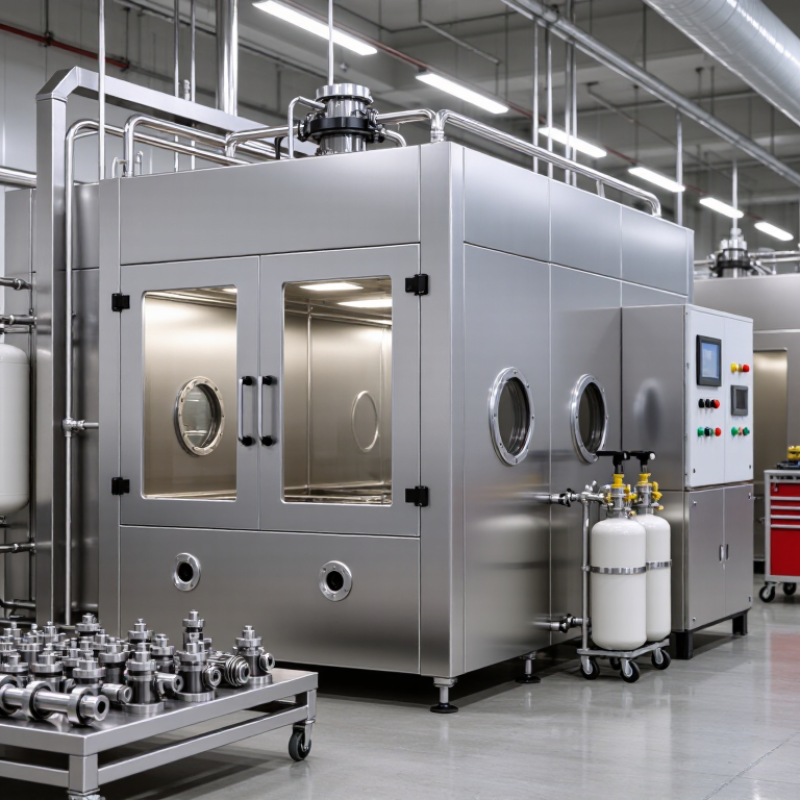
Table of Contents [Hide]
What Is a Vacuum Hydrocarbon Cleaning Machine?
A vacuum hydrocarbon cleaning machine removes oils, machining fluids, and fine residues from metal or precision components. It uses a hydrocarbon-based solvent inside a sealed chamber rather than an open wash tank. Parts may be sprayed or immersed, then exposed to reduced pressure. Lower pressure helps solvent evaporate at lower temperatures, while filtration and distillation can recover reusable solvent. A final vacuum-drying stage helps clear liquid from narrow holes and threaded features. That matters. Operators still need to check material compatibility; elastomers and coatings can react differently.
The machine’s key value is controlled cleaning, not a promise of zero exposure or zero residue. Actual results depend on solvent formulation, load geometry, soil type, and cycle settings. NIOSH’s Pocket Guide to Chemical Hazards lists a 50 ppm recommended exposure limit for n-hexane, averaged over a 10-hour workday. That figure applies to n-hexane, not every hydrocarbon solvent. Facilities should consult the safety data sheet and verify ventilation and exposure controls for the chosen blend. A vacuum cycle can improve drying, but trapped soil may remain.





