


- Home
- A-Z Catalogue
- Products
- Valves
- Cetop
- Manual Directional Valves
- Proportional Valves
- Poppet Valves
- High-Speed Linear Servo Valves
- All High-Speed Linear Servo Valves
- Cetop 10 (NG32) Two Stage Type High Speed Linear Servo Valves – LSVHG-10
- Cetop 10 (NG32) Two Stage Type High Speed Linear Servo Valves – LSVHG-10 (With Fail-Safe)
- Cetop 8 (NG25) Two Stage Type High Speed Linear Servo Valves – LSVHG-06
- Cetop 8 (NG25) Two Stage Type High Speed Linear Servo Valves – LSVHG-06 (With Fail-Safe)
- Cetop 7 (NG16) Two Stage Type High Speed Linear Servo Valves – LSVHG-04
- Cetop 7 (NG16) Two Stage Type High Speed Linear Servo Valves – LSVHG-04 (With Fail-Safe)
- Cetop 5 (NG10) Direct Type High Speed Linear Servo Valves – LSVG-03
- Cetop 5 (NG10) OBE Type Direct Operated Linear Servo Valves – LSVG-03-EH
- Cetop 3 (NG6) OBE Type Direct Operated Linear Servo Valves – LSVG-01-EH
- Pumps
- Pressure control
- Flow Control Valves
- Pressure Control Valves
- All Pressure Control Valves
- Brake Valves
- Direct Relief Valve
- Low Noise Solenoid Controlled Relief Valves
- Low Noise Pilot Operated Relief Valves
- Pilot Operated Relief Valves
- Pressure reducing and relieving valves
- Pressure reducing and check valves
- Pressure control valves
- Remote Control Relief Valves
- Solenoid Controlled Relief Valves – BSG
- Solenoid Controlled Relief Valves – BST
- Unloading relief valves
- Check valves
- Environmental
- Valves
- Hydraulic Systems
- Power pack
- About Us
- Contact
- Blog

China Top 10 Electric Lawn Riding Mower Suppliers?
China’s electric landscaping market is expanding beyond small garden tools. Electric Lawn Riding Mower suppliers now serve homeowners, contractors, parks, resorts, and municipal grounds teams. Their machines promise quieter operation, lower routine maintenance, and cleaner work around public spaces.
This guide examines China’s top ten suppliers through practical purchasing criteria. We will consider cutting width, battery capacity, charging time, deck durability, drive comfort, factory experience, certifications, export history, and after-sales support. A reliable supplier should provide more than attractive photographs. Buyers need clear battery specifications, realistic mowing ranges, spare-part availability, and responsive technical assistance. A large deck can save time, yet it may reduce maneuverability on narrow lawns. More power is not always better.
Kris Kiser, president and CEO of the Outdoor Power Equipment Institute, has stated, “Battery-powered outdoor power equipment is here to stay.” That direction is visible in Chinese manufacturing facilities, where lithium battery systems and electric drive platforms continue to improve. Still, supplier claims deserve careful checking. Published runtime may assume flat, dry grass and ideal cutting conditions. Real lawns include slopes, wet patches, roots, and uneven surfaces.
No list is perfect. Supplier rankings can change with production capacity, service quality, and product updates. Some manufacturers excel at commercial machines, while others focus on compact residential models. This introduction therefore treats the top ten as a practical starting point, not an absolute verdict. Buyers should request demonstrations, inspect warranty terms, and compare total ownership costs before making a decision. Sometimes, the cheaper mower becomes expensive later.
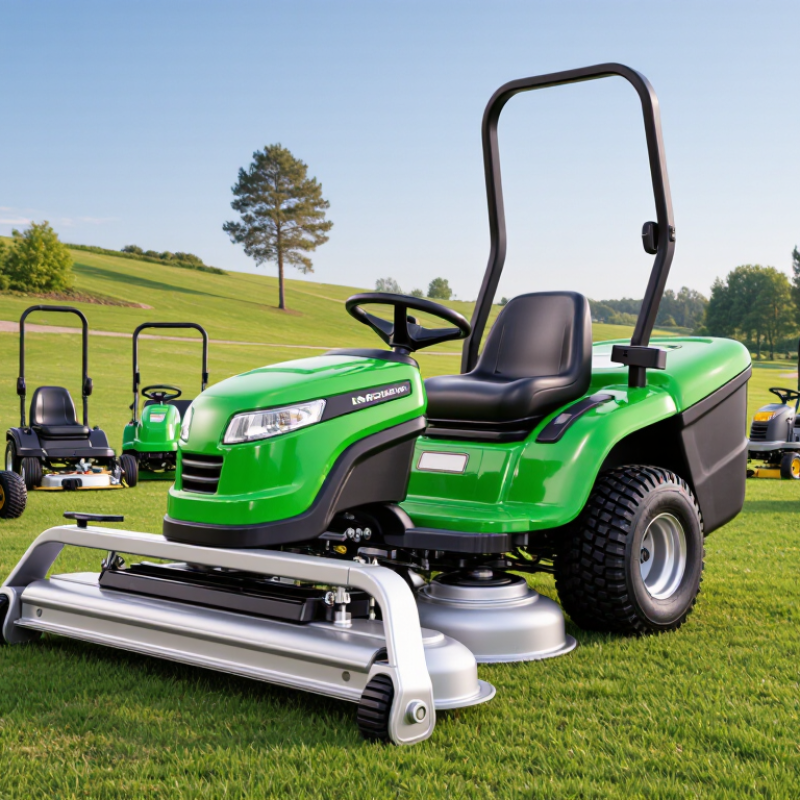
Table of Contents [Hide]
What Are Electric Lawn Riding Mowers and Why Choose Chinese Suppliers?
Electric lawn riding mowers are seated machines powered by rechargeable batteries rather than gasoline engines. They combine a cutting deck, traction motor, controller, and battery pack. Operators get lower operating noise, instant torque, and no tailpipe emissions during mowing. Charging still takes planning. A large property may need several hours before the next session.
Industry data supports this shift. Grand View Research estimated the global lawn mower market above USD 30 billion in 2022, with continued growth expected through 2030. The International Energy Agency reported that China produced more than three-quarters of global battery cells in 2023. This concentration gives Chinese suppliers strong access to motors, battery systems, controllers, and metal components. It can also support flexible deck sizes, voltage options, and private engineering adjustments.
Price is not the only reason to consider Chinese suppliers. Factory experience may shorten development time and improve component matching. However, quality varies. I would not treat factory photos as proof. Buyers should request battery-cycle records, motor efficiency data, waterproofing test results, charger certifications, and spare-parts plans. Ask for a real slope test, too. A mower that performs well on flat concrete may struggle on wet grass. That assumption is incomplete. A lower purchase price can become expensive when diagnostics, batteries, or replacement blades are difficult to obtain.





