


- Home
- A-Z Catalogue
- Products
- Valves
- Cetop
- Manual Directional Valves
- Proportional Valves
- Poppet Valves
- High-Speed Linear Servo Valves
- All High-Speed Linear Servo Valves
- Cetop 10 (NG32) Two Stage Type High Speed Linear Servo Valves – LSVHG-10
- Cetop 10 (NG32) Two Stage Type High Speed Linear Servo Valves – LSVHG-10 (With Fail-Safe)
- Cetop 8 (NG25) Two Stage Type High Speed Linear Servo Valves – LSVHG-06
- Cetop 8 (NG25) Two Stage Type High Speed Linear Servo Valves – LSVHG-06 (With Fail-Safe)
- Cetop 7 (NG16) Two Stage Type High Speed Linear Servo Valves – LSVHG-04
- Cetop 7 (NG16) Two Stage Type High Speed Linear Servo Valves – LSVHG-04 (With Fail-Safe)
- Cetop 5 (NG10) Direct Type High Speed Linear Servo Valves – LSVG-03
- Cetop 5 (NG10) OBE Type Direct Operated Linear Servo Valves – LSVG-03-EH
- Cetop 3 (NG6) OBE Type Direct Operated Linear Servo Valves – LSVG-01-EH
- Pumps
- Pressure control
- Flow Control Valves
- Pressure Control Valves
- All Pressure Control Valves
- Brake Valves
- Direct Relief Valve
- Low Noise Solenoid Controlled Relief Valves
- Low Noise Pilot Operated Relief Valves
- Pilot Operated Relief Valves
- Pressure reducing and relieving valves
- Pressure reducing and check valves
- Pressure control valves
- Remote Control Relief Valves
- Solenoid Controlled Relief Valves – BSG
- Solenoid Controlled Relief Valves – BST
- Unloading relief valves
- Check valves
- Environmental
- Valves
- Hydraulic Systems
- Power pack
- About Us
- Contact
- Blog

China Top Crankshaft Bearing Manufacturers for Global Buyers
Choosing reliable Crankshaft Bearing manufacturers is a practical decision for engine builders, distributors, and maintenance teams worldwide. A bearing may look simple, yet its performance depends on alloy quality, surface finish, oil compatibility, and production control. A few microns of variation can influence clearance, heat, and engine life.
Dr. Michael M. Khonsari, a recognized tribology researcher, has said, “Friction is not simply a nuisance; it is a design variable.” This idea matters when comparing Chinese suppliers. A capable manufacturer should explain its bearing materials, load ratings, fatigue testing, dimensional tolerances, and quality inspection process. Buyers should also examine factory experience, export records, technical support, and traceability. Product samples alone are not enough.
The strongest manufacturers usually combine modern machining with experienced technicians. Their workshops may include CNC equipment, automated inspection systems, coating lines, and clean assembly areas. Ask for test reports. Check the details.
This guide reviews China’s leading Crankshaft Bearing manufacturers for global buyers. It considers manufacturing capacity, material options, application knowledge, customization, certifications, and after-sales communication. These factors can reveal whether a supplier supports long-term engine performance or simply competes on price.
No supplier is perfect. Even an established factory may have inconsistent communication or limited support for unusual engines. Buyers should verify claims independently, request production samples, and clarify warranty conditions before placing large orders. That extra effort feels slow, but it can prevent premature wear, scoring, overheating, and costly downtime.
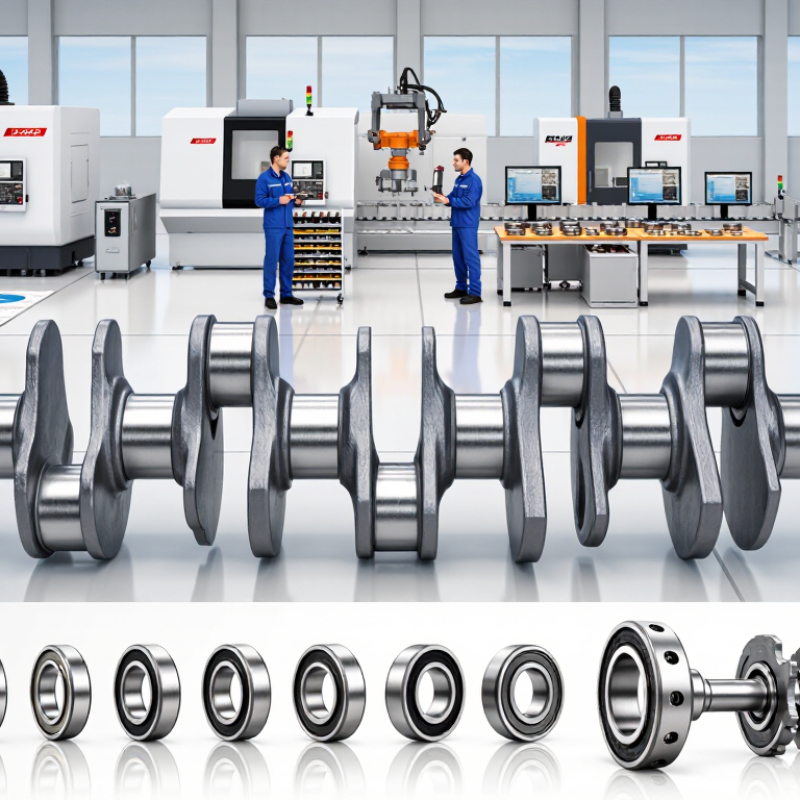
Table of Contents [Hide]
Crankshaft Bearings: Types, Functions, and Key Performance Standards
Crankshaft bearings support the crankshaft while controlling friction, heat, and oil flow. Common types include bimetal, trimetal, and aluminum-based bearings. Each uses a different balance of strength, embedability, and fatigue resistance. In practical engine inspections, correct clearance often matters more than appearance. A polished surface can still hide poor alignment or uneven contact.
Key performance standards include dimensional accuracy, wall thickness, hardness, surface finish, fatigue strength, and corrosion resistance. Buyers should request inspection records, material certificates, and traceability from Chinese manufacturers. Testing should follow approved ISO, SAE, ASTM, or equivalent methods when applicable. Oil compatibility also deserves attention, especially for engines operating under high temperature or heavy loads. Specifications must match the crankshaft journal, housing, lubricant, and engine duty cycle. One overlooked measurement can damage the entire assembly.
Tips: Compare finished samples with approved drawings, not photographs. Check bore clearance at several positions. Ask how cleanliness is verified after machining. Confirm packaging prevents moisture and edge damage. A supplier may offer attractive prices, but inconsistent batch control can erase those savings. I have found that communication about tolerances should be written, because verbal promises are easy to misunderstand. Some buyers focus too heavily on tensile data. That is not always enough. Real service depends on fit, lubrication, heat, and installation quality working together.





