


- Home
- A-Z Catalogue
- Products
- Valves
- Cetop
- Manual Directional Valves
- Proportional Valves
- Poppet Valves
- High-Speed Linear Servo Valves
- All High-Speed Linear Servo Valves
- Cetop 10 (NG32) Two Stage Type High Speed Linear Servo Valves – LSVHG-10
- Cetop 10 (NG32) Two Stage Type High Speed Linear Servo Valves – LSVHG-10 (With Fail-Safe)
- Cetop 8 (NG25) Two Stage Type High Speed Linear Servo Valves – LSVHG-06
- Cetop 8 (NG25) Two Stage Type High Speed Linear Servo Valves – LSVHG-06 (With Fail-Safe)
- Cetop 7 (NG16) Two Stage Type High Speed Linear Servo Valves – LSVHG-04
- Cetop 7 (NG16) Two Stage Type High Speed Linear Servo Valves – LSVHG-04 (With Fail-Safe)
- Cetop 5 (NG10) Direct Type High Speed Linear Servo Valves – LSVG-03
- Cetop 5 (NG10) OBE Type Direct Operated Linear Servo Valves – LSVG-03-EH
- Cetop 3 (NG6) OBE Type Direct Operated Linear Servo Valves – LSVG-01-EH
- Pumps
- Pressure control
- Flow Control Valves
- Pressure Control Valves
- All Pressure Control Valves
- Brake Valves
- Direct Relief Valve
- Low Noise Solenoid Controlled Relief Valves
- Low Noise Pilot Operated Relief Valves
- Pilot Operated Relief Valves
- Pressure reducing and relieving valves
- Pressure reducing and check valves
- Pressure control valves
- Remote Control Relief Valves
- Solenoid Controlled Relief Valves – BSG
- Solenoid Controlled Relief Valves – BST
- Unloading relief valves
- Check valves
- Environmental
- Valves
- Hydraulic Systems
- Power pack
- About Us
- Contact
- Blog

China Top 10 Wood Cutting Chainsaw Manufacturers
China’s wood-processing industry has developed a broad and competitive manufacturing base. This growth makes China a major sourcing destination for the Wood Cutting Chain Saw market. However, factory size alone does not prove product reliability.
This guide examines China’s top 10 Wood Cutting Chain Saw manufacturers through practical purchasing criteria. These criteria include engine performance, guide-bar compatibility, chain quality, vibration control, fuel efficiency, safety design, production capacity, and after-sales support. We also consider factory experience, export records, quality-management systems, and customization capability. Small details matter. A stable trigger, balanced handle, and clear maintenance instructions can change daily working comfort.
John Ball, Ph.D., a recognized chainsaw-safety educator, states, “The best safety device is a well-trained operator.” His point remains essential when comparing professional and consumer models. Even an advanced saw requires correct chain tension, protective equipment, and regular inspection. A powerful engine cannot compensate for poor training.
The manufacturers featured here may serve forestry companies, landscaping contractors, agricultural users, and distributors. Some specialize in gasoline-powered saws, while others focus on electric or battery-operated equipment. Their strengths are not identical. One may offer stronger export support, while another may provide better private-label flexibility or more consistent component sourcing.
This ranking is useful, but it is not flawless. Supplier data can change, and public information may remain incomplete. Buyers should request test reports, warranty terms, sample units, and current certifications before making a final decision. The real winner is not always the largest factory. It is the manufacturer that delivers dependable cutting performance under demanding field conditions.
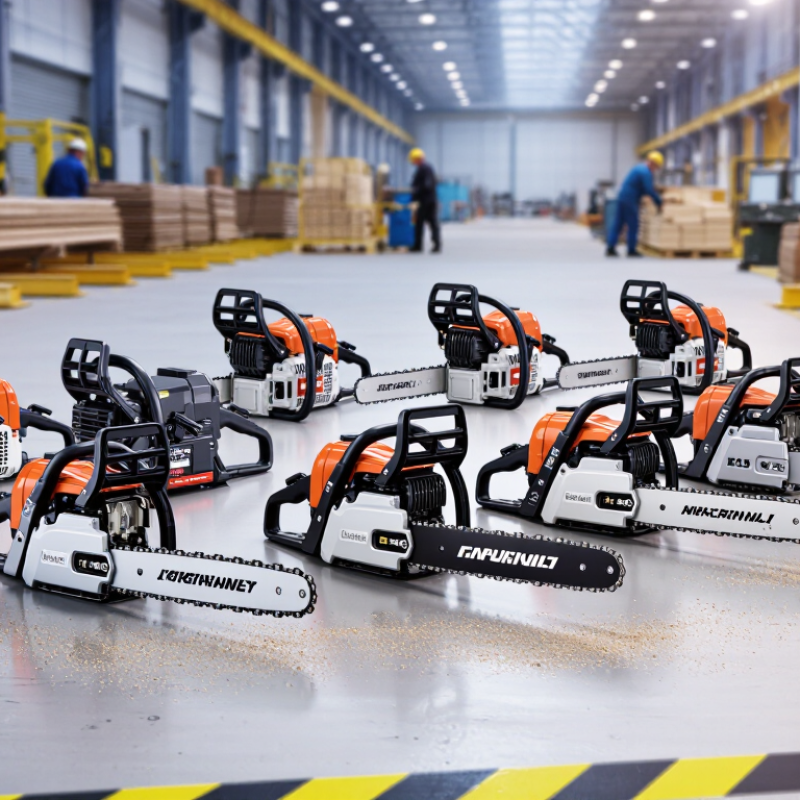
Table of Contents [Hide]
China’s Wood-Cutting Chainsaw Manufacturing Landscape
China’s wood-cutting chainsaw manufacturing landscape combines large industrial zones with specialized component suppliers. Many factories produce engines, guide bars, chains, handles, and safety controls within connected regional networks. This structure can shorten procurement time and support flexible production volumes. From factory assessments, reliable suppliers usually show clear testing records, trained assembly teams, and traceable material sources. A polished showroom is not enough. Production discipline matters more.
Tips: Ask for cutting tests using different wood densities. Check vibration, chain braking, oil delivery, and starting performance. Request maintenance instructions in clear English. Compare sample results with batch records. Small gaps can become costly problems.
Manufacturers increasingly use automated machining and digital inspection for critical parts. These tools improve consistency, but they do not replace skilled workers. Human checks still catch loose fittings, uneven welds, and poor packaging. Export-focused factories often adapt designs for climate, fuel, and user habits. Buyers should verify documentation, spare-part availability, and after-sales response before placing large orders. Some factories promise too much during early discussions. That deserves careful reflection. A dependable partnership grows through repeatable evidence, not confident language. Safety features should remain central, especially chain brakes, protective guards, and stable rear handles.





