


- Home
- A-Z Catalogue
- Products
- Valves
- Cetop
- Manual Directional Valves
- Proportional Valves
- Poppet Valves
- High-Speed Linear Servo Valves
- All High-Speed Linear Servo Valves
- Cetop 10 (NG32) Two Stage Type High Speed Linear Servo Valves – LSVHG-10
- Cetop 10 (NG32) Two Stage Type High Speed Linear Servo Valves – LSVHG-10 (With Fail-Safe)
- Cetop 8 (NG25) Two Stage Type High Speed Linear Servo Valves – LSVHG-06
- Cetop 8 (NG25) Two Stage Type High Speed Linear Servo Valves – LSVHG-06 (With Fail-Safe)
- Cetop 7 (NG16) Two Stage Type High Speed Linear Servo Valves – LSVHG-04
- Cetop 7 (NG16) Two Stage Type High Speed Linear Servo Valves – LSVHG-04 (With Fail-Safe)
- Cetop 5 (NG10) Direct Type High Speed Linear Servo Valves – LSVG-03
- Cetop 5 (NG10) OBE Type Direct Operated Linear Servo Valves – LSVG-03-EH
- Cetop 3 (NG6) OBE Type Direct Operated Linear Servo Valves – LSVG-01-EH
- Pumps
- Pressure control
- Flow Control Valves
- Pressure Control Valves
- All Pressure Control Valves
- Brake Valves
- Direct Relief Valve
- Low Noise Solenoid Controlled Relief Valves
- Low Noise Pilot Operated Relief Valves
- Pilot Operated Relief Valves
- Pressure reducing and relieving valves
- Pressure reducing and check valves
- Pressure control valves
- Remote Control Relief Valves
- Solenoid Controlled Relief Valves – BSG
- Solenoid Controlled Relief Valves – BST
- Unloading relief valves
- Check valves
- Environmental
- Valves
- Hydraulic Systems
- Power pack
- About Us
- Contact
- Blog

China Top 10 Fluid End Modules Manufacturers?
China’s fluid equipment industry serves oilfield, chemical, mining, water treatment, and industrial processing applications. This article examines China’s top 10 Fluid End Modules manufacturers through practical purchasing criteria. It focuses on manufacturing capability, engineering experience, quality systems, and application support.
Performance matters in demanding service. A fluid end module must manage pressure, pulsation, corrosion, and repeated mechanical stress. Key details include forged or cast materials, heat treatment records, dimensional accuracy, surface finish, and pressure-test results. We also consider compatibility with triplex and quintuplex pumps, replacement-part availability, delivery capacity, and technical communication. These factors can reveal more than a polished website.
Real evidence matters.
The selection approach combines publicly available company information, product documentation, industry reputation, and observable manufacturing capabilities. Where possible, buyers should verify certifications, inspection reports, production samples, and customer references directly. A manufacturer may advertise broad expertise but offer limited experience with a specific medium or pressure range. That difference deserves attention. No ranking is perfect, because supplier performance can change with equipment, management, and project scale. This guide should support due diligence, not replace it. Readers should compare drawings, tolerances, material specifications, warranty terms, and after-sales response before making a decision. The strongest supplier is not always the largest one. It is often the manufacturer that understands the operating conditions and documents its claims clearly.
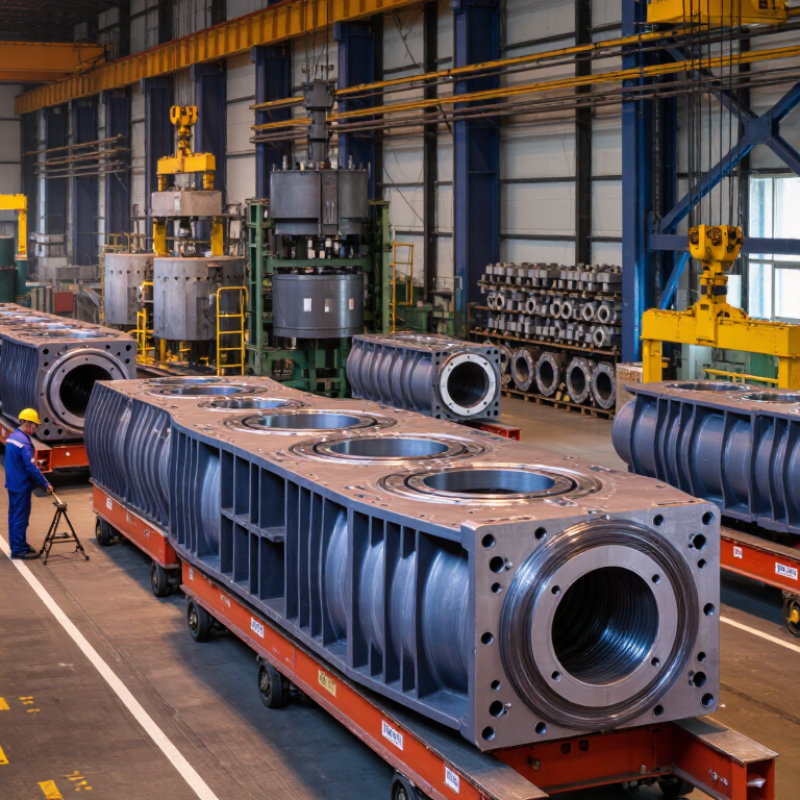
Table of Contents [Hide]
What Are Fluid End Modules and Why Do They Matter?
Fluid end modules are the pressure-bearing assemblies at the working end of a pump. They contain fluid passages, valves, seats, plungers, and sealing interfaces. During operation, these parts face repeated pressure pulses, abrasive solids, temperature changes, and chemical exposure. Think of a steel block with narrow channels and moving contact points. Small surface damage can become a leak, vibration, or unplanned shutdown. The module turns mechanical motion into controlled fluid movement.
Their importance is practical, not cosmetic. A well-designed module keeps pressure stable and protects the pump’s power end from fluid intrusion. Engineers assess metallurgy, wall thickness, fatigue resistance, machining accuracy, and replaceable wear parts. Inspection records should identify heat treatment, dimensional checks, pressure tests, and material certificates. In field work, technicians also examine valve springs, seating marks, thread condition, and seal compression. A clean fit matters. Even a correct part can fail when assembled carelessly.
Manufacturers are often compared by casting quality, forging practice, testing discipline, and technical support. Yet a ranking alone can mislead buyers. Service conditions differ widely between water, slurry, and corrosive fluids. The strongest module on paper may not suit every application. I have seen maintenance teams focus on purchase price and overlook spare-part compatibility. That choice can extend downtime. Better selection connects operating data with verified engineering limits, while leaving room to question old assumptions.