


- Home
- A-Z Catalogue
- Products
- Valves
- Cetop
- Manual Directional Valves
- Proportional Valves
- Poppet Valves
- High-Speed Linear Servo Valves
- All High-Speed Linear Servo Valves
- Cetop 10 (NG32) Two Stage Type High Speed Linear Servo Valves – LSVHG-10
- Cetop 10 (NG32) Two Stage Type High Speed Linear Servo Valves – LSVHG-10 (With Fail-Safe)
- Cetop 8 (NG25) Two Stage Type High Speed Linear Servo Valves – LSVHG-06
- Cetop 8 (NG25) Two Stage Type High Speed Linear Servo Valves – LSVHG-06 (With Fail-Safe)
- Cetop 7 (NG16) Two Stage Type High Speed Linear Servo Valves – LSVHG-04
- Cetop 7 (NG16) Two Stage Type High Speed Linear Servo Valves – LSVHG-04 (With Fail-Safe)
- Cetop 5 (NG10) Direct Type High Speed Linear Servo Valves – LSVG-03
- Cetop 5 (NG10) OBE Type Direct Operated Linear Servo Valves – LSVG-03-EH
- Cetop 3 (NG6) OBE Type Direct Operated Linear Servo Valves – LSVG-01-EH
- Pumps
- Pressure control
- Flow Control Valves
- Pressure Control Valves
- All Pressure Control Valves
- Brake Valves
- Direct Relief Valve
- Low Noise Solenoid Controlled Relief Valves
- Low Noise Pilot Operated Relief Valves
- Pilot Operated Relief Valves
- Pressure reducing and relieving valves
- Pressure reducing and check valves
- Pressure control valves
- Remote Control Relief Valves
- Solenoid Controlled Relief Valves – BSG
- Solenoid Controlled Relief Valves – BST
- Unloading relief valves
- Check valves
- Environmental
- Valves
- Hydraulic Systems
- Power pack
- About Us
- Contact
- Blog

China Top 10 Abrasive Flap Disc Suppliers?
Choosing among China’s top 10 Abrasive Flap Disc suppliers requires more than comparing catalog prices. Performance depends on grain type, flap density, backing strength, and production consistency.
This guide introduces manufacturers that serve industrial distributors, metal fabricators, maintenance teams, and professional workshops. It considers practical evidence, including factory experience, product range, quality control, export capability, and customer support. A reliable supplier should explain whether its discs use zirconia alumina, ceramic grain, or aluminum oxide. It should also provide clear grit options, dimensions, maximum operating speeds, and compatible angle grinders.
Small details matter.
During supplier evaluation, buyers should request samples and test them on real materials. Cutting stainless steel, removing welds, and preparing carbon steel can expose differences quickly. A disc may look uniform but wear unevenly after several minutes of pressure. Batch records, inspection procedures, and traceable documentation can add confidence. Relevant certifications may support credibility, but certificates should be verified rather than accepted blindly.
The “top 10” label is not permanent. Rankings may change with pricing, delivery performance, innovation, and regional service. No supplier is perfect, and a strong factory for heavy grinding may not suit delicate finishing work. This overview therefore aims to support careful comparison, not replace technical testing. Readers should match each supplier’s strengths with their applications, purchasing volume, safety requirements, and expected service life. That practical approach can reduce costly trial orders and encourage more dependable long-term cooperation.
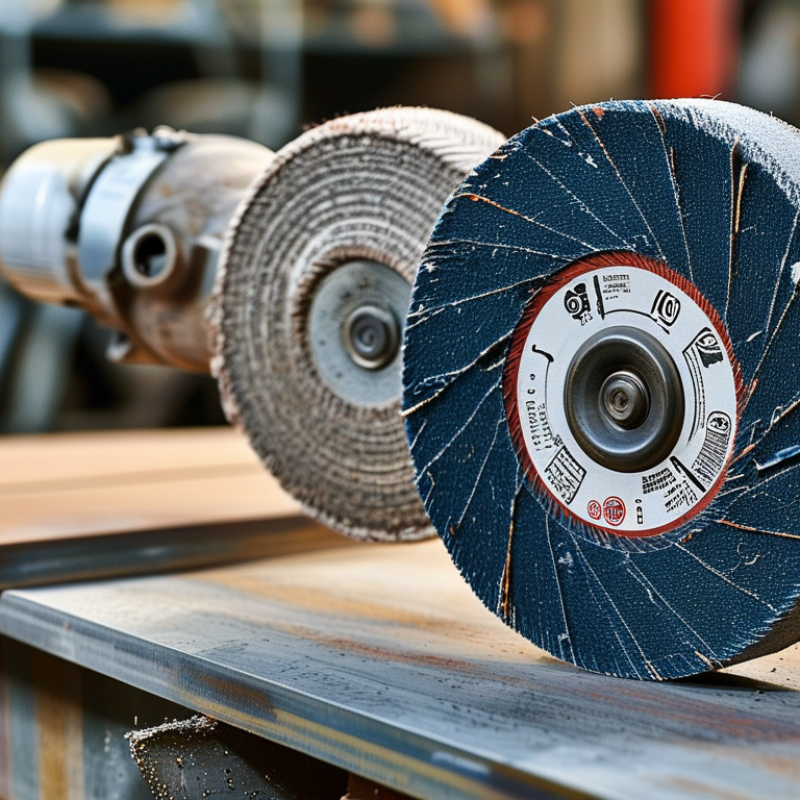
Table of Contents [Hide]
Abrasive Flap Disc Fundamentals: Grain Types, Grit Sizes, and EN 13743
Abrasive flap discs combine overlapping abrasive flaps with a flexible backing, giving controlled stock removal and surface blending. Grain choice changes the working feel. Aluminum oxide is economical for general steel. Zirconia alumina cuts harder and lasts longer under pressure. Ceramic alumina offers aggressive cutting on stainless steel, but it needs suitable pressure. Silicon carbide produces a finer cut on non-ferrous materials, though it can wear quickly.
Grit controls scratch depth. P24 to P40 suits rapid weld removal, while P60 to P80 balances grinding and blending. P120 and finer grits leave a smoother finish. FEPA’s coated-abrasive specifications define these P-grade sizes, but operators often misread grit as a complete performance guarantee. It is not. Backing stiffness, flap density, machine speed, and contact pressure also matter. Sometimes, a finer disc removes less material but creates more heat.
EN 13743 establishes safety requirements for coated abrasive products, including flap discs. It addresses marking, dimensions, mounting, and maximum operating speed. A 2024 market analysis by Grand View Research estimated the global coated abrasives market at over USD 9 billion, showing broad industrial demand. However, market growth does not prove product quality. Users should verify the disc’s EN 13743 information, rated RPM, grain type, and intended material before testing it. The practical mistake is simple: choosing by price alone. Try a small area first.