- Home
- A-Z Catalogue
- Products
- Valves
- Cetop
- Manual Directional Valves
- Proportional Valves
- Poppet Valves
- High-Speed Linear Servo Valves
- All High-Speed Linear Servo Valves
- Cetop 10 (NG32) Two Stage Type High Speed Linear Servo Valves – LSVHG-10
- Cetop 10 (NG32) Two Stage Type High Speed Linear Servo Valves – LSVHG-10 (With Fail-Safe)
- Cetop 8 (NG25) Two Stage Type High Speed Linear Servo Valves – LSVHG-06
- Cetop 8 (NG25) Two Stage Type High Speed Linear Servo Valves – LSVHG-06 (With Fail-Safe)
- Cetop 7 (NG16) Two Stage Type High Speed Linear Servo Valves – LSVHG-04
- Cetop 7 (NG16) Two Stage Type High Speed Linear Servo Valves – LSVHG-04 (With Fail-Safe)
- Cetop 5 (NG10) Direct Type High Speed Linear Servo Valves – LSVG-03
- Cetop 5 (NG10) OBE Type Direct Operated Linear Servo Valves – LSVG-03-EH
- Cetop 3 (NG6) OBE Type Direct Operated Linear Servo Valves – LSVG-01-EH
- Pumps
- Pressure control
- Flow Control Valves
- Pressure Control Valves
- All Pressure Control Valves
- Brake Valves
- Direct Relief Valve
- Low Noise Solenoid Controlled Relief Valves
- Low Noise Pilot Operated Relief Valves
- Pilot Operated Relief Valves
- Pressure reducing and relieving valves
- Pressure reducing and check valves
- Pressure control valves
- Remote Control Relief Valves
- Solenoid Controlled Relief Valves – BSG
- Solenoid Controlled Relief Valves – BST
- Unloading relief valves
- Check valves
- Environmental
- Valves
- Hydraulic Systems
- Power pack
- About Us
- Contact
- Blog

China Best Fusion Bonded Epoxy Pipe Manufacturers
Choosing among China’s best Fusion Bonded Epoxy Pipe manufacturers takes more than comparing prices or catalogues. Buyers need to understand how the pipe will perform in its actual service conditions. Soil moisture, operating temperature, transport, and installation can all affect coating integrity. A clean, carefully prepared steel surface matters. So does even coating coverage. Small defects can become costly problems later.
Corrosion engineer Dr. Pierre R. Roberge gives a useful reminder: “Corrosion is the destructive attack of a material by reaction with its environment.” That principle helps explain why Fusion Bonded Epoxy Pipe is selected for corrosion protection in demanding water, oil, gas, and industrial applications. The coating is applied as a powder and fused to heated steel, creating a continuous protective layer. But the process is not magic. Quality depends on controlled heating, surface preparation, application, and inspection.
This guide looks at manufacturers through practical evidence: production capability, coating thickness controls, testing records, material traceability, and experience with comparable projects. Ask for documented results, not only polished brochures. Check how a supplier handles holidays, adhesion checks, and packaging before shipment. A low quotation may leave important questions unanswered. No supplier should be judged by claims alone. Even a strong factory record deserves review against your project’s specifications. That extra scrutiny takes time, but it can prevent avoidable delays and repairs.
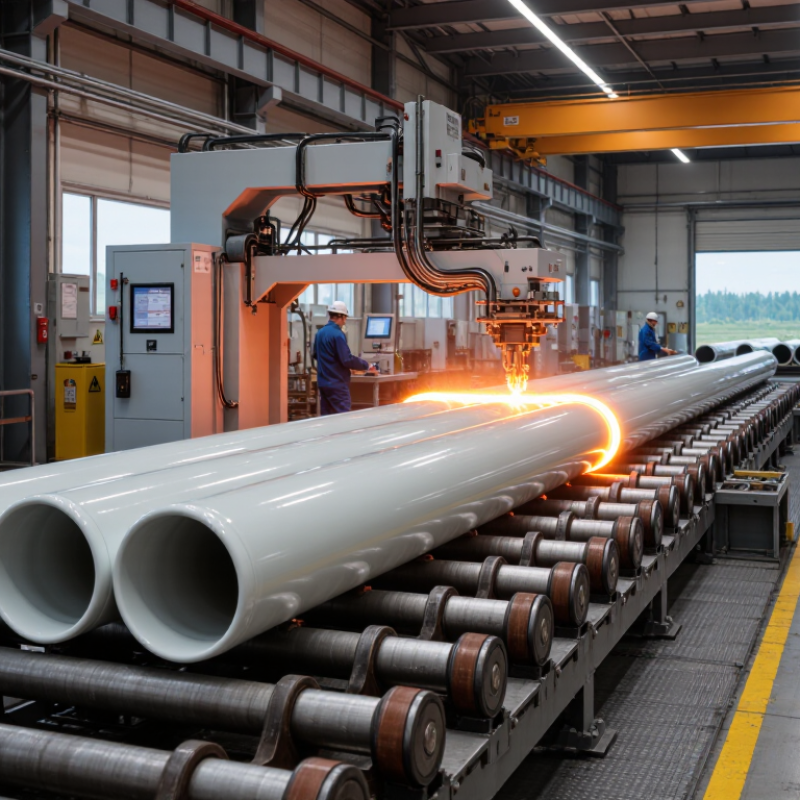
Table of Contents [Hide]
Understanding Fusion Bonded Epoxy Pipes and Their Key Properties
Fusion bonded epoxy (FBE) is a protective coating applied to prepared steel pipe. In a controlled process, epoxy powder melts and cures into a continuous layer bonded to the metal. That layer helps limit contact with moisture and corrosive substances. It also provides electrical insulation. A smooth internal coating can support steady flow, though performance depends on pipe condition and installation.
Surface preparation matters. Oil, rust, or scale can weaken adhesion, even when the finished coating looks even. Inspectors may check coating thickness and use holiday testing to find tiny gaps. Small defects matter. A coating can look flawless and still hide a missed spot. During transport, supports and lifting equipment should avoid scraping the surface; repairs may be needed after damage. FBE is not a universal answer: temperature, conveyed fluid, and service conditions affect suitability. Check the coating specification against the actual operating environment. In practice, that review is sometimes rushed, and it deserves more attention.