


- Home
- A-Z Catalogue
- Products
- Valves
- Cetop
- Manual Directional Valves
- Proportional Valves
- Poppet Valves
- High-Speed Linear Servo Valves
- All High-Speed Linear Servo Valves
- Cetop 10 (NG32) Two Stage Type High Speed Linear Servo Valves – LSVHG-10
- Cetop 10 (NG32) Two Stage Type High Speed Linear Servo Valves – LSVHG-10 (With Fail-Safe)
- Cetop 8 (NG25) Two Stage Type High Speed Linear Servo Valves – LSVHG-06
- Cetop 8 (NG25) Two Stage Type High Speed Linear Servo Valves – LSVHG-06 (With Fail-Safe)
- Cetop 7 (NG16) Two Stage Type High Speed Linear Servo Valves – LSVHG-04
- Cetop 7 (NG16) Two Stage Type High Speed Linear Servo Valves – LSVHG-04 (With Fail-Safe)
- Cetop 5 (NG10) Direct Type High Speed Linear Servo Valves – LSVG-03
- Cetop 5 (NG10) OBE Type Direct Operated Linear Servo Valves – LSVG-03-EH
- Cetop 3 (NG6) OBE Type Direct Operated Linear Servo Valves – LSVG-01-EH
- Pumps
- Pressure control
- Flow Control Valves
- Pressure Control Valves
- All Pressure Control Valves
- Brake Valves
- Direct Relief Valve
- Low Noise Solenoid Controlled Relief Valves
- Low Noise Pilot Operated Relief Valves
- Pilot Operated Relief Valves
- Pressure reducing and relieving valves
- Pressure reducing and check valves
- Pressure control valves
- Remote Control Relief Valves
- Solenoid Controlled Relief Valves – BSG
- Solenoid Controlled Relief Valves – BST
- Unloading relief valves
- Check valves
- Environmental
- Valves
- Hydraulic Systems
- Power pack
- About Us
- Contact
- Blog

China Best SPDT Micro Switch Supplier for Global Buyers
China has become a major sourcing base for precision switching components, including the spdt micro switch. Global buyers now expect more than competitive pricing. They need stable contact resistance, repeatable actuation force, sealed housings, and traceable production records.
Grand View Research reports continued growth in the global microswitch market, driven by automotive systems, appliances, industrial controls, and smart equipment. MarketsandMarkets also identifies automation and vehicle electrification as important demand factors. However, market estimates differ. That gap deserves attention. Buyers should verify specifications instead of trusting attractive forecasts.
Reliability begins with defined conditions. Dr. Michael Pecht, a recognized reliability engineering expert, states, “Reliability is the probability that a product will perform its intended function for a specified period of time under specified conditions.” This principle matters when selecting an spdt micro switch for a dusty factory, a vibrating vehicle panel, or a control cabinet with millions of switching cycles.
Experienced Chinese suppliers can support custom terminals, actuator shapes, IP-rated sealing, and automated inspection. Yet supplier capability varies widely. A polished sample proves little. Global buyers should review test methods, UL or EN documentation, RoHS compliance, batch records, and failure data. Ask for the actual operating curve. Check it twice.
The strongest sourcing decision balances electrical performance, mechanical life, delivery stability, and technical communication. Small errors can create large field costs. China remains a competitive manufacturing option, but dependable results require engineering review, sample validation, and honest supplier comparison.
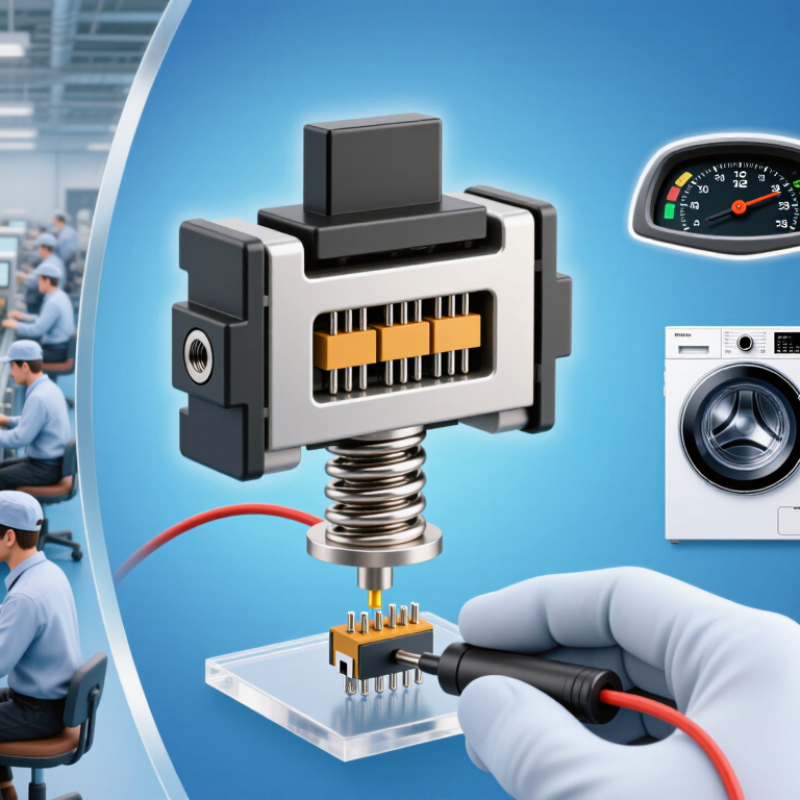
Table of Contents [Hide]
What Is an SPDT Micro Switch?
China Best SPDT Micro Switch Supplier for Global Buyers
What Is an SPDT Micro Switch?
An SPDT micro switch is a compact, snap-action device with one common terminal and two output paths. SPDT means Single Pole, Double Throw. When the actuator moves, the common contact changes from normally closed to normally open. The mechanism is small, but its timing is precise. You can hear a sharp click when the contacts transfer.
In practical equipment, an SPDT micro switch detects a door position, lever movement, or travel limit. Its contacts can control two different circuit states. For example, one path may stop a motor, while the other sends a position signal. Datasheets should show contact arrangement, operating force, travel, and electrical life. Do not judge quality by housing size alone.
Industry reports show why these components remain relevant. A 2024 market assessment from Grand View Research valued the global switches market at several billion U.S. dollars, with steady growth expected through 2030. Reports from MarketsandMarkets also identify automation and transportation equipment as important demand areas. These figures cover many switch types, not SPDT units alone. That distinction matters.
From field inspection experience, failures often begin with poor sealing, excessive actuator force, or unstable soldering. IP protection, temperature range, and load type need careful checking. A switch rated for resistance load may perform differently with an inductive motor. IEC 61058-1 provides useful safety guidance, but it does not replace application testing. One assumption can still be wrong. Testing the real load remains necessary.





