


- Home
- A-Z Catalogue
- Products
- Valves
- Cetop
- Manual Directional Valves
- Proportional Valves
- Poppet Valves
- High-Speed Linear Servo Valves
- All High-Speed Linear Servo Valves
- Cetop 10 (NG32) Two Stage Type High Speed Linear Servo Valves – LSVHG-10
- Cetop 10 (NG32) Two Stage Type High Speed Linear Servo Valves – LSVHG-10 (With Fail-Safe)
- Cetop 8 (NG25) Two Stage Type High Speed Linear Servo Valves – LSVHG-06
- Cetop 8 (NG25) Two Stage Type High Speed Linear Servo Valves – LSVHG-06 (With Fail-Safe)
- Cetop 7 (NG16) Two Stage Type High Speed Linear Servo Valves – LSVHG-04
- Cetop 7 (NG16) Two Stage Type High Speed Linear Servo Valves – LSVHG-04 (With Fail-Safe)
- Cetop 5 (NG10) Direct Type High Speed Linear Servo Valves – LSVG-03
- Cetop 5 (NG10) OBE Type Direct Operated Linear Servo Valves – LSVG-03-EH
- Cetop 3 (NG6) OBE Type Direct Operated Linear Servo Valves – LSVG-01-EH
- Pumps
- Pressure control
- Flow Control Valves
- Pressure Control Valves
- All Pressure Control Valves
- Brake Valves
- Direct Relief Valve
- Low Noise Solenoid Controlled Relief Valves
- Low Noise Pilot Operated Relief Valves
- Pilot Operated Relief Valves
- Pressure reducing and relieving valves
- Pressure reducing and check valves
- Pressure control valves
- Remote Control Relief Valves
- Solenoid Controlled Relief Valves – BSG
- Solenoid Controlled Relief Valves – BST
- Unloading relief valves
- Check valves
- Environmental
- Valves
- Hydraulic Systems
- Power pack
- About Us
- Contact
- Blog

What Is a Centering Machine Used For?
In modern manufacturing, a small alignment error can become a costly defect. A Centering Machine helps locate a workpiece’s axis or center before operations such as drilling, turning, grinding, or assembly. Depending on its design, it may use mechanical stops, probes, optical sensors, or automated measurement. The goal is practical: position each part consistently, reduce manual setup, and support repeatable machining. Think of a metal shaft held firmly while a probe checks its centerline before a cutting tool approaches.
The workforce challenge makes reliable setup increasingly important. Deloitte and The Manufacturing Institute’s 2024 report estimates that U.S. manufacturing may need 3.8 million additional workers by 2033, with 1.9 million jobs potentially unfilled. That forecast does not prove that centering machines solve labor shortages. It does underscore why manufacturers examine automation, setup time, and process consistency. A centering machine can help, but results depend on the workpiece, machine calibration, operator training, and inspection routine. It is not a cure-all. Even a precise machine can repeat a bad setup. This guide explains what centering machines are used for, how they work, and where their limits matter on the shop floor. The details matter.
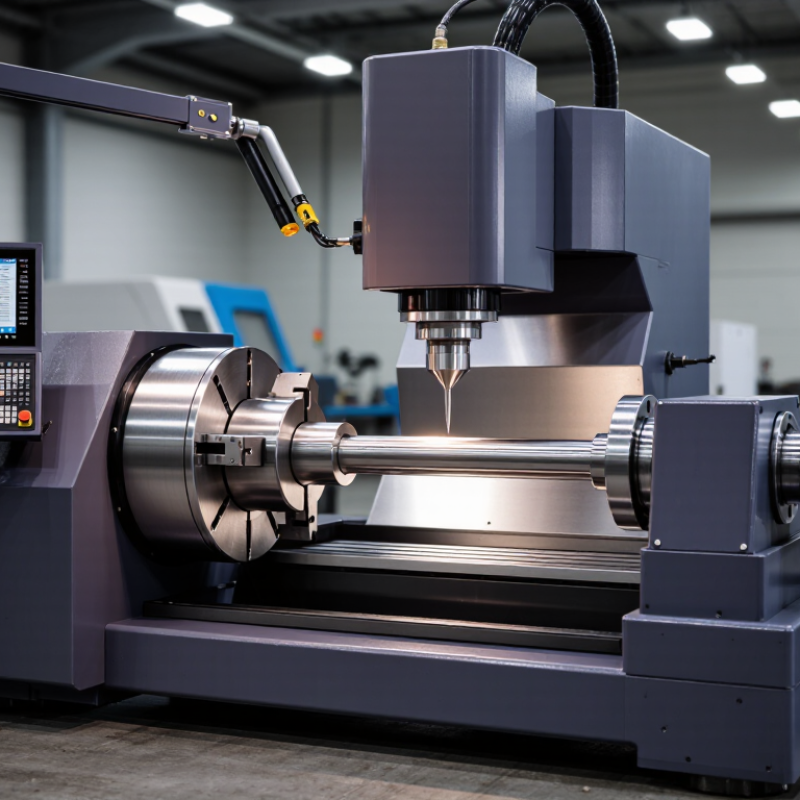
Table of Contents [Hide]
What a Centering Machine Is and How It Works
A centering machine prepares the end of a workpiece so it can be held and machined accurately. It commonly creates a small center hole in a shaft, bar, or similar part. That hole gives a lathe center a stable contact point, helping the workpiece rotate with less wobble. The machine may also face or lightly chamfer the end.
The operator secures the workpiece in a clamp, chuck, or other fixture. The cutting tool and workpiece are aligned on the same axis, then the tool advances into the end. Its shape forms the required center opening. Exact settings depend on the material, part diameter, and later machining operation. A machinist checks that the end is square and the hole sits centrally, often using a gauge or visual inspection. Small alignment errors matter.
The process is straightforward, but setup is not automatic. A loose part can shift, and a worn tool may leave a rough or uneven hole. Clean contact surfaces and a measured setup help reduce these problems. Still, a centering machine cannot correct a bent workpiece or poor stock quality. The result deserves inspection before the part moves to the next operation.