How Much Does a Carbon Fiber Production Line Cost in China?
How Much Does a Carbon fiber production line cost in China? The answer is rarely a single number. A small pilot line may require several million dollars, while a commercial PAN-based facility can demand tens or hundreds of millions. Capacity, precursor quality, furnace configuration, automation, and environmental controls change the calculation dramatically.
Market reports provide useful context. The MarketsandMarkets Carbon Fiber Market report forecasts continued growth through 2030, driven by aerospace, wind energy, hydrogen storage, and automotive applications. Research from the U.S. Department of Energy and Oak Ridge National Laboratory also identifies precursor conversion, stabilization, carbonization, and energy consumption as the main cost pressures. ORNL’s low-cost carbon fiber work targets production near conventional industrial benchmarks, but laboratory economics do not automatically transfer to a Chinese factory.
Dr. Sanjay Mazumdar, CEO of Lucintel, has described carbon fiber as “a strategic material for lightweighting and energy efficiency.” That observation matters. The cheapest line may produce material that fails tensile, modulus, or consistency requirements. A furnace may look impressive, yet unstable temperature zones can quietly ruin an entire tow batch. Carbon fiber production line cost must therefore include engineering validation, installation, commissioning, testing, utilities, labor, spare parts, and working capital.
Some published estimates appear precise. They are not always comparable. One may include only equipment; another may include the building and process integration. This article examines the real cost structure in China, including supplier selection, production capacity, hidden expenses, and the compromises buyers should question before signing a contract.
Define Production Scope: PAN-to-Fiber Lines Commonly Start at 1,000 t/y
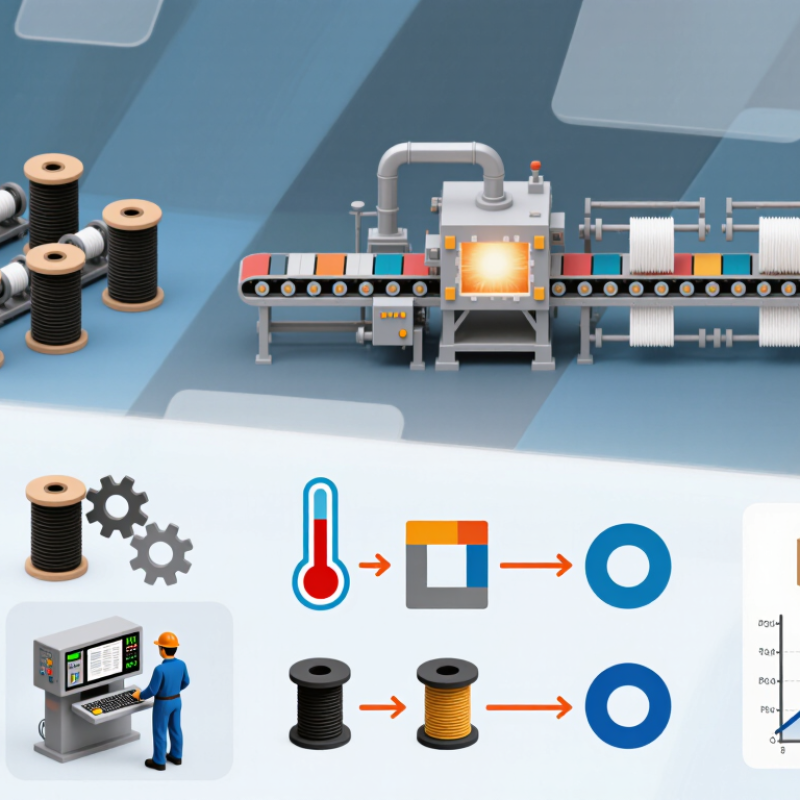
When asking how much a carbon fiber production line costs in China, define the production scope first. A PAN-to-fiber line commonly starts at 1,000 tons per year. This capacity includes precursor conversion, stabilization, carbonization, surface treatment, sizing, and winding.
A 1,000 t/y line may require tens of millions of US dollars. The final figure depends on furnace design, automation, energy systems, emissions control, and product grade. Precursor production can increase capital costs significantly. A fiber-only project may need less equipment, but it still requires stable PAN supply and strict quality control.
Factory buildings and utilities are easy to underestimate. High-temperature furnaces need reliable power, cooling water, ventilation, and fire protection. Installation, commissioning, laboratory equipment, staff training, and spare parts also affect the budget. In practical planning, request separate quotations for core equipment, civil work, and production validation. Do not trust one headline number.
A spreadsheet misses operational friction. Trial batches may consume months and materials before stable output appears. Some equipment choices look economical but create maintenance problems later. Site visits, reference checks, and process tests provide stronger evidence than sales estimates. Chinese suppliers may offer flexible engineering support, but technical specifications must be written clearly and verified independently.
Estimate CAPEX: A 1,000–3,000 t/y Line May Require RMB 100–300 Million
How Much Does a Carbon Fiber Production Line Cost in China?
A 1,000–3,000 t/y carbon fiber line in China may require RMB 100–300 million in capital expenditure. This estimate covers major process equipment, installation, utilities, environmental systems, and commissioning. It usually excludes land, financing, working capital, and large-scale precursor production. Actual costs vary sharply.
The largest budget items are oxidation ovens, carbonization furnaces, graphitization equipment, surface treatment, sizing, winding, and quality-control systems. Electricity demand is substantial. The International Energy Agency identifies industrial heat and electricity as important cost drivers in advanced-material production. A plant also needs nitrogen supply, cooling water, exhaust treatment, and fire protection. These details are easy to underestimate.
Market reports support the capacity logic, but not a universal price. Grand View Research and Lucintel both describe carbon fiber demand expanding through aerospace, wind energy, pressure vessels, and automotive applications. Their outlooks indicate stronger demand for standardized industrial-grade fiber. That does not guarantee project profitability. In practice, equipment quotes can differ by 30% or more, depending on automation, process route, product grade, and local construction costs. A preliminary budget may therefore use RMB 100,000–300,000 per annual tonne of capacity. This is only a planning range. It needs validation through vendor quotations, pilot trials, energy modeling, and a site-specific feasibility study. Mistakes happen here. A cheaper furnace can create higher yield losses later.
How Much Does a Carbon Fiber Production Line Cost in China? - Estimate CAPEX: A 1,000–3,000 t/y Line May Require RMB 100–300 Million | CAPEX Category | 1,000 t/y Line | 2,000 t/y Line | 3,000 t/y Line | Typical Scope Included |
| Precursor preparation and feed systems | RMB 18 million | RMB 32 million | RMB 48 million | Feed preparation, storage, metering, filtration and transfer equipment |
| Stabilization ovens and oxidation section | RMB 22 million | RMB 42 million | RMB 66 million | Multi-zone oxidation ovens, temperature control, tension control and exhaust handling |
| Carbonization furnaces and inert-gas systems | RMB 28 million | RMB 54 million | RMB 84 million | Low- and high-temperature furnaces, nitrogen circulation, cooling and off-gas treatment |
| Surface treatment and sizing | RMB 8 million | RMB 15 million | RMB 24 million | Electrochemical treatment, washing, drying, sizing and process-water circulation |
| Winding, packaging and material handling | RMB 6 million | RMB 10 million | RMB 16 million | Take-up winders, spool handling, inspection stations and finished-product packaging |
| Utilities and environmental systems | RMB 8 million | RMB 16 million | RMB 25 million | Electrical distribution, cooling water, compressed air, nitrogen supply, ventilation and emission control |
| Laboratory and quality-control equipment | RMB 3 million | RMB 6 million | RMB 9 million | Tensile testing, filament inspection, sizing analysis, weighing and routine process testing |
| Engineering, installation and commissioning | RMB 7 million | RMB 15 million | RMB 28 million | Detailed engineering, equipment installation, controls integration, start-up and operator training |
| Estimated equipment and project CAPEX | RMB 100 million
≈ USD 13.9 million | RMB 190 million
≈ USD 26.4 million | RMB 300 million
≈ USD 41.7 million | Indicative installed-project estimate for a new PAN-based carbon-fiber line |
| Nominal annual output | 1,000 tonnes/year | 2,000 tonnes/year | 3,000 tonnes/year | Nominal nameplate capacity; actual saleable output depends on operating rate and product grade |
| CAPEX per annual tonne of capacity | RMB 100,000/t/y | RMB 95,000/t/y | RMB 100,000/t/y | Calculated from estimated CAPEX divided by nominal annual capacity |
| Basis of estimate: Indicative 2026 planning values for a new PAN-based carbon-fiber production line in China. USD conversions use an illustrative exchange rate of RMB 7.20 per USD. Estimates exclude land purchase, buildings or civil works, financing costs, taxes and duties, working capital, precursor inventory, product-development costs and major site infrastructure upgrades. Final quotations vary with tow size, target tensile properties, automation level, furnace configuration, environmental requirements and local construction conditions. |
Map Core Equipment: Stabilization Operates at Approximately 200–300°C
How Much Does a Carbon Fiber Production Line Cost in China?
The stabilization section deserves careful budgeting. PAN precursor fibers usually pass through oxidation ovens at approximately 200–300°C. This controlled heating changes the fiber’s chemical structure before carbonization. Uneven temperature can cause shrinkage, weak filaments, or surface defects.
A Chinese production line may cost several million to tens of millions of US dollars. Capacity, oven length, atmosphere control, exhaust treatment, and automation strongly affect the investment. Oak Ridge National Laboratory process-cost studies identify stabilization as a major energy and equipment burden. A 2024 report from Lucintel also notes that energy efficiency remains important for carbon fiber manufacturers facing rising production costs. These figures are useful, but they are not universal. A cost model can look precise and still miss local installation expenses.
Tips: Inspect the stabilization oven’s temperature uniformity, tension control, and exhaust design. Ask for measured energy use per kilogram, not only rated power. The useful range is often narrower than sales documents suggest. Include spare heating elements and sensor calibration in the budget. Small omissions can delay commissioning. A practical factory audit should also review residence time, fiber throughput, and maintenance access before equipment selection.
Compare Chinese Suppliers: Verify Yield, Energy Use and 5–10-Year Payback
A carbon fiber production line in China can cost from several hundred thousand dollars for limited processing equipment to several million for a complete, integrated plant. The final price depends on tow size, annual capacity, precursor quality, furnace length, and automation. A serious quotation should separate equipment, installation, commissioning, spare parts, and operator training.
Supplier comparison must begin with verified yield, not brochure capacity. Ask for pilot data using your actual precursor and target grade. Measure precursor-to-carbon-fiber conversion, line speed, tensile strength, and rejected material. A factory acceptance test should record stable production for several shifts. Inspect temperature uniformity inside oxidation and carbonization furnaces. Small deviations can create expensive weak fiber.
Energy use deserves equal attention. Request measured kilowatt-hours per kilogram at a stated production rate. Include natural gas, cooling water, compressed air, labor, maintenance, and furnace replacement costs. I would also audit two operating plants, if possible. One spreadsheet is not enough. Real conditions are messier. Utilization may reach only 70% during ramp-up, and early yield losses can be uncomfortable. A 5–10-year payback model should test conservative selling prices, downtime, financing, and maintenance reserves. If savings depend on perfect output every month, the estimate is probably too optimistic. A reliable supplier will disclose assumptions, provide traceable test records, and accept performance penalties when agreed targets are missed.








