


- Home
- A-Z Catalogue
- Products
- Valves
- Cetop
- Manual Directional Valves
- Proportional Valves
- Poppet Valves
- High-Speed Linear Servo Valves
- All High-Speed Linear Servo Valves
- Cetop 10 (NG32) Two Stage Type High Speed Linear Servo Valves – LSVHG-10
- Cetop 10 (NG32) Two Stage Type High Speed Linear Servo Valves – LSVHG-10 (With Fail-Safe)
- Cetop 8 (NG25) Two Stage Type High Speed Linear Servo Valves – LSVHG-06
- Cetop 8 (NG25) Two Stage Type High Speed Linear Servo Valves – LSVHG-06 (With Fail-Safe)
- Cetop 7 (NG16) Two Stage Type High Speed Linear Servo Valves – LSVHG-04
- Cetop 7 (NG16) Two Stage Type High Speed Linear Servo Valves – LSVHG-04 (With Fail-Safe)
- Cetop 5 (NG10) Direct Type High Speed Linear Servo Valves – LSVG-03
- Cetop 5 (NG10) OBE Type Direct Operated Linear Servo Valves – LSVG-03-EH
- Cetop 3 (NG6) OBE Type Direct Operated Linear Servo Valves – LSVG-01-EH
- Pumps
- Pressure control
- Flow Control Valves
- Pressure Control Valves
- All Pressure Control Valves
- Brake Valves
- Direct Relief Valve
- Low Noise Solenoid Controlled Relief Valves
- Low Noise Pilot Operated Relief Valves
- Pilot Operated Relief Valves
- Pressure reducing and relieving valves
- Pressure reducing and check valves
- Pressure control valves
- Remote Control Relief Valves
- Solenoid Controlled Relief Valves – BSG
- Solenoid Controlled Relief Valves – BST
- Unloading relief valves
- Check valves
- Environmental
- Valves
- Hydraulic Systems
- Power pack
- About Us
- Contact
- Blog

10 Tips for Buying PE Gas Pipes for Global Projects?
Global gas projects depend on more than a competitive pipe price. PE Gas Pipes must suit the network design, operating conditions, and installation method. A product that performs well on paper may not fit local requirements. Check the applicable standards and approval documents before comparing suppliers. Confirm pressure ratings, outside diameter, wall thickness, and material grade against the project specification. Small mismatches can delay delivery or create costly site changes.
Look beyond the quotation. Ask for traceable production records, test documentation, and clear marking on each pipe or bundle. Review the manufacturer’s quality controls, delivery capacity, packaging, and experience with similar projects. These details matter when pipes travel long distances, wait at a port, or arrive in difficult weather. Also consider how joints will be made and whether compatible fittings and trained installation support are available. Keep the project engineer and procurement team involved; neither should rely on a brochure alone.
Be realistic about risk. A lower price may not include inspection, freight protection, or replacement terms. And a polished certificate is not a substitute for checking its scope and validity. Ask direct questions, compare like-for-like specifications, and document the answers. Some project details will remain uncertain until the route and site conditions are confirmed. That is worth admitting. The following ten tips offer a practical framework for evaluating suppliers, verifying product information, and making a more informed buying decision for global projects.
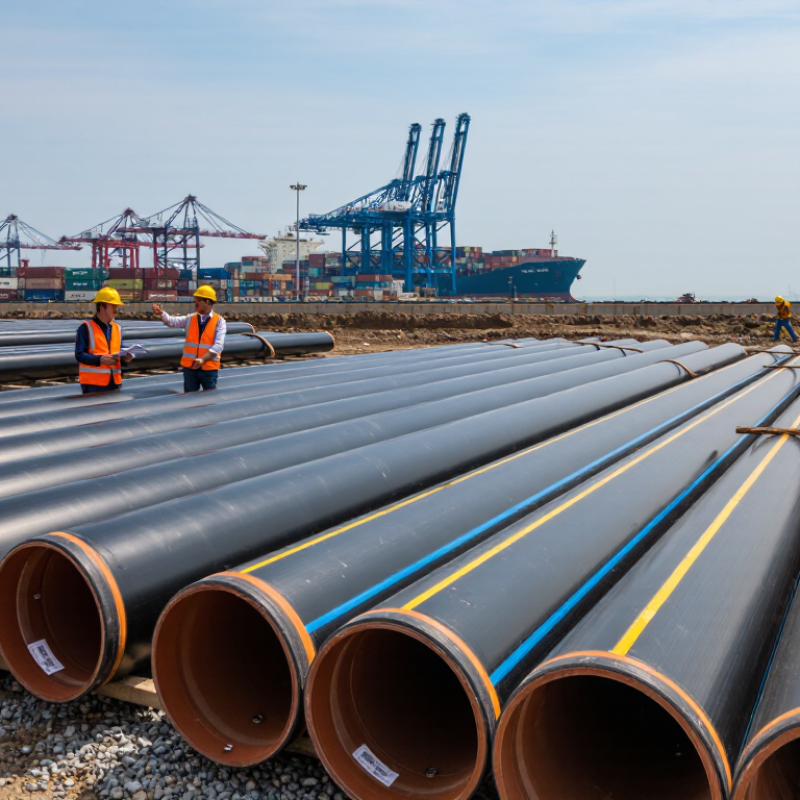
Table of Contents [Hide]
Define PE Gas Pipe Grades Using ISO 12162 MRS Classes: PE80 at 8 MPa, PE100 at 10 MPa
PE gas-pipe grades are tied to long-term strength, not simply to a higher number on the pipe. ISO 12162 classifies PE80 at an MRS of 8 MPa and PE100 at 10 MPa. MRS is a material classification value, not the pipe’s allowable operating pressure. ISO 9080 sets out the regression method used to assess long-term hydrostatic strength from pressure-test data. That distinction matters.
Key takeaway
PE grade alone does not determine a pipe’s pressure rating. Confirm the dimensions, design conditions, and applicable requirements.
For a global project, ask suppliers to document the resin grade and the pipe’s SDR, wall thickness, and intended gas service. Check the paperwork. A PE100 pipe does not automatically deliver the same pressure rating at every diameter: SDR, design coefficient, operating temperature, and the applicable installation rules all affect the design. Compare the stated rating against the project specification, rather than choosing by grade alone.
Project checks
- Verify the specified SDR and delivered pipe dimensions.
- Confirm the stated pressure rating against the project specification.
- Check that certificates identify the tested material and pipe dimensions.
A small mismatch between the specified SDR and delivered pipe can create costly delays on site. I would also verify that certificates identify the tested material and pipe dimensions; paperwork can look complete while leaving those details unclear.
Sources: ISO 12162, Thermoplastics materials for pipes and fittings for pressure applications; ISO 9080, determination of long-term hydrostatic strength.





