


- Home
- A-Z Catalogue
- Products
- Valves
- Cetop
- Manual Directional Valves
- Proportional Valves
- Poppet Valves
- High-Speed Linear Servo Valves
- All High-Speed Linear Servo Valves
- Cetop 10 (NG32) Two Stage Type High Speed Linear Servo Valves – LSVHG-10
- Cetop 10 (NG32) Two Stage Type High Speed Linear Servo Valves – LSVHG-10 (With Fail-Safe)
- Cetop 8 (NG25) Two Stage Type High Speed Linear Servo Valves – LSVHG-06
- Cetop 8 (NG25) Two Stage Type High Speed Linear Servo Valves – LSVHG-06 (With Fail-Safe)
- Cetop 7 (NG16) Two Stage Type High Speed Linear Servo Valves – LSVHG-04
- Cetop 7 (NG16) Two Stage Type High Speed Linear Servo Valves – LSVHG-04 (With Fail-Safe)
- Cetop 5 (NG10) Direct Type High Speed Linear Servo Valves – LSVG-03
- Cetop 5 (NG10) OBE Type Direct Operated Linear Servo Valves – LSVG-03-EH
- Cetop 3 (NG6) OBE Type Direct Operated Linear Servo Valves – LSVG-01-EH
- Pumps
- Pressure control
- Flow Control Valves
- Pressure Control Valves
- All Pressure Control Valves
- Brake Valves
- Direct Relief Valve
- Low Noise Solenoid Controlled Relief Valves
- Low Noise Pilot Operated Relief Valves
- Pilot Operated Relief Valves
- Pressure reducing and relieving valves
- Pressure reducing and check valves
- Pressure control valves
- Remote Control Relief Valves
- Solenoid Controlled Relief Valves – BSG
- Solenoid Controlled Relief Valves – BST
- Unloading relief valves
- Check valves
- Environmental
- Valves
- Hydraulic Systems
- Power pack
- About Us
- Contact
- Blog

How to Buy Eco Friendly Tissue Paper in 2026?
Buying Eco Friendly Tissue Paper in 2026 takes more than choosing a green-colored package. Buyers need to compare fiber sources, recycled content, certifications, packaging, and everyday performance. A soft sheet that tears when wet may lead to greater use. A product’s sustainability claims also deserve a closer look.
The U.S. Environmental Protection Agency’s Advancing Sustainable Materials Management report recorded a 68.2 percent recycling rate for paper and paperboard in 2018. That figure covers a broad material category, not tissue alone, so it should not be mistaken for a tissue-paper recycling rate. Still, it highlights why fiber sourcing and end-of-life claims matter. Forest certification can help buyers check sourcing, while clear recycled-content disclosures make comparisons more useful.
Sustainable-design expert William McDonough offers a useful reminder: “Being less bad is not being good.” For tissue buyers, that means weighing the full product, not one appealing label. Look closer. Check whether the certification applies to the product or only its packaging. Compare sheet size, ply, strength, and the number of sheets per roll. Unscented options may suit households seeking fewer added ingredients, but individual needs differ. Packaging can also vary, from plastic wrap to paper-based alternatives, and neither choice tells the whole story by itself.
There is no perfect option. This guide explains how to assess Eco Friendly Tissue Paper with practical checks, credible documentation, and realistic expectations. Some trade-offs remain. A careful comparison can still make the next purchase more informed.
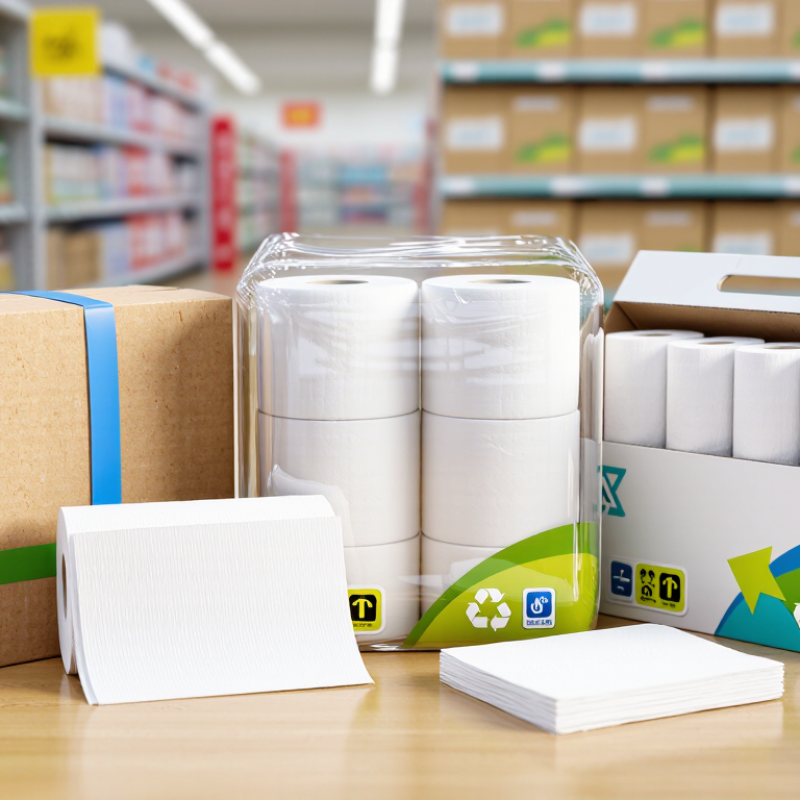
Table of Contents [Hide]
Define What Makes Tissue Paper Eco-Friendly in 2026
In 2026, eco-friendly tissue paper should be judged by evidence, not a green leaf on its wrapper. Check whether it uses post-consumer recycled fiber or responsibly sourced virgin pulp with credible forest certification. Ask for the recycled-content percentage, fiber origin, and product-level environmental data. “Natural” alone proves little. The U.S. EPA’s 2018 Advancing Sustainable Materials Management report found that 68.2% of paper and paperboard was recycled. That figure covers the wider category, not tissue specifically. That distinction matters.
A useful comparison also considers softness, strength, sheet count, and packaging. A weak sheet may lead people to use more, though the trade-off depends on the product and household. Check whether environmental claims cover manufacturing energy, water use, emissions, and packaging—not just the pulp. Tissue is often unsuitable for recycling after use, so recycled content and disposal claims should not be confused. No option is impact-free. Suppliers’ data can be incomplete, and a certification does not reveal every step in production. Look for specific, verifiable figures, and treat broad “eco” claims with caution.
How to Buy Eco Friendly Tissue Paper in 2026? - Define What Makes Tissue Paper Eco-Friendly in 2026
| What to Evaluate | What to Look For | Evidence to Check | Why It Matters |
|---|---|---|---|
| Fiber source | Clearly identified recycled fiber or responsibly sourced virgin fiber. A product may use a combination of both. | Packaging or product information that specifies the fiber type and, where stated, the recycled-content percentage. | Fiber sourcing is a major part of a paper product’s environmental profile. Clear disclosure makes comparisons more meaningful. |
| Recycled content | Look for a stated percentage and whether the content is post-consumer recycled fiber, pre-consumer recycled fiber, or a mix. | Product specifications or a recognized ecolabel’s published criteria. “Recycled” alone does not disclose the amount or type of recycled fiber. | Post-consumer fiber has already been used by consumers; recycled-content definitions and reporting rules can vary, so check the specific claim. |
| Responsible forest sourcing | If virgin fiber is used, look for credible chain-of-custody certification and a clear explanation of the claim. | Check the certification label and its claim category, such as FSC 100%, FSC Recycled, or FSC Mix, using the FSC label guide. | Certification can help trace fiber through a supply chain. Different label categories represent different material claims and should not be treated as identical. |
| Independent ecolabels | Prefer labels with public criteria that assess relevant environmental impacts and product performance. | Verify the label and applicable product category in the program’s official directory. Examples include the EU Ecolabel and Green Seal standards. | Independent criteria can cover more than a single marketing claim. Requirements depend on the label, product category, and current standard version. |
| Environmental claims | Choose specific, qualified claims rather than broad phrases such as “green,” “natural,” or “eco-friendly” without supporting details. | Look for the basis of the claim, its scope, and supporting documentation. For example, distinguish “made with recycled fiber” from “100% recycled fiber.” | Specific claims are easier to verify and less likely to imply environmental benefits that the product has not demonstrated. |
| Product performance | Check softness, absorbency, strength, sheet size, and suitability for the intended use. | Compare product specifications and, where available, independent ecolabel requirements for fitness for use. | A product that performs adequately may reduce the need to use extra sheets. Environmental attributes should be considered alongside practical performance. |
| Bleaching and processing claims | Look for precise descriptions of processing rather than assuming that “unbleached” or “chlorine-free” alone proves a product is environmentally preferable. | Check the manufacturer’s technical information or the requirements of a recognized ecolabel. | Processing claims describe only part of a product’s impact; fiber sourcing, energy, water, chemicals, and product performance also matter. |
| Packaging | Check whether packaging uses recycled material and whether it is accepted for recycling in your local area. | Read the packaging material and disposal instructions. Confirm local recycling rules rather than relying only on a general recycling symbol. | Packaging recyclability depends on its material, format, and local collection facilities. |
| Flushability and disposal | Follow the product’s disposal directions and local wastewater guidance. Do not assume that “biodegradable” means safe to flush. | Check the product instructions and local utility guidance. Dispose of facial tissues and other products in the bin unless local guidance says otherwise. | Products that do not break apart appropriately can contribute to plumbing or wastewater-system problems. |
| Compostability | Do not treat tissue as compostable solely because it is made from paper. Check for a relevant certification and local acceptance. | Confirm the certification applies to the product and that a local composting program accepts it. | Composting conditions and accepted materials vary. Tissue used with chemicals, oils, or other contaminants may not be suitable for composting. |
| Overall buying decision | Compare verified fiber information, credible certification, packaging, and performance together. | Use product-level documentation and current official certification criteria; avoid relying on a single logo or unsubstantiated claim. | There is no single attribute that establishes the full environmental impact of every tissue product. |
Certification requirements and local recycling or composting rules can change. Check current official criteria and local disposal guidance when purchasing.





