


- Home
- A-Z Catalogue
- Products
- Valves
- Cetop
- Manual Directional Valves
- Proportional Valves
- Poppet Valves
- High-Speed Linear Servo Valves
- All High-Speed Linear Servo Valves
- Cetop 10 (NG32) Two Stage Type High Speed Linear Servo Valves – LSVHG-10
- Cetop 10 (NG32) Two Stage Type High Speed Linear Servo Valves – LSVHG-10 (With Fail-Safe)
- Cetop 8 (NG25) Two Stage Type High Speed Linear Servo Valves – LSVHG-06
- Cetop 8 (NG25) Two Stage Type High Speed Linear Servo Valves – LSVHG-06 (With Fail-Safe)
- Cetop 7 (NG16) Two Stage Type High Speed Linear Servo Valves – LSVHG-04
- Cetop 7 (NG16) Two Stage Type High Speed Linear Servo Valves – LSVHG-04 (With Fail-Safe)
- Cetop 5 (NG10) Direct Type High Speed Linear Servo Valves – LSVG-03
- Cetop 5 (NG10) OBE Type Direct Operated Linear Servo Valves – LSVG-03-EH
- Cetop 3 (NG6) OBE Type Direct Operated Linear Servo Valves – LSVG-01-EH
- Pumps
- Pressure control
- Flow Control Valves
- Pressure Control Valves
- All Pressure Control Valves
- Brake Valves
- Direct Relief Valve
- Low Noise Solenoid Controlled Relief Valves
- Low Noise Pilot Operated Relief Valves
- Pilot Operated Relief Valves
- Pressure reducing and relieving valves
- Pressure reducing and check valves
- Pressure control valves
- Remote Control Relief Valves
- Solenoid Controlled Relief Valves – BSG
- Solenoid Controlled Relief Valves – BST
- Unloading relief valves
- Check valves
- Environmental
- Valves
- Hydraulic Systems
- Power pack
- About Us
- Contact
- Blog

10 Best Wire Crimping Tools for Every Application
A reliable crimp starts with the right match between the tool, wire, and terminal. This guide compares 10 Wire Crimping Tool options for automotive repairs, electrical work, and common workshop projects. The best choice depends on more than price or handle comfort. Jaw shape, supported wire gauges, terminal compatibility, and crimping consistency all matter. Small details matter.
A ratcheting model can help apply repeatable pressure, while a compact hand tool may suit occasional repairs in tight spaces. For higher-volume work, adjustable settings and replaceable dies can make daily use more practical. Check the manufacturer’s specifications before pairing any tool with a connector; tools that look similar may produce very different crimps. A clean, secure connection should hold firmly without cutting or deforming the conductor. A quick visual check helps, but it cannot replace the correct tool and terminal combination.
This list considers control, durability, ease of use, and the applications each tool is designed to serve. It also recognizes a limitation: no single crimper is ideal for every wire size or connector style. Some tools feel sturdy yet require more hand strength than expected. Others are convenient but less versatile. Those trade-offs deserve attention, not marketing claims. Use the comparisons to narrow your options, then confirm fit and operating instructions for your specific project. A careful match can save rework and support dependable connections.
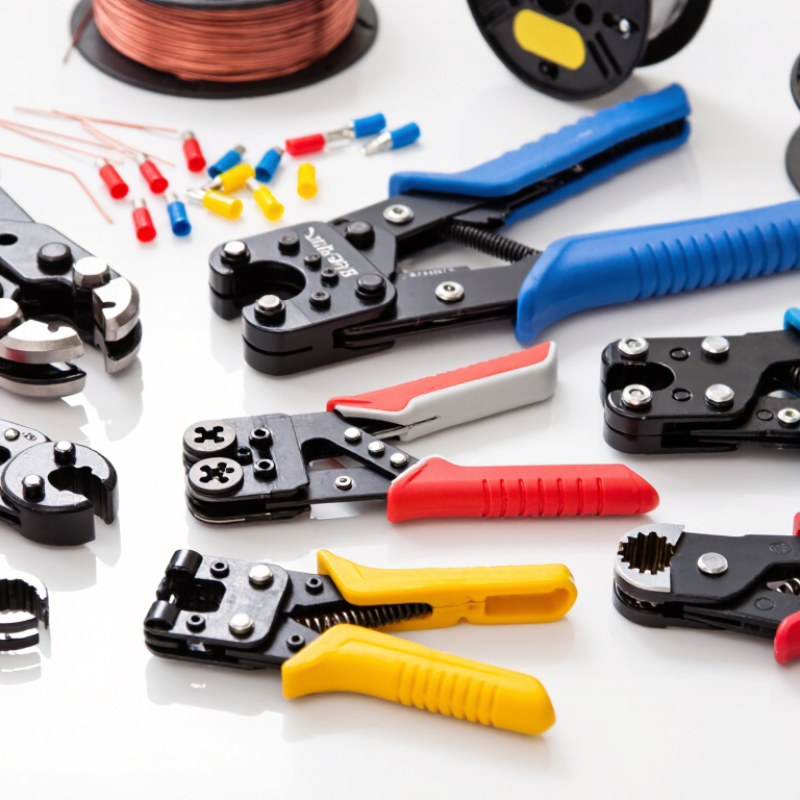
Table of Contents [Hide]
How Wire Crimping Tools Form Reliable Electrical Connections
10 Best Wire Crimping Tools for Every Application
How Wire Crimping Tools Form Reliable Electrical Connections
A crimped connection works when the tool compresses the terminal barrel evenly around the conductor. The strands should sit fully inside the barrel, without being cut or folded back. Correct die size matters. Too little compression can leave a loose joint; too much can damage strands or deform the terminal. Small details matter.
In practical assembly, strip length, wire gauge, terminal size, and tool condition all affect the result. A ratcheting tool helps complete a full crimp cycle, but it cannot correct a mismatched die. After crimping, inspect the barrel for cracks or exposed strands, then perform the pull check specified for the application. IPC/WHMA-A-620 provides workmanship and acceptance criteria for cable and wire-harness assemblies. A clean-looking crimp still deserves inspection.
NFPA’s Home Electrical Fires report estimated 46,700 U.S. home structure fires annually involving electrical failure or malfunction during 2015–2019. The report does not isolate crimp failures, so that figure should not be read as a crimp-specific risk. It does underline why dependable electrical connections matter. The best tool is not simply the strongest one; it is the one matched to the terminal and wire, and maintained well enough to produce repeatable compression. Even experienced users can rush that check.





