


- Home
- A-Z Catalogue
- Products
- Valves
- Cetop
- Manual Directional Valves
- Proportional Valves
- Poppet Valves
- High-Speed Linear Servo Valves
- All High-Speed Linear Servo Valves
- Cetop 10 (NG32) Two Stage Type High Speed Linear Servo Valves – LSVHG-10
- Cetop 10 (NG32) Two Stage Type High Speed Linear Servo Valves – LSVHG-10 (With Fail-Safe)
- Cetop 8 (NG25) Two Stage Type High Speed Linear Servo Valves – LSVHG-06
- Cetop 8 (NG25) Two Stage Type High Speed Linear Servo Valves – LSVHG-06 (With Fail-Safe)
- Cetop 7 (NG16) Two Stage Type High Speed Linear Servo Valves – LSVHG-04
- Cetop 7 (NG16) Two Stage Type High Speed Linear Servo Valves – LSVHG-04 (With Fail-Safe)
- Cetop 5 (NG10) Direct Type High Speed Linear Servo Valves – LSVG-03
- Cetop 5 (NG10) OBE Type Direct Operated Linear Servo Valves – LSVG-03-EH
- Cetop 3 (NG6) OBE Type Direct Operated Linear Servo Valves – LSVG-01-EH
- Pumps
- Pressure control
- Flow Control Valves
- Pressure Control Valves
- All Pressure Control Valves
- Brake Valves
- Direct Relief Valve
- Low Noise Solenoid Controlled Relief Valves
- Low Noise Pilot Operated Relief Valves
- Pilot Operated Relief Valves
- Pressure reducing and relieving valves
- Pressure reducing and check valves
- Pressure control valves
- Remote Control Relief Valves
- Solenoid Controlled Relief Valves – BSG
- Solenoid Controlled Relief Valves – BST
- Unloading relief valves
- Check valves
- Environmental
- Valves
- Hydraulic Systems
- Power pack
- About Us
- Contact
- Blog

10 Best Thermocouple Modules for Global Buyers
Choosing a Thermocouple Module is not just a matter of matching a sensor plug to a controller. Buyers also need to consider thermocouple type, channel count, measurement range, and the conditions around the installation. A module beside a hot furnace may face electrical noise, vibration, and limited space. In a packaging line, quick response and straightforward wiring may matter more. Small details matter.
This guide introduces ten options for global buyers and explains the specifications worth comparing. Look for clear support for thermocouple types such as K, J, and T, along with cold-junction compensation and stated accuracy. Check whether inputs are isolated, which communication interfaces are available, and how the module connects to your PLC or data-acquisition system. A low purchase price can lose its appeal if replacement terminals are difficult to source or documentation is unclear. That matters.
No single model fits every plant. Product specifications, regional availability, and technical support can change, so verify current details with the manufacturer or distributor before ordering. Also compare operating-temperature limits and installation requirements against the actual control cabinet, not an idealized setup. The list is a starting point, not a substitute for engineering review. Some comparisons may still leave questions; that is a useful signal to request sample data, wiring guidance, or clarification before committing.
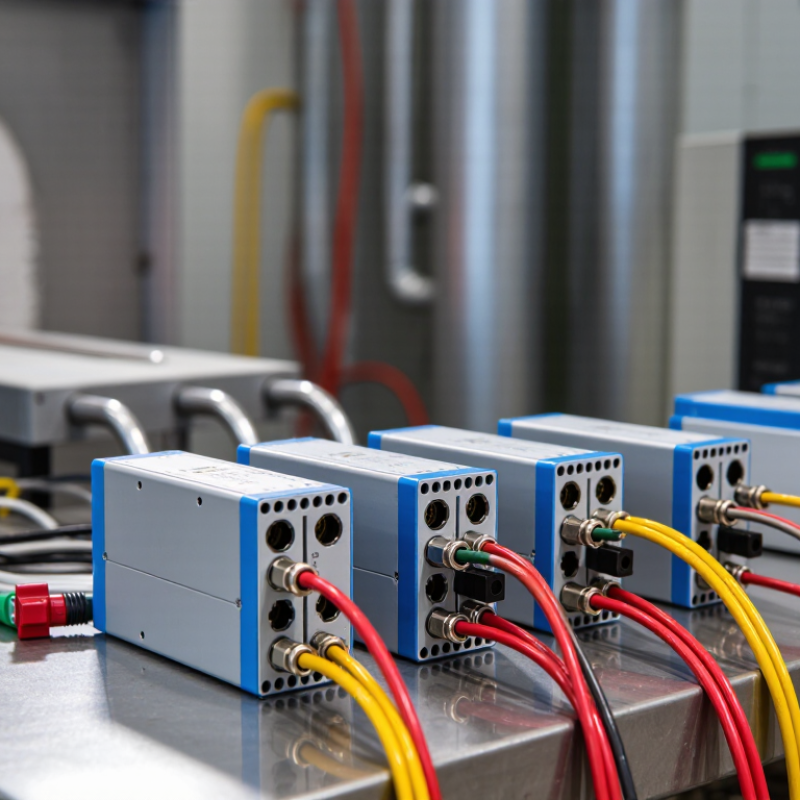
Table of Contents [Hide]
What Thermocouple Modules Measure and How They Work
Thermocouple modules convert a tiny voltage into a temperature reading. At the sensor junction, two unlike metals generate voltage when their junctions experience different temperatures. The module measures this signal, compensates for terminal temperature, then applies a conversion curve. It does not directly sense heat. A loose terminal or electrical noise can shift readings, so installation matters.
NIST Monograph 175, Thermocouple Reference Tables Based on ITS-90, provides Type K reference functions from −270°C to 1,372°C. This range is not a promise of system accuracy. Sensor-wire tolerance, cold-junction compensation, resolution, and calibration all affect the final value. A module beside a hot furnace may report differently from one tested on a stable calibration block. The numbers can look precise. They may still be wrong.
Tips: Match the module input to the thermocouple type. Keep sensor leads away from motor cables, and use suitable extension wire. Check cold-junction conditions during commissioning. Small details matter. Recheck the complete measurement chain periodically; a sensor alone cannot verify module accuracy. One overlooked connection can undo careful setup.





