


- Home
- A-Z Catalogue
- Products
- Valves
- Cetop
- Manual Directional Valves
- Proportional Valves
- Poppet Valves
- High-Speed Linear Servo Valves
- All High-Speed Linear Servo Valves
- Cetop 10 (NG32) Two Stage Type High Speed Linear Servo Valves – LSVHG-10
- Cetop 10 (NG32) Two Stage Type High Speed Linear Servo Valves – LSVHG-10 (With Fail-Safe)
- Cetop 8 (NG25) Two Stage Type High Speed Linear Servo Valves – LSVHG-06
- Cetop 8 (NG25) Two Stage Type High Speed Linear Servo Valves – LSVHG-06 (With Fail-Safe)
- Cetop 7 (NG16) Two Stage Type High Speed Linear Servo Valves – LSVHG-04
- Cetop 7 (NG16) Two Stage Type High Speed Linear Servo Valves – LSVHG-04 (With Fail-Safe)
- Cetop 5 (NG10) Direct Type High Speed Linear Servo Valves – LSVG-03
- Cetop 5 (NG10) OBE Type Direct Operated Linear Servo Valves – LSVG-03-EH
- Cetop 3 (NG6) OBE Type Direct Operated Linear Servo Valves – LSVG-01-EH
- Pumps
- Pressure control
- Flow Control Valves
- Pressure Control Valves
- All Pressure Control Valves
- Brake Valves
- Direct Relief Valve
- Low Noise Solenoid Controlled Relief Valves
- Low Noise Pilot Operated Relief Valves
- Pilot Operated Relief Valves
- Pressure reducing and relieving valves
- Pressure reducing and check valves
- Pressure control valves
- Remote Control Relief Valves
- Solenoid Controlled Relief Valves – BSG
- Solenoid Controlled Relief Valves – BST
- Unloading relief valves
- Check valves
- Environmental
- Valves
- Hydraulic Systems
- Power pack
- About Us
- Contact
- Blog

Which China Switch Test Manufacturers Are Best?
Choosing the best China Switch Test manufacturer is not a simple ranking exercise. The right partner depends on the switch type, test volume, required accuracy, and production environment. Electrical engineer and measurement pioneer Lord Kelvin offered a useful principle: “When you can measure what you are speaking about, and express it in numbers, you know something about it.” For buyers, that means looking beyond a product photo or a broad accuracy claim.
A practical comparison should examine test repeatability, measurement range, fixture design, software records, calibration support, and the manufacturer’s ability to tailor a system. Ask for sample reports and confirm the stated tolerances against your own requirements. If possible, observe a demonstration using representative switches, cables, and operating conditions. Details matter. A polished brochure can still leave one important gap: how the machine performs during a full shift, not just a short demonstration. That deserves scrutiny.
This guide considers how to assess China-based suppliers through technical capability, production consistency, communication, and after-sales support. It also separates verifiable evidence from claims that need further checking. No single supplier is best for every buyer. A compact bench tester may suit a small laboratory, while a high-throughput line may need automation and traceable results. The shortlist should match the application, budget, and service expectations. Treat ratings as a starting point, not a substitute for sample testing, reference checks, and clear acceptance criteria. A little uncertainty remains until the equipment proves itself on your products.
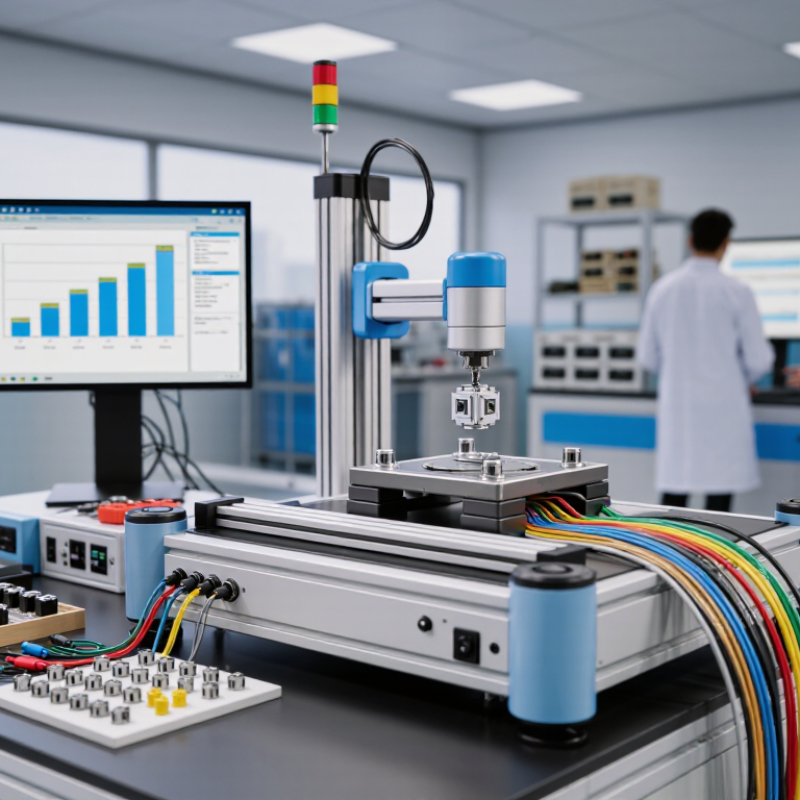
Table of Contents [Hide]
Define China Switch-Test Manufacturers by Equipment and Service Scope
A China switch-test manufacturer is best defined by the equipment it can build and the measurements it can verify. For a low-voltage switch, useful systems may test operating force, contact resistance, insulation, electrical endurance, and mechanical life. Look for adjustable fixtures that hold samples securely and repeat each switching cycle at a controlled speed. A clear test report should identify the method, measured values, and any failed cycles.
Service scope matters as much as the machine. Ask whether the supplier can adapt fixtures, install equipment, train operators, and provide calibration records, spare parts, and troubleshooting. Details matter. Request a demonstration using your switch sample, then compare its results with your own acceptance criteria. A supplier may sell capable equipment but offer limited support after delivery; that distinction is easy to miss. I would not assume one manufacturer covers every test. Some limits only become clear during setup, so confirm them in writing before purchase.





