


- Home
- A-Z Catalogue
- Products
- Valves
- Cetop
- Manual Directional Valves
- Proportional Valves
- Poppet Valves
- High-Speed Linear Servo Valves
- All High-Speed Linear Servo Valves
- Cetop 10 (NG32) Two Stage Type High Speed Linear Servo Valves – LSVHG-10
- Cetop 10 (NG32) Two Stage Type High Speed Linear Servo Valves – LSVHG-10 (With Fail-Safe)
- Cetop 8 (NG25) Two Stage Type High Speed Linear Servo Valves – LSVHG-06
- Cetop 8 (NG25) Two Stage Type High Speed Linear Servo Valves – LSVHG-06 (With Fail-Safe)
- Cetop 7 (NG16) Two Stage Type High Speed Linear Servo Valves – LSVHG-04
- Cetop 7 (NG16) Two Stage Type High Speed Linear Servo Valves – LSVHG-04 (With Fail-Safe)
- Cetop 5 (NG10) Direct Type High Speed Linear Servo Valves – LSVG-03
- Cetop 5 (NG10) OBE Type Direct Operated Linear Servo Valves – LSVG-03-EH
- Cetop 3 (NG6) OBE Type Direct Operated Linear Servo Valves – LSVG-01-EH
- Pumps
- Pressure control
- Flow Control Valves
- Pressure Control Valves
- All Pressure Control Valves
- Brake Valves
- Direct Relief Valve
- Low Noise Solenoid Controlled Relief Valves
- Low Noise Pilot Operated Relief Valves
- Pilot Operated Relief Valves
- Pressure reducing and relieving valves
- Pressure reducing and check valves
- Pressure control valves
- Remote Control Relief Valves
- Solenoid Controlled Relief Valves – BSG
- Solenoid Controlled Relief Valves – BST
- Unloading relief valves
- Check valves
- Environmental
- Valves
- Hydraulic Systems
- Power pack
- About Us
- Contact
- Blog

What Are the Best Storage Rack Uprights in 2026?
Choosing the best Storage Rack Upright in 2026 is not a brand-name contest. It is a fit test. The right upright must match the beam capacity, rack height, connection style, and floor conditions. A mismatch can turn a tidy aisle into a costly problem. Small details matter.
Before comparing options, check the load rating for the complete rack configuration, not just one component. Verify the manufacturer’s drawings and confirm that beams, braces, and anchors suit the planned layout. A forklift aisle may look generous on paper, yet feel tight beside a loaded pallet. Measure it.
This guide will compare upright profiles, steel thickness, finishes, compatibility, and practical safety features. It will also distinguish published specifications from sales claims. No single upright is best for every warehouse. The right choice depends on pallet weight, operating conditions, expansion plans, and careful installation.
A transparent note on expertise: no interview or attributable expert quotation was supplied for this article, so I will not invent one. The Rack Manufacturers Institute’s technical resources are a useful reference for rack design and safety. Treat any quoted capacity as configuration-specific, and confirm it with the supplier before ordering. That step can feel tedious. It is still worth doing.
Some trade-offs are easy to miss. A heavier upright may offer greater capacity, but it can affect cost, handling, and compatibility with existing beams. And a good specification cannot fix poor inspection habits. This comparison aims to help buyers ask sharper questions, while recognizing that real warehouse conditions may expose gaps in any guide.
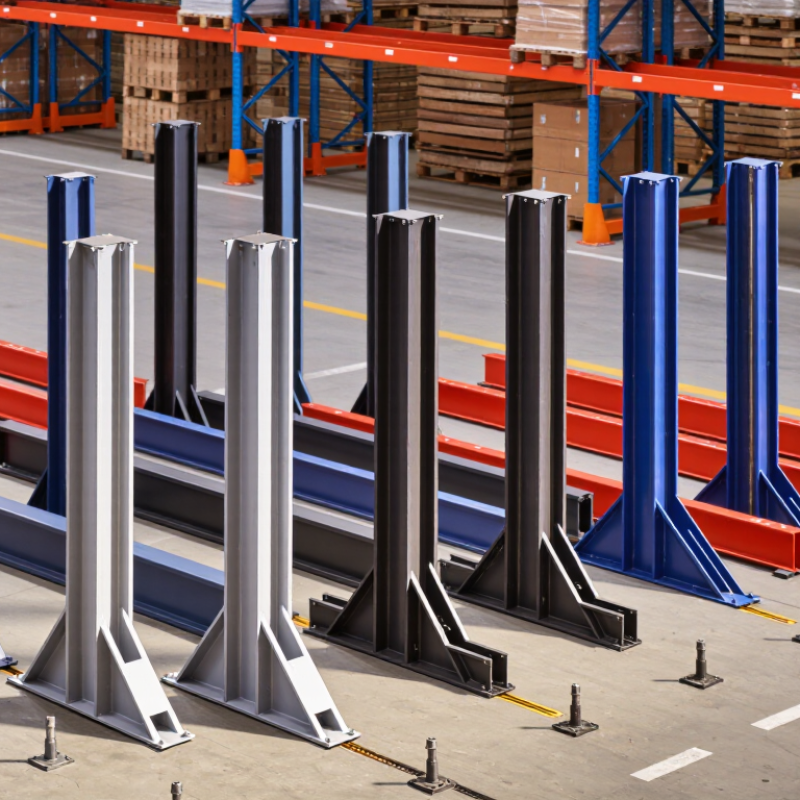
Table of Contents [Hide]
What Storage Rack Uprights Are and How They Support a Racking System
Storage rack uprights are the vertical frames that support horizontal beams and help carry stored loads down to the floor. A frame usually includes two upright columns joined by diagonal and horizontal bracing. The columns have regularly spaced connection points, allowing beams to be fitted at different heights. That spacing affects how well a system suits the products, pallets, and handling equipment in a warehouse.
Uprights do more than hold beams in place. Their dimensions, steel thickness, bracing, and connection details all influence how the assembled rack performs. A sound layout also needs compatible beams, suitable floor conditions, and proper anchoring where required. Small details count. A frame that looks sturdy may still be unsuitable for a particular bay height or load. It is tempting to judge by appearance alone; that can mislead.
When comparing uprights in 2026, check the rack supplier’s load tables for the exact configuration, including beam levels and frame height. Do not assume parts from different systems will fit or perform alike. Measure the available space, note the heaviest planned loads, and inspect frames regularly for impact damage, bent sections, or loose anchors. I would still recheck measurements before ordering; a few millimeters can complicate installation.





