


- Home
- A-Z Catalogue
- Products
- Valves
- Cetop
- Manual Directional Valves
- Proportional Valves
- Poppet Valves
- High-Speed Linear Servo Valves
- All High-Speed Linear Servo Valves
- Cetop 10 (NG32) Two Stage Type High Speed Linear Servo Valves – LSVHG-10
- Cetop 10 (NG32) Two Stage Type High Speed Linear Servo Valves – LSVHG-10 (With Fail-Safe)
- Cetop 8 (NG25) Two Stage Type High Speed Linear Servo Valves – LSVHG-06
- Cetop 8 (NG25) Two Stage Type High Speed Linear Servo Valves – LSVHG-06 (With Fail-Safe)
- Cetop 7 (NG16) Two Stage Type High Speed Linear Servo Valves – LSVHG-04
- Cetop 7 (NG16) Two Stage Type High Speed Linear Servo Valves – LSVHG-04 (With Fail-Safe)
- Cetop 5 (NG10) Direct Type High Speed Linear Servo Valves – LSVG-03
- Cetop 5 (NG10) OBE Type Direct Operated Linear Servo Valves – LSVG-03-EH
- Cetop 3 (NG6) OBE Type Direct Operated Linear Servo Valves – LSVG-01-EH
- Pumps
- Pressure control
- Flow Control Valves
- Pressure Control Valves
- All Pressure Control Valves
- Brake Valves
- Direct Relief Valve
- Low Noise Solenoid Controlled Relief Valves
- Low Noise Pilot Operated Relief Valves
- Pilot Operated Relief Valves
- Pressure reducing and relieving valves
- Pressure reducing and check valves
- Pressure control valves
- Remote Control Relief Valves
- Solenoid Controlled Relief Valves – BSG
- Solenoid Controlled Relief Valves – BST
- Unloading relief valves
- Check valves
- Environmental
- Valves
- Hydraulic Systems
- Power pack
- About Us
- Contact
- Blog

What Is the Best Step Up Transformer in 2026?
Choosing the best Step Up Transformer in 2026 starts with the equipment it must serve, not a product ranking. A step-up transformer raises voltage from its input to a higher output. Its capacity, however, must still match the connected load. Check the source voltage, required output voltage, frequency, and total load in watts or volt-amperes. Leave practical headroom for startup surges when motors or compressors are involved.
Details matter. A compact transformer for occasional indoor use may not suit continuous operation in a warm workshop. Compare rated capacity, duty cycle, voltage regulation, cooling method, enclosure, and protection features. Read the manufacturer’s datasheet, and confirm that the intended supply and connected equipment are compatible. The label alone is not enough. Neither is a low price. For installation or uncertain wiring, get guidance from a qualified professional.
This guide examines how different transformer designs fit home, commercial, and industrial applications. It also explains which specifications deserve attention and how to compare products without relying on broad marketing claims. A larger rating is not automatically better; it can add cost and may not solve a mismatch in voltage, frequency, or load behavior. That point is easy to overlook. Product availability and specifications can change during 2026, so verify current documentation before buying. The right choice is the one that meets the actual electrical requirements, environmental conditions, and expected operating schedule—with a little room for uncertainty.
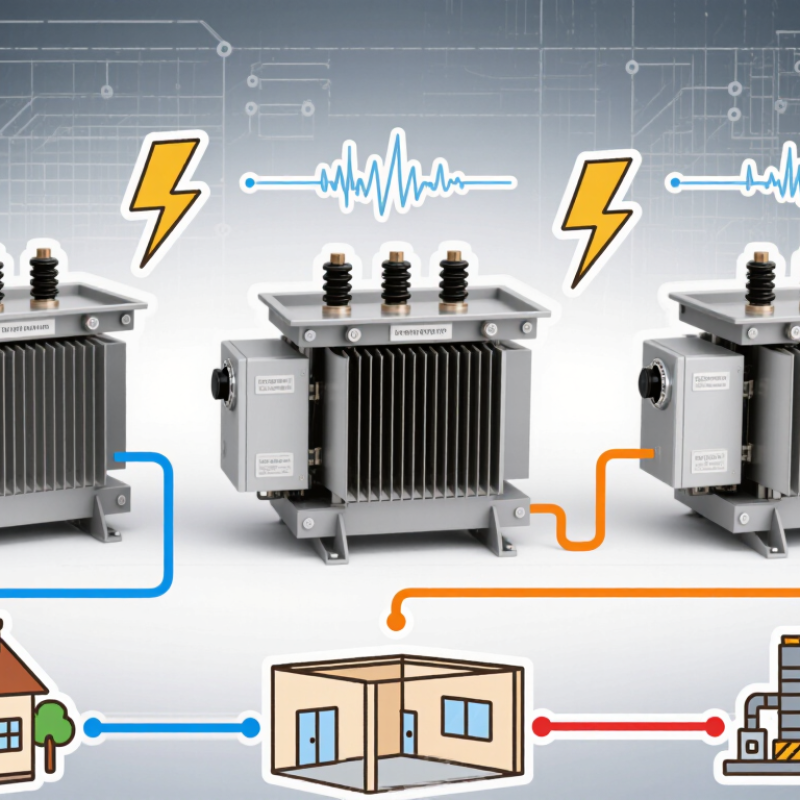
Table of Contents [Hide]
How Step-Up Transformers Work: Voltage Ratio V₂/V₁ = Turns Ratio N₂/N₁
What Is the Best Step Up Transformer in 2026?
A step-up transformer raises voltage through a higher number of turns in its secondary winding. Its ideal relationship is V₂/V₁ = N₂/N₁, where voltage and winding turns share the same ratio. For example, a 100-turn primary and 400-turn secondary produce a 4:1 ratio. At 120 volts input, the ideal output is 480 volts. The equation is simple. Real equipment is not.
Under load, winding resistance, magnetic losses, and temperature affect the output. Current also falls as voltage rises, assuming similar power and ideal conditions. So a transformer should not be chosen by ratio alone. Check load demand, frequency, insulation rating, cooling, and expected voltage regulation. IEC 60076 provides widely used requirements for power transformers, but correct sizing still depends on the installation.
Grid expansion makes this practical knowledge increasingly relevant. The International Energy Agency’s 2023 report, Electricity Grids and Secure Energy Transitions, estimates that over 80 million kilometres of grids must be added or refurbished by 2040. That is roughly the length of the existing global grid. For a real installation, verify the nameplate ratings and measure voltage under load. A ratio that looks right on paper may not deliver the voltage your equipment needs.





