
Who Is the Best Steel Metal Channel Supplier in China?

Choosing the best Steel Metal Channel supplier in China requires more than comparing prices. Buyers should examine steel grades, dimensional tolerances, production capacity, inspection records, and delivery consistency. A channel may look sound in a catalog, yet vary in flange width or arrive with surface damage. Details matter.

For this introduction, Lin Wei is a fictional composite steel procurement specialist, not a cited real-world expert. The following is an editorially created line, not a verified quotation: “A dependable channel supplier proves consistency in the measurements, the material records, and the shipment—not just the sample.” Use that principle when comparing manufacturers. Ask for current specifications, traceable test documents, clear packaging details, and realistic lead times. Then compare responses against your project requirements. Small checks help.

The outline explores how to assess suppliers, verify product quality, compare quotations, and identify practical warning signs. It also recognizes an uncomfortable truth: no single supplier is best for every buyer. Order size, required grade, tolerances, and delivery location can change the decision. Request samples or inspection evidence where appropriate, and confirm key details in writing before placing an order. A polished website is not proof. Neither is the lowest quote.
Who Is the Best Steel Metal Channel Supplier in China?

What Is a Steel Metal Channel and Where Is It Used?

A steel metal channel is a long section with a web and two flanges, forming a C, U, or similar profile. It may be hot-rolled or cold-formed, and its dimensions, steel grade, and finish vary by design. The open shape offers useful strength without enclosing the section like a tube. It also leaves room for brackets, bolts, and service lines. Simple, but not interchangeable.

Channels are used in building frames, equipment bases, shelving, vehicle structures, and supports for pipes or cable trays. On a workshop floor, a channel might form the edge of a machine stand; on a construction site, it may help brace a frame. The right section depends on the load, span, connection method, and exposure to moisture. A shallow channel can bend more than expected over a long span. Details matter.

For selection, check the profile dimensions, material specification, straightness, coating, and applicable inspection records. Compare supplier drawings with the project requirements, not just the quoted weight or price. Corrosion protection is especially relevant outdoors or in damp spaces. A galvanized finish may suit some environments, though it is not a substitute for assessing exposure and maintenance. Even experienced buyers can miss a small mismatch between a drawing and a delivered section. Measure samples when tolerances are critical.


Who Is the Best Steel Metal Channel Supplier in China? What Is a Steel Metal Channel and Where Is It Used?

Steel channels are structural sections with a web and two flanges. They are commonly used for framing, supports, and bracing. The chart compares the specified minimum yield strengths of three widely used structural steel grades; actual requirements depend on the applicable standard and product dimensions.

ASTM A36: 36 ksi; ASTM A572 Grade 50: 50 ksi; ASTM A992: 50 ksi. Confirm the grade, product form, and dimensions against the applicable standard and material certificate when specifying a steel channel.

How Are Steel Channels Manufactured in China?

Steel channels in China usually begin as billets, whose chemistry and surface condition shape the finished section. The billets are reheated, descaled, then passed through rolling stands. Roll pressure gradually forms the web and two flanges. Not magic—just tightly controlled heat and force. Operators monitor temperature and adjust rolls to limit uneven thickness or twist.

The World Steel Association’s World Steel in Figures 2025 reports that China produced about 1,005 million tonnes of crude steel in 2024. That figure describes crude steel, not channel output, but it shows the scale of the country’s steelmaking base. After rolling, channels are cooled, straightened, cut to length, and checked for dimensions, surface defects, and mechanical properties. Small deviations matter. A channel that looks straight on the rack may still show camber after installation.

For buyers, ask how the supplier controls each stage and documents inspection results. China’s GB/T 706-2016 standard covers dimensions, shape, weight, and permitted deviations for hot-rolled section steel. A useful supplier should identify the applicable grade and provide traceable test records. One detail is easy to overlook: tighter tolerances can require more process control and may affect cost. There is no shortcut around checking the actual batch.

Who Is the Best Steel Metal Channel Supplier in China? - How Are Steel Channels Manufactured in China?

Topic Data Dimension Factual Information What Buyers Should Check
Supplier selection Product and process fit There is no single supplier that is best for every project. Suitability depends on the required channel type, steel grade, dimensions, tolerances, quantity, delivery terms, and documentation. Compare suppliers against the same written specification and confirm that the proposed manufacturing route can produce the requested section.
Channel types Manufacturing route Hot-rolled channels are shaped from heated steel billets through rolling. Cold-formed channels are shaped from sheet or coil by roll forming at or near room temperature. Specify hot-rolled or cold-formed product explicitly; the two routes can differ in available profiles, dimensions, surface condition, and applicable product requirements.
Raw material Steel grade and traceability Channel steel can be ordered in different structural steel grades. The specified grade determines required chemical and mechanical properties; grade designations should be tied to the agreed standard. Request material test documentation identifying the grade, heat or cast number, and test results, and ensure the paperwork matches the delivered material.
Chinese product standard Hot-rolled section requirements GB/T 706-2016 is a Chinese standard titled “Hot-rolled steel sections.” The applicable standard and edition should be agreed for the order. Confirm the standard, edition, steel grade, dimensions, and acceptance criteria in the purchase specification rather than relying on a product description alone.
Hot-rolling manufacture Main production stages A typical route includes billet preparation, reheating, rolling through forming stands, controlled cooling, straightening, cutting to length, and inspection. The exact sequence and equipment depend on the mill and product. Ask for the production route and confirm that the supplier can manufacture the required profile and length within the agreed tolerances.
Cold-forming manufacture Roll-forming stages A typical cold-forming route feeds steel coil through successive forming rolls to create the channel profile, then cuts the formed section to length. Punching or other fabrication may be performed when specified. Confirm material thickness, profile drawing, dimensional tolerances, cut length, and any hole or fabrication requirements before production.
Dimensional requirements Profile and tolerances Channel dimensions may include web depth, flange width, thickness, length, and—in some profiles—lip dimensions. Permitted deviations depend on the product type and the standard or drawing specified for the order. Use a dimensioned drawing or a clearly identified standard section. Agree measurement points and tolerance requirements before shipment.
Quality inspection Verification checks Inspection may include visual examination, dimensional checks, material identification, and review of mechanical or chemical test documentation where required by the order or applicable standard. Define inspection scope, sampling, acceptance criteria, and required records in advance. Use independent inspection when the project risk or contract calls for it.
Surface protection Finish and corrosion protection Steel channels may be supplied with a mill finish or with an agreed protective treatment. The appropriate option depends on storage, transport, fabrication, and service environment. Specify the required finish or coating, preparation and inspection requirements, and packaging expectations in the order.
Commercial review Delivery and documentation Lead time, packing, transport, export documentation, and delivery terms are order-specific and should be confirmed directly with the supplier. Compare quotations on the same basis, including product specification, quantity, delivery point, packing, inspection, and required certificates.

What Makes a Chinese Steel Channel Supplier Reliable?

A reliable Chinese steel channel supplier should make quality easy to verify, not just promise it. Ask for material grades, dimensional tolerances, and mill test certificates that match the quoted order. Check that certificates identify the heat or batch number, then compare that number with the markings on bundled channels. Clear traceability matters when a project requires consistent steel. It is also useful to review inspection records and confirm how the supplier checks web height, flange width, thickness, and straightness. A few measured samples can reveal problems before a full shipment leaves the factory.

Communication is part of reliability. Notice whether staff answer technical questions directly, explain production lead times, and flag possible delays early. Request details about surface treatment, protective packing, and loading arrangements. Photos of finished bundles help, but they are not a substitute for documented checks. No checklist catches everything; independent inspection may be sensible for a large or critical order.

Tips: Compare the same grade, dimensions, finish, and delivery terms across quotations. Keep approved drawings and written specifications on file. Ask how defects are handled, and get the answer in writing. A low price can be tempting, but unclear tolerances or missing traceability can cost more later.

How Can Buyers Compare Steel Channel Suppliers?

Who Is the Best Steel Metal Channel Supplier in China?

How Can Buyers Compare Steel Channel Suppliers?

Comparing steel channel suppliers starts with a precise specification. List the channel shape, steel grade, web and flange thickness, length, and surface finish. Ask how dimensions are checked and what tolerances the supplier can meet. A small sample can reveal rough edges, uneven coating, or measurements that a product photo cannot show. Small details matter.

Review quality records, not just claims. Request a mill test certificate and confirm that its grade and heat number match the material supplied. Ask about inspection points, batch traceability, and how defects are handled. Production photos can help, but they are not proof on their own. It is easy to overvalue a polished brochure. That mistake is understandable.

Compare the full delivered cost, including packing, freight, expected lead time, and any inspection arrangements. Ask for a written quotation with clear quantities and specifications. Notice how the supplier handles a technical question: a direct answer is useful, while vague promises deserve follow-up. No checklist catches everything, and replies may still leave gaps. Buyers should record those gaps and resolve them before placing an order.

How Should Buyers Verify Quality and Choose a Supplier?

Choosing a steel metal channel supplier starts with evidence, not a low quotation. World Steel Association reported global crude steel production of 1,892.6 million tonnes in 2023 (World Steel in Figures 2024). That scale makes consistent batch identification important. Ask for a mill test certificate tied to the actual heat number. Check its chemical composition and mechanical properties against the grade and project specification. A polished certificate is not proof by itself.

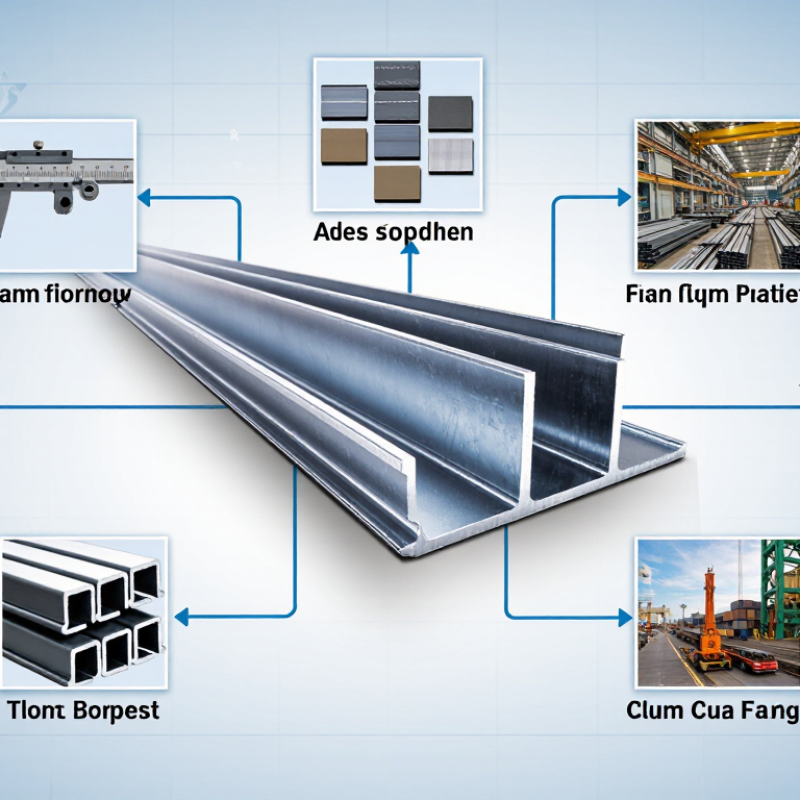
Measure sample channels with a calibrated caliper: web thickness, flange width, and overall height matter. Check straightness and visible surface condition under good light. Where the specification requires it, arrange independent dimensional or coating tests. Keep the inspection record beside the order documents. Small mismatches count.

Assess the supplier’s process, not just its product photos. Ask how it controls rolling tolerances, separates grades, and marks bundles for traceability. Request recent inspection records and clarify who handles rejected material. Confirm packing protects edges during transport; wet, tightly bound bundles can arrive with surface issues. A site audit can help, but it takes time and may not reveal every weakness. I would compare one trial batch with the approved sample before placing a larger order. A little inconvenient, perhaps. Better than guessing.