


- Home
- A-Z Catalogue
- Products
- Valves
- Cetop
- Manual Directional Valves
- Proportional Valves
- Poppet Valves
- High-Speed Linear Servo Valves
- All High-Speed Linear Servo Valves
- Cetop 10 (NG32) Two Stage Type High Speed Linear Servo Valves – LSVHG-10
- Cetop 10 (NG32) Two Stage Type High Speed Linear Servo Valves – LSVHG-10 (With Fail-Safe)
- Cetop 8 (NG25) Two Stage Type High Speed Linear Servo Valves – LSVHG-06
- Cetop 8 (NG25) Two Stage Type High Speed Linear Servo Valves – LSVHG-06 (With Fail-Safe)
- Cetop 7 (NG16) Two Stage Type High Speed Linear Servo Valves – LSVHG-04
- Cetop 7 (NG16) Two Stage Type High Speed Linear Servo Valves – LSVHG-04 (With Fail-Safe)
- Cetop 5 (NG10) Direct Type High Speed Linear Servo Valves – LSVG-03
- Cetop 5 (NG10) OBE Type Direct Operated Linear Servo Valves – LSVG-03-EH
- Cetop 3 (NG6) OBE Type Direct Operated Linear Servo Valves – LSVG-01-EH
- Pumps
- Pressure control
- Flow Control Valves
- Pressure Control Valves
- All Pressure Control Valves
- Brake Valves
- Direct Relief Valve
- Low Noise Solenoid Controlled Relief Valves
- Low Noise Pilot Operated Relief Valves
- Pilot Operated Relief Valves
- Pressure reducing and relieving valves
- Pressure reducing and check valves
- Pressure control valves
- Remote Control Relief Valves
- Solenoid Controlled Relief Valves – BSG
- Solenoid Controlled Relief Valves – BST
- Unloading relief valves
- Check valves
- Environmental
- Valves
- Hydraulic Systems
- Power pack
- About Us
- Contact
- Blog

10 Best Rubber Pads for Industrial Use in 2026?
Industrial equipment rarely fails at a convenient moment. Vibration, impact, moisture, and uneven floors can all affect machine stability and surrounding surfaces. A Rubber Pad may help absorb shock, reduce slipping, or protect a workbench, but the right choice depends on the job. Small details matter.
This guide compares 10 rubber pads for industrial use in 2026. It considers material, thickness, load capacity, grip, temperature tolerance, and resistance to common workplace fluids. These factors can help narrow the options for machinery, workstations, storage racks, and vehicle equipment. Still, product specifications vary, and a listed load rating is not a substitute for checking the conditions at your site.
There is no universal winner. Before ordering, measure the contact area and confirm the expected load, including movement or vibration. Check whether the pad is solid or layered, and review its care requirements. Where possible, compare manufacturer data with your actual operating conditions. A pad that performs well under a stationary machine may not suit a frequently moved cart. That distinction is easy to miss. Use the picks below as a practical starting point, then verify fit and specifications with the supplier before installation.
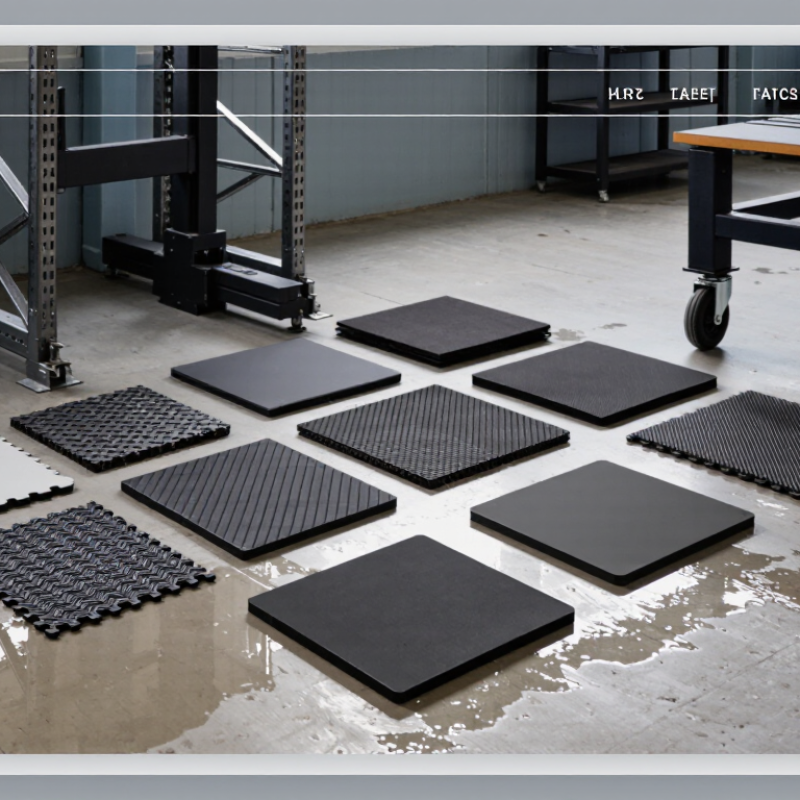
Table of Contents [Hide]
Industrial Rubber Pads: Materials, Functions, and Key Properties
10 Best Rubber Pads for Industrial Use in 2026?
Industrial Rubber Pads: Materials, Functions, and Key Properties
Industrial rubber pads do more than cushion machinery. They reduce vibration, limit impact, protect floors, and help equipment stay level under load. Material choice matters. Natural rubber offers strong elasticity and abrasion resistance, while nitrile rubber better resists oils. EPDM suits outdoor areas exposed to weather and ozone. Silicone can handle wider temperature swings, but may cost more and tear more easily.
The International Rubber Study Group’s 2024 statistical reporting puts global rubber consumption at roughly 30 million tonnes in 2023, including natural and synthetic rubber. That scale reflects rubber’s broad industrial role, but it does not tell buyers which pad will perform best. Check the actual application: load, temperature, oil contact, and vibration frequency. A pad that feels firm by hand may still compress too much beneath a machine.
For reliable comparisons, ASTM D2240 measures rubber hardness, while ASTM D412 tests tensile properties. Neither result alone predicts service life. Compression set, thickness, and the pad’s loaded area matter too. Small details matter. A slightly uneven floor can concentrate force at one corner and accelerate wear. I would also question any specification that gives hardness without test conditions; it leaves an important gap. ISO 10846 provides methods for measuring vibration transfer through resilient supports, helping engineers assess performance beyond a simple hardness number.
10 Best Rubber Pads for Industrial Use in 2026?
Industrial Rubber Pads: Materials, Functions, and Key Properties
| Rubber Pad Material | Typical Hardness (Shore A) | Typical Service Temperature | Key Properties and Function | Common Industrial Uses | Main Selection Consideration |
|---|---|---|---|---|---|
| Natural Rubber (NR) | 40–80 | About −40 to +80 °C | High resilience, tensile strength, and resistance to repeated impact and abrasion; effective for vibration isolation. | Machine mounts, impact pads, conveyor components, and general vibration-control pads. | Limited resistance to oils, ozone, weathering, and many chemicals; protect it from prolonged outdoor exposure. |
| Styrene-Butadiene Rubber (SBR) | 50–80 | About −40 to +100 °C | Good abrasion resistance and mechanical strength at a practical cost; suitable for general-purpose cushioning. | Floor protection, general-purpose gaskets, anti-vibration pads, and industrial lining. | Not a preferred choice for sustained contact with oils, fuels, or strong outdoor ozone exposure. |
| Nitrile Rubber (NBR) | 40–90 | About −30 to +100 °C | Good resistance to petroleum oils, greases, and many fuels; hardness and formulation affect wear and flexibility. | Oil-resistant machine pads, seals, pump components, and workshop equipment supports. | Ozone, sunlight, and weather resistance are generally limited unless the compound is specially protected. |
| EPDM Rubber | 40–80 | About −40 to +120 °C | Strong resistance to weathering, ozone, water, and many dilute acids and alkalis; maintains flexibility outdoors. | Outdoor equipment pads, water-system seals, weather-exposed supports, and electrical enclosures. | Generally unsuitable for petroleum oils, fuels, and many hydrocarbon-based fluids. |
| Chloroprene Rubber (CR, commonly called Neoprene) | 40–80 | About −30 to +100 °C | Balanced resistance to weather, ozone, moderate oils, and abrasion; useful where several properties are needed. | Outdoor machine mounts, bridge and structural bearing pads, gaskets, and vibration isolators. | Compatibility with specific chemicals and oils depends on the fluid, temperature, and compound formulation. |
| Silicone Rubber | 30–80 | About −55 to +200 °C | Retains flexibility across a wide temperature range and offers good heat and weather resistance. | Heat-exposed equipment cushioning, thermal-interface pads, and selected sealing applications. | Often has lower tear and abrasion resistance than tougher industrial elastomers; check load and wear requirements. |
| Fluoroelastomer (FKM) | 60–90 | About −20 to +200 °C | High resistance to many oils, fuels, and aggressive chemicals, with good performance at elevated temperatures. | Process-equipment seals, chemical-service pads, and components exposed to hot oils or fuels. | Typically more costly; low-temperature flexibility and compatibility with hot water or steam depend on the grade. |
| Butyl Rubber (IIR) | 40–70 | About −40 to +120 °C | Very low gas permeability and good resistance to ozone and weathering; provides useful damping. | Sealing pads, vibration-damping components, and applications requiring reduced gas transmission. | Not generally suited to petroleum oils and fuels; check the compound for the intended chemical environment. |
| Hydrogenated Nitrile Rubber (HNBR) | 50–90 | About −30 to +150 °C | Improved heat, aging, and mechanical performance compared with standard NBR, while retaining useful oil resistance. | Oilfield equipment, automotive and industrial seals, and supports exposed to heat and mechanical stress. | Performance varies by grade; confirm compatibility with the exact fluid, temperature, and duty cycle. |
| Cork-Rubber Composite | Typically specified by density and compression rather than Shore A | Often about −20 to +100 °C | Compressible composite that can seal uneven surfaces and help damp vibration; available with different cork contents and binders. | Equipment gaskets, enclosure seals, low-pressure cushioning, and vibration-isolating pads. | Load capacity, fluid resistance, and recovery after compression depend strongly on the binder and composite construction. |
Note: Temperature and hardness figures are broad, typical ranges, not guaranteed specifications. Actual properties vary by compound, manufacturing method, thickness, load, and exposure conditions. Verify the supplier’s technical data and chemical-compatibility guidance before selecting a pad.





