


- Home
- A-Z Catalogue
- Products
- Valves
- Cetop
- Manual Directional Valves
- Proportional Valves
- Poppet Valves
- High-Speed Linear Servo Valves
- All High-Speed Linear Servo Valves
- Cetop 10 (NG32) Two Stage Type High Speed Linear Servo Valves – LSVHG-10
- Cetop 10 (NG32) Two Stage Type High Speed Linear Servo Valves – LSVHG-10 (With Fail-Safe)
- Cetop 8 (NG25) Two Stage Type High Speed Linear Servo Valves – LSVHG-06
- Cetop 8 (NG25) Two Stage Type High Speed Linear Servo Valves – LSVHG-06 (With Fail-Safe)
- Cetop 7 (NG16) Two Stage Type High Speed Linear Servo Valves – LSVHG-04
- Cetop 7 (NG16) Two Stage Type High Speed Linear Servo Valves – LSVHG-04 (With Fail-Safe)
- Cetop 5 (NG10) Direct Type High Speed Linear Servo Valves – LSVG-03
- Cetop 5 (NG10) OBE Type Direct Operated Linear Servo Valves – LSVG-03-EH
- Cetop 3 (NG6) OBE Type Direct Operated Linear Servo Valves – LSVG-01-EH
- Pumps
- Pressure control
- Flow Control Valves
- Pressure Control Valves
- All Pressure Control Valves
- Brake Valves
- Direct Relief Valve
- Low Noise Solenoid Controlled Relief Valves
- Low Noise Pilot Operated Relief Valves
- Pilot Operated Relief Valves
- Pressure reducing and relieving valves
- Pressure reducing and check valves
- Pressure control valves
- Remote Control Relief Valves
- Solenoid Controlled Relief Valves – BSG
- Solenoid Controlled Relief Valves – BST
- Unloading relief valves
- Check valves
- Environmental
- Valves
- Hydraulic Systems
- Power pack
- About Us
- Contact
- Blog

7 Best Roll Crusher Manufacturers for Global Buyers
A Roll Crusher can look simple on a plant drawing: two steel rolls, a defined gap, and a steady feed. In operation, moisture, abrasiveness, feed size, and required product shape all matter. Small differences can change wear rates, throughput, and maintenance intervals. Buyers comparing manufacturers need more than a capacity figure.
The scale of mineral processing makes those choices significant. The U.S. Geological Survey’s Mineral Commodity Summaries 2025 estimates global iron ore mine production at about 2.5 billion metric tons in 2024. That figure describes the wider industry, not roll-crusher demand, but it shows the scale of material handling behind equipment decisions. A crusher must fit the actual duty.
Mineral-processing author Barry Wills has long emphasized the importance of matching equipment to ore characteristics and the process flowsheet. That principle is useful when evaluating manufacturers. Ask for material-specific test data, roll-surface options, achievable product size, and realistic wear estimates. Then check whether service support reaches your site. A polished brochure is not a performance guarantee. Even a strong supplier can be the wrong fit if the feed is wetter, harder, or more variable than expected. This guide compares seven Roll Crusher manufacturers for global buyers, focusing on practical selection factors, technical capability, and support. The shortlist is a starting point—not a substitute for testing your material and checking references.
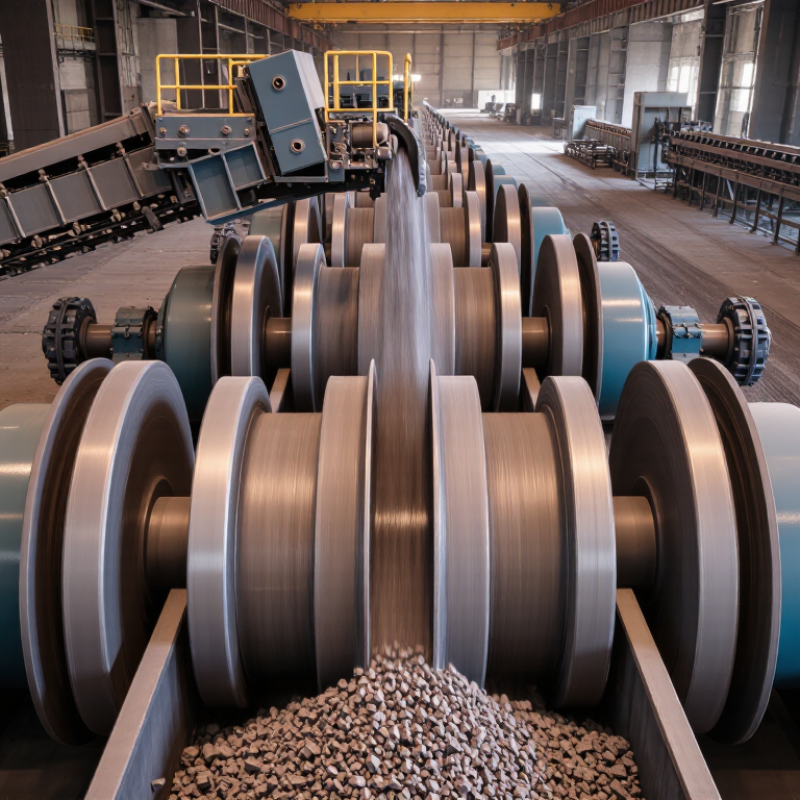
Table of Contents [Hide]
What Roll Crushers Do in Industrial Material Processing
Roll crushers reduce rock, coal, minerals, and recycled materials between two rotating cylinders. Their steady compression can produce a more uniform product than some impact-based methods. The gap between the rolls helps control output size, while surface patterns improve grip on harder feed. Simple in principle, but feed conditions matter.
A consistent feed lets material pass through the crushing zone without overloading the machine. Operators monitor motor load, roll wear, product size, and unusual vibration. Wet, sticky material may cling to the rolls or block the feed opening; dry, brittle material can create more fines. Less dust, often. These trade-offs mean a crusher should be matched to the material, not chosen by capacity alone.
Roll crushers commonly serve as a primary or secondary stage before screening, conveying, or further size reduction. Routine checks of bearings, scrapers, and roll surfaces can help catch uneven wear early. Guards and lockout procedures are essential during inspection and maintenance. The tidy model on paper rarely survives unchanged: real feed varies, and settings may need adjustment. Reliable operation depends on measuring the product and revisiting the setup as conditions change.





