


- Home
- A-Z Catalogue
- Products
- Valves
- Cetop
- Manual Directional Valves
- Proportional Valves
- Poppet Valves
- High-Speed Linear Servo Valves
- All High-Speed Linear Servo Valves
- Cetop 10 (NG32) Two Stage Type High Speed Linear Servo Valves – LSVHG-10
- Cetop 10 (NG32) Two Stage Type High Speed Linear Servo Valves – LSVHG-10 (With Fail-Safe)
- Cetop 8 (NG25) Two Stage Type High Speed Linear Servo Valves – LSVHG-06
- Cetop 8 (NG25) Two Stage Type High Speed Linear Servo Valves – LSVHG-06 (With Fail-Safe)
- Cetop 7 (NG16) Two Stage Type High Speed Linear Servo Valves – LSVHG-04
- Cetop 7 (NG16) Two Stage Type High Speed Linear Servo Valves – LSVHG-04 (With Fail-Safe)
- Cetop 5 (NG10) Direct Type High Speed Linear Servo Valves – LSVG-03
- Cetop 5 (NG10) OBE Type Direct Operated Linear Servo Valves – LSVG-03-EH
- Cetop 3 (NG6) OBE Type Direct Operated Linear Servo Valves – LSVG-01-EH
- Pumps
- Pressure control
- Flow Control Valves
- Pressure Control Valves
- All Pressure Control Valves
- Brake Valves
- Direct Relief Valve
- Low Noise Solenoid Controlled Relief Valves
- Low Noise Pilot Operated Relief Valves
- Pilot Operated Relief Valves
- Pressure reducing and relieving valves
- Pressure reducing and check valves
- Pressure control valves
- Remote Control Relief Valves
- Solenoid Controlled Relief Valves – BSG
- Solenoid Controlled Relief Valves – BST
- Unloading relief valves
- Check valves
- Environmental
- Valves
- Hydraulic Systems
- Power pack
- About Us
- Contact
- Blog

What Is the Best Rice Harvesting Equipment in 2026?
Choosing the best Rice Harvesting Equipment in 2026 starts with the field, not the brochure. A high-capacity combine may suit broad, level paddies, while a compact reaper can be more practical for small plots. Field size, soil firmness, crop variety, and available labor all affect the choice. So does the harvest window. A machine that performs well on dry ground may struggle in soft, waterlogged soil.
Look beyond advertised capacity. Check cutting width, grain loss, fuel use, maintenance access, and the availability of local parts and service. Ask operators about performance in conditions like yours, and, where possible, inspect a machine working in a real paddy. Wet ground changes everything. Tire or track design can influence traction, soil compaction, and the risk of getting stuck. Those details are easy to miss in a specification sheet.
There is no single winner for every rice farm. The right equipment balances output with cost, repair needs, and field conditions. A larger machine can finish quickly, but may be an expensive mismatch for fragmented plots. Smaller equipment can improve access, though it may require more time or labor. The comparison in this guide considers these trade-offs and explains what to assess before buying. Specifications and prices can vary by market and configuration, so verify current details with manufacturers and local dealers. A careful choice matters more than a bold claim.
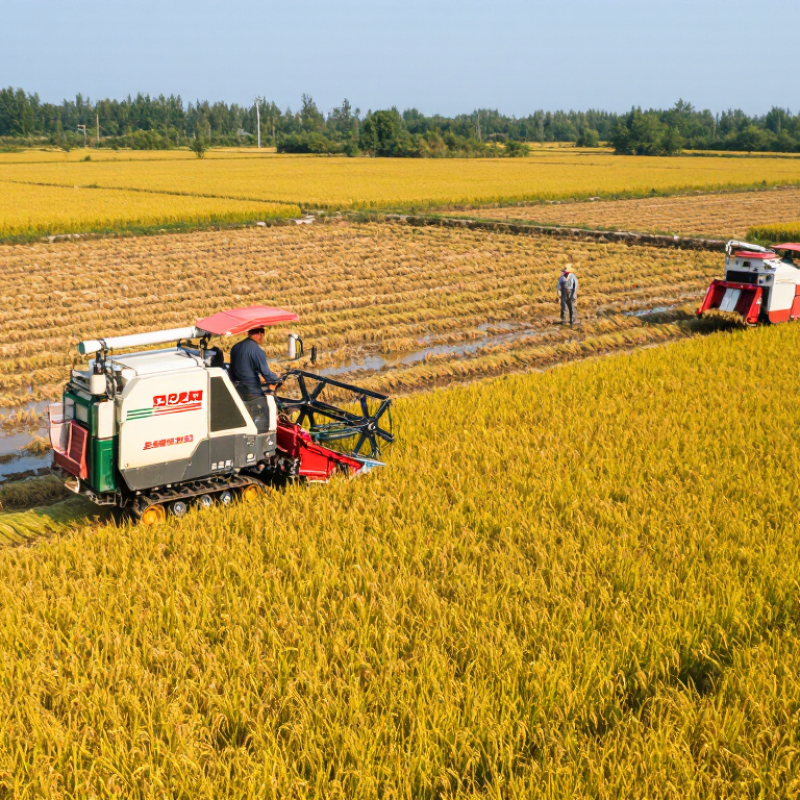
Table of Contents [Hide]
What Rice Harvesting Equipment Does and How It Works
Rice harvesting equipment cuts mature stalks, separates grain, and moves it away from the field. A combine harvester performs these jobs in one pass. Its header gathers rice stalks, while a reel guides them toward the cutter bar. The crop then travels through a threshing system, where rotating parts loosen the grains from the panicles. Sieves and fans remove much of the straw and chaff before grain enters the storage tank. Small details matter. A poorly adjusted header can leave stalks behind or feed unevenly.
The right equipment depends on field size, soil firmness, crop condition, and access between plots. In small or waterlogged fields, a compact tracked machine may reduce sinking and crop damage. Larger, drier fields may suit a wider combine that covers more ground per hour. Operators watch grain loss, clogging, and engine load as conditions change. Wet straw, lodged plants, and uneven ground can slow even a capable machine. Not always. A machine with more power is not automatically the better choice; turning space and maintenance access count too. Before harvesting, check cutter height, threshing settings, and cleaning screens, then inspect grain samples for broken kernels and unthreshed heads. One setting rarely fits every field, and adjusting it takes judgment.





