


- Home
- A-Z Catalogue
- Products
- Valves
- Cetop
- Manual Directional Valves
- Proportional Valves
- Poppet Valves
- High-Speed Linear Servo Valves
- All High-Speed Linear Servo Valves
- Cetop 10 (NG32) Two Stage Type High Speed Linear Servo Valves – LSVHG-10
- Cetop 10 (NG32) Two Stage Type High Speed Linear Servo Valves – LSVHG-10 (With Fail-Safe)
- Cetop 8 (NG25) Two Stage Type High Speed Linear Servo Valves – LSVHG-06
- Cetop 8 (NG25) Two Stage Type High Speed Linear Servo Valves – LSVHG-06 (With Fail-Safe)
- Cetop 7 (NG16) Two Stage Type High Speed Linear Servo Valves – LSVHG-04
- Cetop 7 (NG16) Two Stage Type High Speed Linear Servo Valves – LSVHG-04 (With Fail-Safe)
- Cetop 5 (NG10) Direct Type High Speed Linear Servo Valves – LSVG-03
- Cetop 5 (NG10) OBE Type Direct Operated Linear Servo Valves – LSVG-03-EH
- Cetop 3 (NG6) OBE Type Direct Operated Linear Servo Valves – LSVG-01-EH
- Pumps
- Pressure control
- Flow Control Valves
- Pressure Control Valves
- All Pressure Control Valves
- Brake Valves
- Direct Relief Valve
- Low Noise Solenoid Controlled Relief Valves
- Low Noise Pilot Operated Relief Valves
- Pilot Operated Relief Valves
- Pressure reducing and relieving valves
- Pressure reducing and check valves
- Pressure control valves
- Remote Control Relief Valves
- Solenoid Controlled Relief Valves – BSG
- Solenoid Controlled Relief Valves – BST
- Unloading relief valves
- Check valves
- Environmental
- Valves
- Hydraulic Systems
- Power pack
- About Us
- Contact
- Blog

What are the Best Practices for Pressure Vessel Procurement?
In the complex world of industrial manufacturing, the procurement of Pressure Vessels stands out as a critical process. According to Sarah Thompson, a renowned expert in the Pressure Vessel industry, "Choosing the right vessel is more than just a purchase; it's a commitment to safety and efficiency." This reflects the fundamental importance of making informed decisions when selecting Pressure Vessels.
Best practices in Pressure Vessel procurement involve a thorough understanding of specifications, regulatory standards, and supplier capabilities. Companies often overlook the necessity of due diligence. Many also underestimate the long-term costs associated with inferior quality vessels. Ensuring compliance with ASME and other relevant standards is not optional; it is essential for safety and reliability.
Moreover, a solid procurement strategy should include robust supplier evaluation. Organizations must engage in frequent communication with suppliers to clarify expectations. However, it's common for companies to skip this step, leading to potential misalignment. Understanding the nuances of Pressure Vessel manufacturing processes can prevent costly mistakes and promote operational excellence.
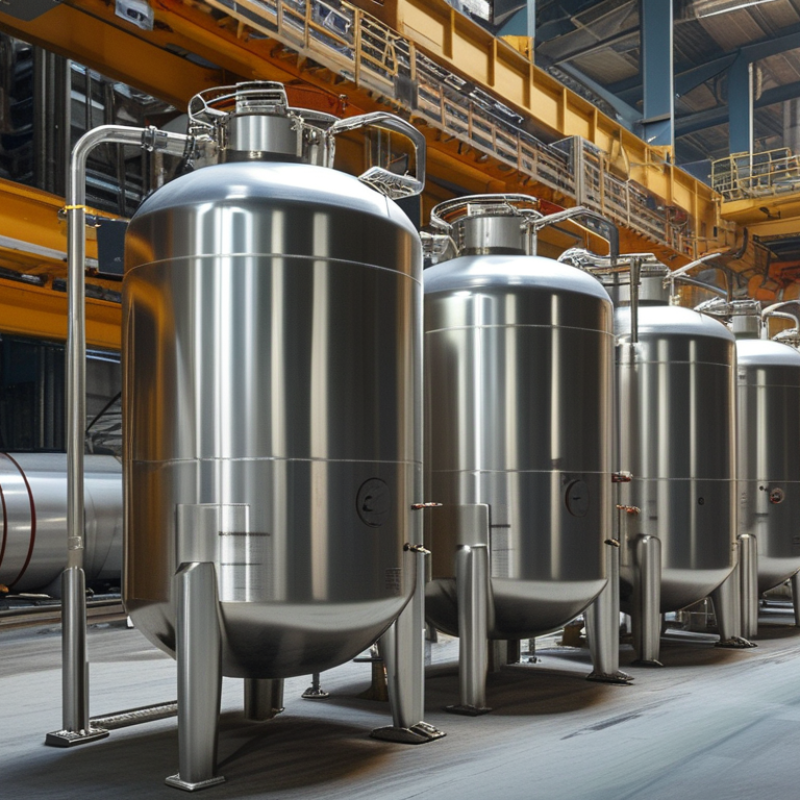
Table of Contents [Hide]
Identifying Your Pressure Vessel Requirements and Specifications
Identifying your pressure vessel requirements and specifications is crucial for effective procurement. Start by understanding the operating environment. This includes temperature ranges, pressure limits, and potential corrosive agents. According to industry reports, 40% of pressure vessel failures can be attributed to improper material selection. Therefore, conducting material compatibility tests is essential.
Next, consider the design standards. Adhering to ASME (American Society of Mechanical Engineers) guidelines is a common best practice. These standards ensure safety and performance. A report by the European Pressure Vessel Manufacturers Association highlights that vessels built to recognized standards have a failure rate that is 60% lower than those built off-spec. This statistic emphasizes the importance of rigorous specification adherence.
Furthermore, engaging with certified engineers can enhance your procurement process. They can help clarify your specific needs and suggest appropriate vessel types. However, not all engineers may have the same level of expertise. It's important to vet their qualifications and past projects carefully. A lack of attention to this detail can lead to costly mistakes in vessel selection. Adjusting your requirements based on real-world feedback may also be necessary to ensure optimal performance.