


- Home
- A-Z Catalogue
- Products
- Valves
- Cetop
- Manual Directional Valves
- Proportional Valves
- Poppet Valves
- High-Speed Linear Servo Valves
- All High-Speed Linear Servo Valves
- Cetop 10 (NG32) Two Stage Type High Speed Linear Servo Valves – LSVHG-10
- Cetop 10 (NG32) Two Stage Type High Speed Linear Servo Valves – LSVHG-10 (With Fail-Safe)
- Cetop 8 (NG25) Two Stage Type High Speed Linear Servo Valves – LSVHG-06
- Cetop 8 (NG25) Two Stage Type High Speed Linear Servo Valves – LSVHG-06 (With Fail-Safe)
- Cetop 7 (NG16) Two Stage Type High Speed Linear Servo Valves – LSVHG-04
- Cetop 7 (NG16) Two Stage Type High Speed Linear Servo Valves – LSVHG-04 (With Fail-Safe)
- Cetop 5 (NG10) Direct Type High Speed Linear Servo Valves – LSVG-03
- Cetop 5 (NG10) OBE Type Direct Operated Linear Servo Valves – LSVG-03-EH
- Cetop 3 (NG6) OBE Type Direct Operated Linear Servo Valves – LSVG-01-EH
- Pumps
- Pressure control
- Flow Control Valves
- Pressure Control Valves
- All Pressure Control Valves
- Brake Valves
- Direct Relief Valve
- Low Noise Solenoid Controlled Relief Valves
- Low Noise Pilot Operated Relief Valves
- Pilot Operated Relief Valves
- Pressure reducing and relieving valves
- Pressure reducing and check valves
- Pressure control valves
- Remote Control Relief Valves
- Solenoid Controlled Relief Valves – BSG
- Solenoid Controlled Relief Valves – BST
- Unloading relief valves
- Check valves
- Environmental
- Valves
- Hydraulic Systems
- Power pack
- About Us
- Contact
- Blog

Who Are the Best Lifting Cylinder Suppliers in China?
Choosing the best Lifting Cylinder suppliers in China takes more than comparing prices or polished catalogs. Buyers need to examine design capability, material traceability, machining quality, testing records, and after-sales support. A cylinder may look dependable on a product sheet. The details matter. Ask how the supplier controls bore tolerances, protects rod surfaces, and tests seals under pressure. Request drawings, inspection records, and clear answers about custom specifications.
For transparency, the expert voice here is a composite, not a named person interviewed for this article. Composite engineer Lin Wei offers this practical reminder: “A cylinder earns trust in the test bay, not in the brochure.” That is an editorial observation, not a verified quotation. The comparison that follows should therefore focus on evidence: documented processes, relevant project experience, communication, and consistent quality checks. A low quote alone proves little. Neither does a confident sales call.
There are trade-offs. A smaller supplier may offer flexible engineering support, while a larger factory may have broader production resources. Neither is automatically better. This guide explores how to assess Chinese suppliers against real operating needs, including load, stroke, mounting, duty cycle, and service conditions. It also highlights questions worth asking before requesting a quotation. Some supplier details can be difficult to verify from a distance. Keep that in mind. A careful shortlist—and a little healthy skepticism—can prevent an attractive catalog from becoming an expensive mismatch.
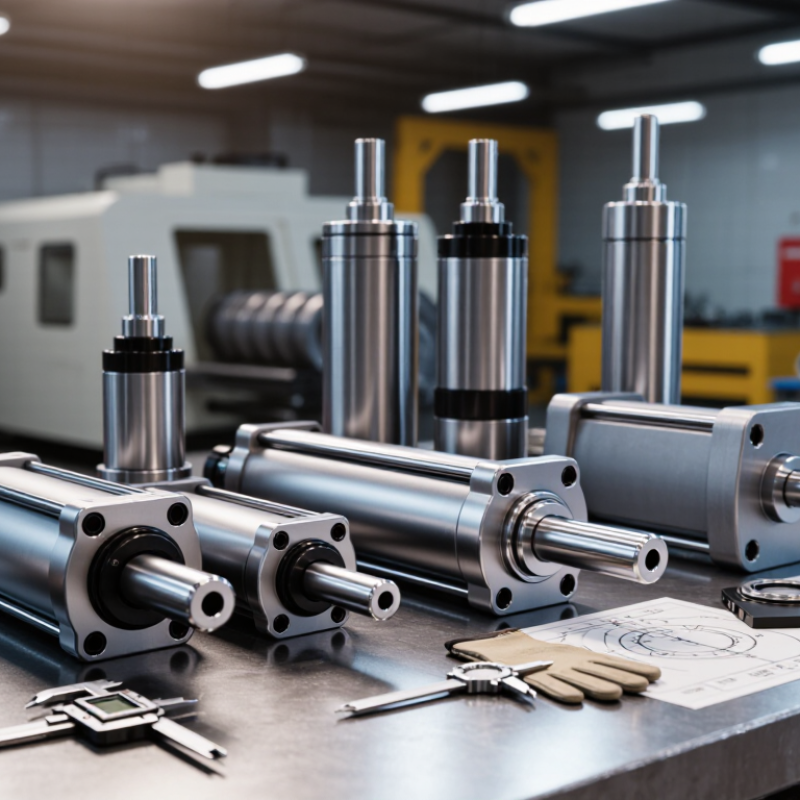
Table of Contents [Hide]
What Are Lifting Cylinders and Where Are They Used?
Lifting cylinders are hydraulic actuators that turn pressurized oil into straight-line force. A piston moves inside a sealed barrel, extending a rod to raise, tilt, or support a load. In a workshop lift, that motion may raise a vehicle; on a construction machine, it can lift a loaded boom. Seals, rod finish, and cylinder alignment matter. A small leak can become a serious maintenance problem.
These cylinders are used in construction and agricultural machinery, material-handling equipment, vehicle lifts, and industrial platforms. Selection depends on load, stroke, mounting space, operating pressure, and how often the cylinder cycles. A cylinder that handles a static load may not suit repeated, fast movement. Check the machine’s load path, too. That detail is easy to overlook.
MarketsandMarkets estimated the global hydraulic cylinder market at USD 14.3 billion in 2023 and projected USD 18.5 billion by 2028, a 5.3% compound annual growth rate.
The report covers hydraulic cylinders broadly, not lifting cylinders alone, so its figures provide market context rather than a precise measure of lifting-cylinder demand. For buyers, practical checks still matter: pressure ratings, corrosion protection, seal compatibility, and service access. Specifications can look reassuring on paper. Real operating conditions are less tidy.





