


- Home
- A-Z Catalogue
- Products
- Valves
- Cetop
- Manual Directional Valves
- Proportional Valves
- Poppet Valves
- High-Speed Linear Servo Valves
- All High-Speed Linear Servo Valves
- Cetop 10 (NG32) Two Stage Type High Speed Linear Servo Valves – LSVHG-10
- Cetop 10 (NG32) Two Stage Type High Speed Linear Servo Valves – LSVHG-10 (With Fail-Safe)
- Cetop 8 (NG25) Two Stage Type High Speed Linear Servo Valves – LSVHG-06
- Cetop 8 (NG25) Two Stage Type High Speed Linear Servo Valves – LSVHG-06 (With Fail-Safe)
- Cetop 7 (NG16) Two Stage Type High Speed Linear Servo Valves – LSVHG-04
- Cetop 7 (NG16) Two Stage Type High Speed Linear Servo Valves – LSVHG-04 (With Fail-Safe)
- Cetop 5 (NG10) Direct Type High Speed Linear Servo Valves – LSVG-03
- Cetop 5 (NG10) OBE Type Direct Operated Linear Servo Valves – LSVG-03-EH
- Cetop 3 (NG6) OBE Type Direct Operated Linear Servo Valves – LSVG-01-EH
- Pumps
- Pressure control
- Flow Control Valves
- Pressure Control Valves
- All Pressure Control Valves
- Brake Valves
- Direct Relief Valve
- Low Noise Solenoid Controlled Relief Valves
- Low Noise Pilot Operated Relief Valves
- Pilot Operated Relief Valves
- Pressure reducing and relieving valves
- Pressure reducing and check valves
- Pressure control valves
- Remote Control Relief Valves
- Solenoid Controlled Relief Valves – BSG
- Solenoid Controlled Relief Valves – BST
- Unloading relief valves
- Check valves
- Environmental
- Valves
- Hydraulic Systems
- Power pack
- About Us
- Contact
- Blog

10 Best Laser Bending Machines for Global Buyers
Global sheet-metal manufacturers are seeking faster, cleaner, and more adaptable forming equipment. The Laser Bending Machine has become part of this shift, especially where complex profiles, thin materials, and short production runs matter. It can combine precise heat control with automated positioning, reducing repeated tooling changes in suitable applications. However, performance depends heavily on material grade, thickness, software quality, operator experience, and after-sales support.
Market evidence supports the wider move toward digitally connected fabrication. Grand View Research reports that the global laser cutting machine market was valued at approximately USD 6.8 billion in 2023, with continued growth expected through 2030. The International Federation of Robotics recorded 541,302 industrial robot installations worldwide in 2023. That figure shows how strongly manufacturers are investing in automation. It does not prove that every factory needs laser bending technology. The business case still requires careful testing.
This guide reviews 10 Best Laser Bending Machines for Global Buyers. It compares working accuracy, laser source, bending capacity, control systems, automation options, energy use, safety design, maintenance access, and technical support. Buyers should also inspect sample parts, calibration records, warranty terms, and local service coverage. Those details often matter more than impressive brochure specifications.
Real production data matters.
A machine may achieve excellent repeatability in a demonstration, yet perform differently during long shifts, dusty conditions, or mixed-material production. This review therefore balances published specifications with practical buying considerations. It also recognizes an unavoidable limitation: supplier data is not always reported under identical testing conditions. Global buyers should verify every critical claim before signing a purchase agreement.
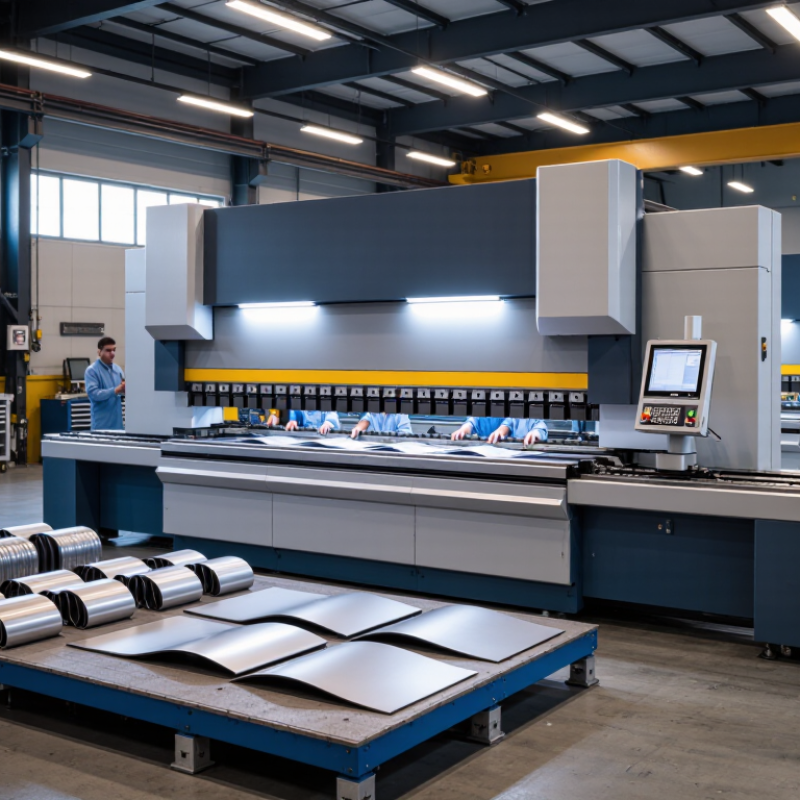
Table of Contents [Hide]
What Is a Laser Bending Machine and How Does It Work?
A laser bending machine forms sheet metal by applying controlled heat along a planned bend line. Unlike a conventional press brake, it can bend some parts without direct mechanical force. Heat does the work.
The laser focuses energy into a narrow strip, often less than a few millimeters wide. That strip expands, while the cooler surrounding metal resists movement. As the heated area cools and contracts, the sheet develops a permanent bend. Operators adjust laser power, scanning speed, spot size, and travel path for each material and thickness. Stainless steel, mild steel, and certain alloys may react differently. The process needs testing.
Some machines use laser heating before mechanical bending. This reduces forming force and can help shape difficult materials. Others rely on laser forming alone, especially for lightweight panels and complex curves. In a workshop, an operator may inspect the first sample with a digital angle gauge, then modify the scan path by a small amount. A trial piece can still warp. That is not failure; it reveals how the material behaves.
Accurate clamping, clean surfaces, and stable temperature improve repeatability. Automated sensors can monitor position and temperature, but skilled setup remains important. Buyers should examine working size, laser control, cooling design, software access, maintenance support, and documented test results before choosing equipment. Safety shielding and trained operation are essential.





