


- Home
- A-Z Catalogue
- Products
- Valves
- Cetop
- Manual Directional Valves
- Proportional Valves
- Poppet Valves
- High-Speed Linear Servo Valves
- All High-Speed Linear Servo Valves
- Cetop 10 (NG32) Two Stage Type High Speed Linear Servo Valves – LSVHG-10
- Cetop 10 (NG32) Two Stage Type High Speed Linear Servo Valves – LSVHG-10 (With Fail-Safe)
- Cetop 8 (NG25) Two Stage Type High Speed Linear Servo Valves – LSVHG-06
- Cetop 8 (NG25) Two Stage Type High Speed Linear Servo Valves – LSVHG-06 (With Fail-Safe)
- Cetop 7 (NG16) Two Stage Type High Speed Linear Servo Valves – LSVHG-04
- Cetop 7 (NG16) Two Stage Type High Speed Linear Servo Valves – LSVHG-04 (With Fail-Safe)
- Cetop 5 (NG10) Direct Type High Speed Linear Servo Valves – LSVG-03
- Cetop 5 (NG10) OBE Type Direct Operated Linear Servo Valves – LSVG-03-EH
- Cetop 3 (NG6) OBE Type Direct Operated Linear Servo Valves – LSVG-01-EH
- Pumps
- Pressure control
- Flow Control Valves
- Pressure Control Valves
- All Pressure Control Valves
- Brake Valves
- Direct Relief Valve
- Low Noise Solenoid Controlled Relief Valves
- Low Noise Pilot Operated Relief Valves
- Pilot Operated Relief Valves
- Pressure reducing and relieving valves
- Pressure reducing and check valves
- Pressure control valves
- Remote Control Relief Valves
- Solenoid Controlled Relief Valves – BSG
- Solenoid Controlled Relief Valves – BST
- Unloading relief valves
- Check valves
- Environmental
- Valves
- Hydraulic Systems
- Power pack
- About Us
- Contact
- Blog

10 Best Flexible Wire Types for Your Application?
Choosing a wire by appearance alone is a quiet way to invite trouble. A conductor that bends easily on a workbench may stiffen in cold air, fatigue beside a moving hinge, or overheat inside a crowded enclosure. Flexible Wire selection depends on the job: movement, current, voltage, temperature, abrasion, chemicals, and installation space all matter. Small details matter, too. A silicone-insulated lead near a warm motor behaves differently from a PVC-insulated cord dragged across a workshop floor.
This guide compares ten common Flexible Wire types, including fine-stranded copper, silicone-insulated wire, rubber cable, and high-flex robotic cable. It will help readers match construction and insulation to real operating conditions, rather than choosing by price or bend feel alone. Check the manufacturer’s datasheet for strand construction, temperature range, current rating, and minimum bend radius. Ratings vary by product. A familiar material name is not a performance guarantee.
One caution before the list: “flexible” does not mean indestructible. Repeated bending can break strands beneath intact insulation, and tight bends can shorten service life. No verified, topic-specific expert quotation was provided, so I won’t invent one or attribute a slogan to a real engineer. That is a useful reminder in itself: good wire selection relies on evidence, not impressive-sounding claims. The best choice is the one that fits the actual motion, load, and environment—and still leaves a little safety margin.
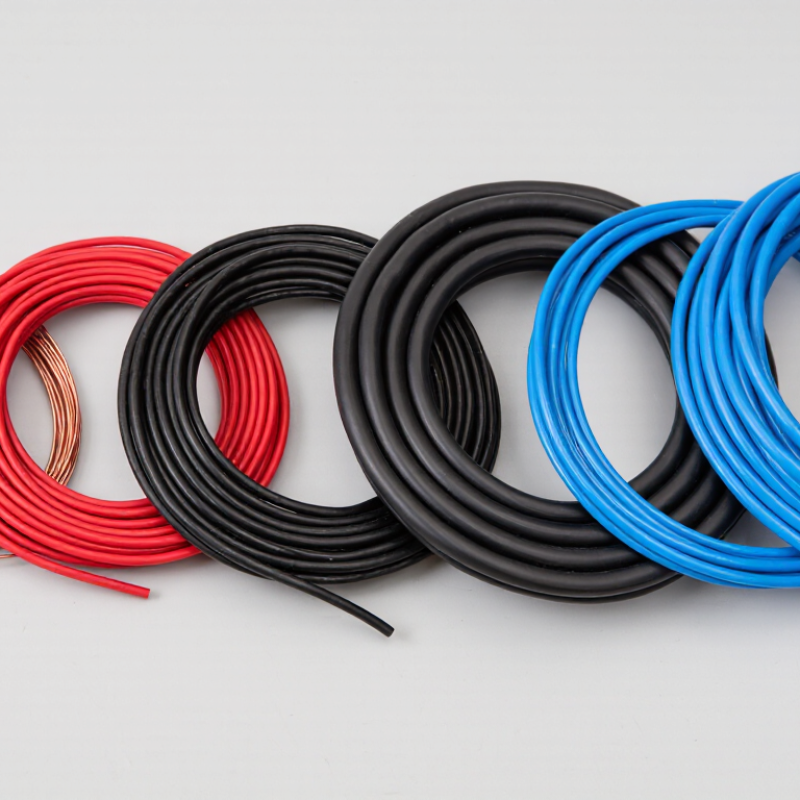
Table of Contents [Hide]
How Flexible Wire Is Defined and Classified
Flexible wire is not defined by softness alone. It is a conductor-and-insulation assembly designed to bend without unacceptable damage or loss of electrical performance. Its flexibility depends on strand size, strand count, conductor material, insulation, and construction. A wire that bends easily during installation may not withstand repeated movement.
One useful classification is conductor construction: solid, stranded, fine-stranded, and extra-flexible. Solid conductors suit fixed routes but resist repeated bending. Stranded conductors bend more readily, while finer strands generally improve flexibility.
That distinction matters. Classifications also describe insulation and intended duty, such as fixed wiring, continuous flexing, or exposure to heat, oil, or abrasion. These labels are not interchangeable.
For equipment that moves, check the specified bend radius, flexing life, temperature range, and whether twisting is expected. A cable routed through a machine arm may need different construction from one pulled around a cabinet corner. Check the datasheet. “Flexible” alone does not establish suitability, and a generous strand count cannot compensate for incompatible insulation. In practice, installation space and motion pattern are easy to underestimate; measure both before choosing a type.





