


- Home
- A-Z Catalogue
- Products
- Valves
- Cetop
- Manual Directional Valves
- Proportional Valves
- Poppet Valves
- High-Speed Linear Servo Valves
- All High-Speed Linear Servo Valves
- Cetop 10 (NG32) Two Stage Type High Speed Linear Servo Valves – LSVHG-10
- Cetop 10 (NG32) Two Stage Type High Speed Linear Servo Valves – LSVHG-10 (With Fail-Safe)
- Cetop 8 (NG25) Two Stage Type High Speed Linear Servo Valves – LSVHG-06
- Cetop 8 (NG25) Two Stage Type High Speed Linear Servo Valves – LSVHG-06 (With Fail-Safe)
- Cetop 7 (NG16) Two Stage Type High Speed Linear Servo Valves – LSVHG-04
- Cetop 7 (NG16) Two Stage Type High Speed Linear Servo Valves – LSVHG-04 (With Fail-Safe)
- Cetop 5 (NG10) Direct Type High Speed Linear Servo Valves – LSVG-03
- Cetop 5 (NG10) OBE Type Direct Operated Linear Servo Valves – LSVG-03-EH
- Cetop 3 (NG6) OBE Type Direct Operated Linear Servo Valves – LSVG-01-EH
- Pumps
- Pressure control
- Flow Control Valves
- Pressure Control Valves
- All Pressure Control Valves
- Brake Valves
- Direct Relief Valve
- Low Noise Solenoid Controlled Relief Valves
- Low Noise Pilot Operated Relief Valves
- Pilot Operated Relief Valves
- Pressure reducing and relieving valves
- Pressure reducing and check valves
- Pressure control valves
- Remote Control Relief Valves
- Solenoid Controlled Relief Valves – BSG
- Solenoid Controlled Relief Valves – BST
- Unloading relief valves
- Check valves
- Environmental
- Valves
- Hydraulic Systems
- Power pack
- About Us
- Contact
- Blog

What Is the Best Duct Air Heater in 2026?
Choosing the best Duct Air Heater in 2026 starts with the duct, not the product label. A compact unit may suit a short branch, while a larger system may need greater airflow and carefully matched heating capacity. Check the duct dimensions, available power supply, required temperature rise, and the system’s expected airflow before comparing models. A high wattage rating alone does not prove a heater will perform well in your installation.
Details matter. Look for clear specifications, documented overheat protection, suitable temperature controls, and installation instructions that match your system. Confirm whether the heater works with your existing sensors or controller, and check the manufacturer’s guidance on clearances and maintenance. A metal cabinet, accessible wiring compartment, and replaceable components can also make routine inspection easier. These are practical checks, not guarantees of quality.
Not always.
There is no single best choice for every building. Performance depends on the duct layout, operating conditions, and correct installation, so compare like-for-like ratings rather than relying on promotional claims. If electrical capacity or control compatibility is uncertain, ask a qualified HVAC professional to review the specifications. I would also treat missing performance data as a reason to pause; a polished product page cannot replace a clear technical manual. This guide explains which features deserve attention, how to compare common heater types, and what questions to ask before buying. Some details may seem minor until the unit is running daily.
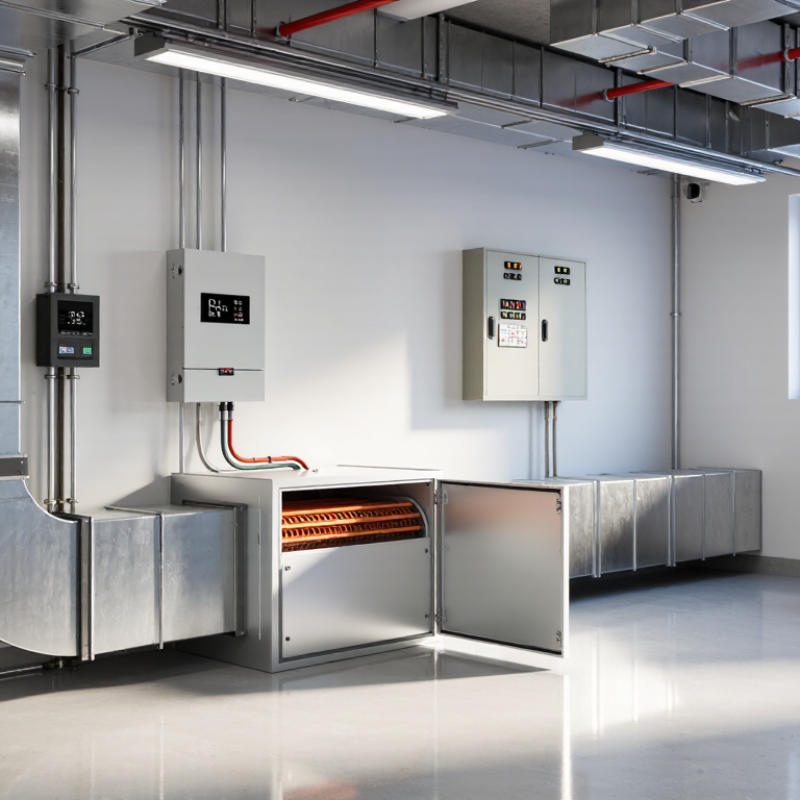
Table of Contents [Hide]
What a Duct Air Heater Is: Electric, Gas, and Hydronic Types
A duct air heater raises the temperature of air moving through a building’s ductwork. The main options are electric, gas, and hydronic. Each fits a different system, so “best” depends on the available utilities, airflow, and heating needs.
Electric heaters use resistance elements to warm passing air. They are compact and often straightforward to install, especially where gas is unavailable. However, they can draw substantial electrical power.
Gas heaters warm air through a heat exchanger and need suitable venting and combustion-air arrangements.
Hydronic heaters use a coil carrying hot water from a boiler or heat pump. They can suit buildings with existing water-based heating, but their performance depends on water temperature and flow. Details matter.
Before choosing, check the duct size, airflow, electrical capacity, and required temperature rise. A heater that is too large may cycle frequently; one that is too small may struggle on cold days. The comparison is less tidy than a simple efficiency chart suggests. Local energy costs and the rest of the heating system can change the result. Have a qualified heating professional verify sizing, controls, and safe installation for the specific duct system.





