- Home
- A-Z Catalogue
- Products
- Valves
- Cetop
- Manual Directional Valves
- Proportional Valves
- Poppet Valves
- High-Speed Linear Servo Valves
- All High-Speed Linear Servo Valves
- Cetop 10 (NG32) Two Stage Type High Speed Linear Servo Valves – LSVHG-10
- Cetop 10 (NG32) Two Stage Type High Speed Linear Servo Valves – LSVHG-10 (With Fail-Safe)
- Cetop 8 (NG25) Two Stage Type High Speed Linear Servo Valves – LSVHG-06
- Cetop 8 (NG25) Two Stage Type High Speed Linear Servo Valves – LSVHG-06 (With Fail-Safe)
- Cetop 7 (NG16) Two Stage Type High Speed Linear Servo Valves – LSVHG-04
- Cetop 7 (NG16) Two Stage Type High Speed Linear Servo Valves – LSVHG-04 (With Fail-Safe)
- Cetop 5 (NG10) Direct Type High Speed Linear Servo Valves – LSVG-03
- Cetop 5 (NG10) OBE Type Direct Operated Linear Servo Valves – LSVG-03-EH
- Cetop 3 (NG6) OBE Type Direct Operated Linear Servo Valves – LSVG-01-EH
- Pumps
- Pressure control
- Flow Control Valves
- Pressure Control Valves
- All Pressure Control Valves
- Brake Valves
- Direct Relief Valve
- Low Noise Solenoid Controlled Relief Valves
- Low Noise Pilot Operated Relief Valves
- Pilot Operated Relief Valves
- Pressure reducing and relieving valves
- Pressure reducing and check valves
- Pressure control valves
- Remote Control Relief Valves
- Solenoid Controlled Relief Valves – BSG
- Solenoid Controlled Relief Valves – BST
- Unloading relief valves
- Check valves
- Environmental
- Valves
- Hydraulic Systems
- Power pack
- About Us
- Contact
- Blog

10 Best CNC Cutting Tools for Precision Machining
Precision machining is shaped by the tool at the cutting edge. The right choice can improve surface finish, hold a tight tolerance, and reduce unnecessary tool changes. The wrong one may leave chatter marks on a stainless-steel face or wear quickly in abrasive material. Small details matter. This guide to 10 Best CNC Cutting Tools for Precision Machining examines tools commonly used for milling, turning, drilling, and finishing. It considers more than advertised speed or price. Material, machine rigidity, tool geometry, coating, and coolant access all affect performance.
Cnc Cutting Tools are not interchangeable, even when their dimensions look similar. A carbide end mill with the wrong flute design can pack chips in a deep pocket; a suitable geometry may clear them cleanly. For that reason, the selections are framed around practical machining needs, not a universal winner. Not always. Shop conditions differ, and a tool that works well in aluminum may struggle in hardened steel. Readers should check manufacturer recommendations and verify choices with controlled test cuts. That trade-off matters. Tool life and finish can shift with feed rate, workholding, and setup stiffness, so results deserve careful review. The aim is a useful starting point for comparing options, while acknowledging that real machining decisions sometimes require adjustment.
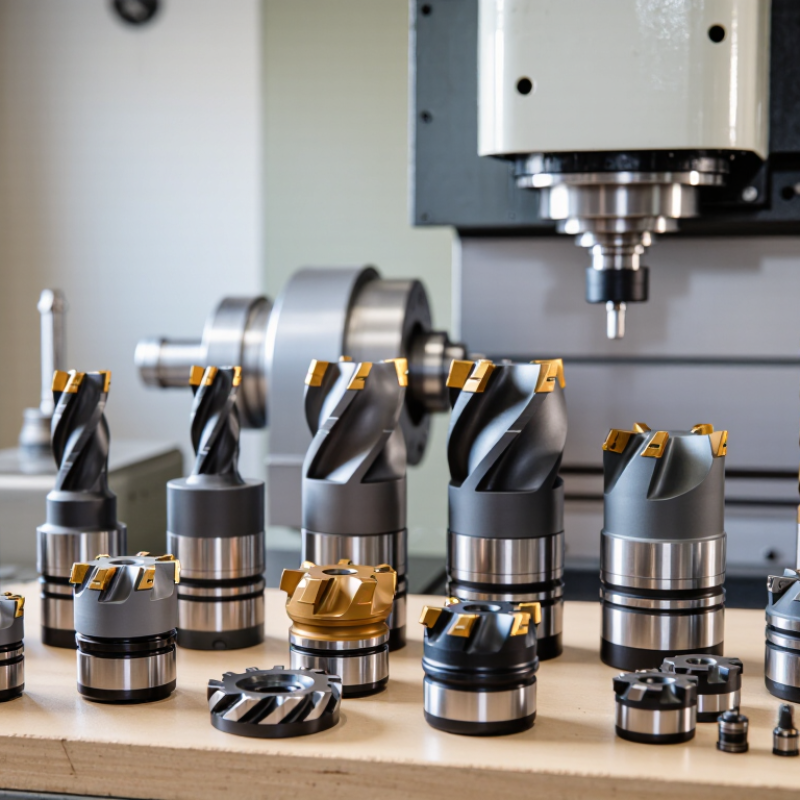
Table of Contents [Hide]
How CNC Cutting Tools Enable Precision Machining
Precision machining begins where the cutting edge meets the material. An end mill with the right flute geometry can leave a clean wall in aluminum, while a suitable carbide drill helps hold a hole’s position and diameter. Face mills remove stock evenly across broad surfaces; reamers refine drilled holes when closer sizing is needed. Small details matter. Tool runout, for example, can make one flute do most of the work, causing uneven wear and a rough finish.
Tool choice also depends on the workpiece, cut depth, machine rigidity, and coolant strategy. A sharp edge may reduce cutting forces in softer alloys, while tougher materials may call for a more wear-resistant grade and steadier feed. Correct speed and feed are not universal settings; operators should check tooling guidance, then verify the cut with measurements and surface inspection. Watch for a changing spindle sound, rising heat, or chips that turn from short curls into long, tangled strands. These clues are useful, but not conclusive. I would not trust a polished surface alone: a part can look accurate and still miss its tolerance. Careful setup, tool condition checks, and measured test cuts make precision repeatable, though they cannot remove every source of variation.
10 Best CNC Cutting Tools for Precision Machining - How CNC Cutting Tools Enable Precision Machining
| CNC Cutting Tool | Typical Use and Materials | How It Supports Precision | Selection and Setup Considerations |
|---|---|---|---|
| Solid Carbide End Mill | Slotting, profiling, and pocketing in steels, stainless steels, aluminum, and other machinable alloys. | High rigidity and sharp cutting edges can help produce accurate walls and consistent features when tool deflection is controlled. | Match flute geometry and coating to the work material. Use a suitable stick-out and secure workholding to limit vibration. |
| Indexable Face Mill | Facing broad surfaces on cast iron, steel, and nonferrous metal workpieces. | Multiple inserts remove material efficiently; correct insert height and a stable setup help create a flat surface. | Check insert seating, cutter runout, and insert condition. Cutting parameters depend on the insert geometry and work material. |
| Ball-Nose End Mill | Contoured surfaces, 3D profiles, and curved features in dies, molds, and other components. | The rounded cutting end follows curved geometry and can produce controlled surface finishes with an appropriate step-over. | Effective cutting speed varies with contact point. Consider toolpath direction, step-over, and finishing allowance. |
| Twist Drill | Producing holes in common metals, plastics, and other materials compatible with the drill geometry. | A suitable drill point and stable alignment help establish hole location and maintain consistent hole size. | For deeper holes, use a suitable chip-evacuation strategy. Check drill runout, point condition, and workpiece support. |
| Reamer | Finishing a pre-drilled or pre-bored hole to a more controlled diameter and surface finish. | Its finishing edges remove a small amount of material to improve hole size, roundness, and surface quality. | Leave an appropriate, consistent finishing allowance. Reaming does not correct major hole-position or alignment errors. |
| Boring Bar | Enlarging and finishing internal diameters on milling or turning machines. | Adjustable boring setups can bring an internal diameter to a target size while maintaining concentricity with the setup axis. | Minimize bar overhang and use a rigid setup. Long, slender bars are more prone to deflection and chatter. |
| Tapping Tool | Cutting internal threads in pre-drilled holes in metals and other suitable materials. | A tap forms a thread profile that mates with the specified thread standard and size when correctly aligned. | Use the correct tap-drill diameter, thread specification, and synchronization for the machine. Provide suitable lubrication where required. |
| Thread Mill | Machining internal or external threads, including threads in larger holes and some difficult-to-machine materials. | CNC interpolation controls the thread path and pitch; one tool can often machine different diameters with the same pitch. | Program the correct helical path and account for cutter diameter. Verify thread fit with an appropriate gauge. |
| Turning Tool with Indexable Insert | Facing, straight turning, and profiling cylindrical parts made from steels, stainless steels, cast iron, or nonferrous alloys. | Consistent insert positioning and a rigid toolholder support repeatable diameters and surface finishes. | Choose insert shape, nose radius, and chipbreaker for the operation. Check tool-center height and workpiece rigidity. |
| Parting and Grooving Tool | Cutting grooves or separating parts on a CNC lathe. | A correctly aligned, rigid blade helps maintain groove width and reduce variation during cut-off. | Keep blade overhang short, align the tool accurately, and ensure chips can escape from the groove. |
Precision depends on the complete machining setup—not only the cutting tool. Workholding, machine condition, tool runout, toolpath, material, and cutting parameters all affect the final result.