


- Home
- A-Z Catalogue
- Products
- Valves
- Cetop
- Manual Directional Valves
- Proportional Valves
- Poppet Valves
- High-Speed Linear Servo Valves
- All High-Speed Linear Servo Valves
- Cetop 10 (NG32) Two Stage Type High Speed Linear Servo Valves – LSVHG-10
- Cetop 10 (NG32) Two Stage Type High Speed Linear Servo Valves – LSVHG-10 (With Fail-Safe)
- Cetop 8 (NG25) Two Stage Type High Speed Linear Servo Valves – LSVHG-06
- Cetop 8 (NG25) Two Stage Type High Speed Linear Servo Valves – LSVHG-06 (With Fail-Safe)
- Cetop 7 (NG16) Two Stage Type High Speed Linear Servo Valves – LSVHG-04
- Cetop 7 (NG16) Two Stage Type High Speed Linear Servo Valves – LSVHG-04 (With Fail-Safe)
- Cetop 5 (NG10) Direct Type High Speed Linear Servo Valves – LSVG-03
- Cetop 5 (NG10) OBE Type Direct Operated Linear Servo Valves – LSVG-03-EH
- Cetop 3 (NG6) OBE Type Direct Operated Linear Servo Valves – LSVG-01-EH
- Pumps
- Pressure control
- Flow Control Valves
- Pressure Control Valves
- All Pressure Control Valves
- Brake Valves
- Direct Relief Valve
- Low Noise Solenoid Controlled Relief Valves
- Low Noise Pilot Operated Relief Valves
- Pilot Operated Relief Valves
- Pressure reducing and relieving valves
- Pressure reducing and check valves
- Pressure control valves
- Remote Control Relief Valves
- Solenoid Controlled Relief Valves – BSG
- Solenoid Controlled Relief Valves – BST
- Unloading relief valves
- Check valves
- Environmental
- Valves
- Hydraulic Systems
- Power pack
- About Us
- Contact
- Blog

What Is the Best Chemical Eyewash Station in 2026?
A chemical splash can happen in seconds: a loose hose shifts, a bottle tips, or a worker turns too quickly. In that moment, a Chemical Eyewash station must be easy to spot and simple to activate. The best choice for 2026 is not automatically the newest or most expensive model. It is the unit that fits the actual hazards, room layout, water supply, and maintenance capacity of the workplace.
This guide compares key options, from plumbed stations to self-contained units. It looks at spray pattern, hands-free operation, access, and the time needed to reach the station. A clear path matters. So does a reliable water supply. A unit hidden behind stored cartons may look compliant on paper, yet fail the practical test. Small details count.
Selection should begin with a site-specific hazard review and the chemical’s safety information. Check manufacturer instructions and applicable workplace requirements before installation. Then consider routine flushing, inspection records, replacement parts, and whether staff can operate the unit without confusion. These steps are easy to overlook. They should not be. No product can replace training or appropriate medical evaluation after exposure. And one uncomfortable truth remains: even a well-chosen station is only useful when it works, stays accessible, and is checked consistently. The sections ahead offer a practical framework for comparing products without treating a single feature as a guarantee of safety.
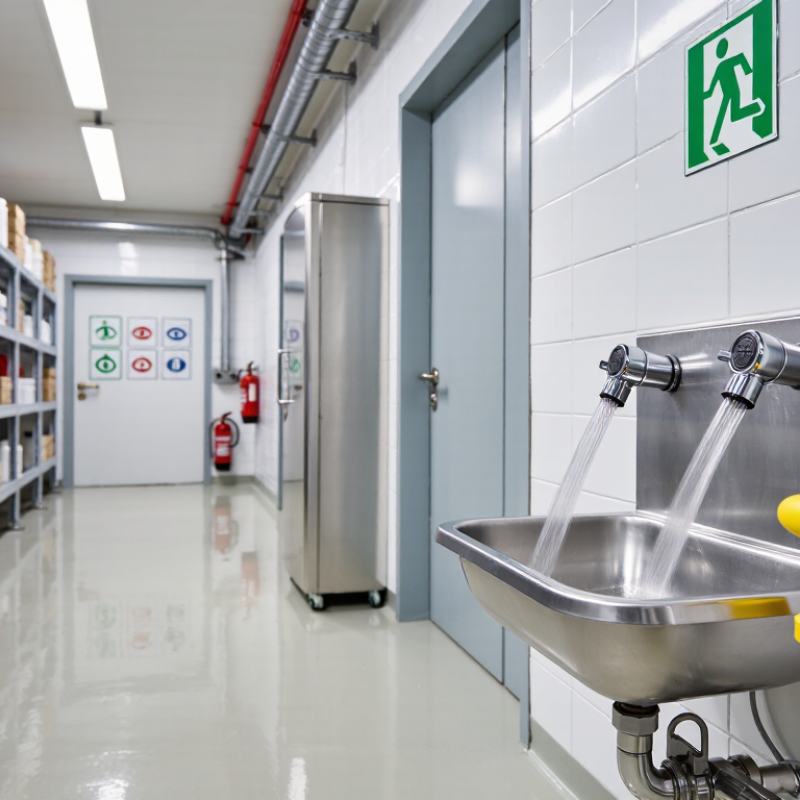
Table of Contents [Hide]
Chemical Eyewash Stations: Types, Purpose, and ANSI/ISEA Z358.1 Scope
A chemical eyewash station is emergency equipment for flushing the eyes after a splash. The best choice depends on the hazard, water supply, and room layout—not a product label. OSHA estimates that about 2,000 U.S. workers experience job-related eye injuries requiring medical treatment each day. Chemical exposure can make rapid access especially important. Seconds matter.
Common options include plumbed units, self-contained units, and combination stations with an eyewash and drench shower. Personal rinse bottles may help remove debris during initial response, but they do not replace a compliant emergency station. ANSI/ISEA Z358.1 sets performance and installation criteria for emergency eyewash and shower equipment. For example, an eyewash must deliver at least 0.4 gallons per minute for 15 minutes. The standard also addresses tepid water, accessibility, activation, and maintenance. Check the applicable edition and site requirements.
A practical selection starts with the chemical’s safety data sheet and the likely splash zone. A station should be reachable along a clear route, with no doors or stored boxes slowing access. That detail is easy to overlook. Plumbed units need a dependable water supply; self-contained models need scheduled inspection and fluid replacement. Combination units suit locations where both eye and body exposure are possible. Test the unit regularly, and keep the path and drain area clear. Real rooms are messy, so a paper plan alone is not enough.





