


- Home
- A-Z Catalogue
- Products
- Valves
- Cetop
- Manual Directional Valves
- Proportional Valves
- Poppet Valves
- High-Speed Linear Servo Valves
- All High-Speed Linear Servo Valves
- Cetop 10 (NG32) Two Stage Type High Speed Linear Servo Valves – LSVHG-10
- Cetop 10 (NG32) Two Stage Type High Speed Linear Servo Valves – LSVHG-10 (With Fail-Safe)
- Cetop 8 (NG25) Two Stage Type High Speed Linear Servo Valves – LSVHG-06
- Cetop 8 (NG25) Two Stage Type High Speed Linear Servo Valves – LSVHG-06 (With Fail-Safe)
- Cetop 7 (NG16) Two Stage Type High Speed Linear Servo Valves – LSVHG-04
- Cetop 7 (NG16) Two Stage Type High Speed Linear Servo Valves – LSVHG-04 (With Fail-Safe)
- Cetop 5 (NG10) Direct Type High Speed Linear Servo Valves – LSVG-03
- Cetop 5 (NG10) OBE Type Direct Operated Linear Servo Valves – LSVG-03-EH
- Cetop 3 (NG6) OBE Type Direct Operated Linear Servo Valves – LSVG-01-EH
- Pumps
- Pressure control
- Flow Control Valves
- Pressure Control Valves
- All Pressure Control Valves
- Brake Valves
- Direct Relief Valve
- Low Noise Solenoid Controlled Relief Valves
- Low Noise Pilot Operated Relief Valves
- Pilot Operated Relief Valves
- Pressure reducing and relieving valves
- Pressure reducing and check valves
- Pressure control valves
- Remote Control Relief Valves
- Solenoid Controlled Relief Valves – BSG
- Solenoid Controlled Relief Valves – BST
- Unloading relief valves
- Check valves
- Environmental
- Valves
- Hydraulic Systems
- Power pack
- About Us
- Contact
- Blog

What Is the Best Cable Swaging Tool in 2026?
Choosing the best Cable Swaging Tool in 2026 depends on the cable, fittings, and work involved. A hand tool that suits occasional railing repairs may not be right for repeated production work. The crimp should be secure and consistent, not merely neat from a distance.
Small details matter. Check the tool’s stated cable range, compatible sleeve materials, and included or replaceable dies. A mismatched die can leave a sleeve visibly uneven, while a poorly sized tool may require awkward force. Comfort matters too: long handles, a steady grip, and clear markings can make repetitive work easier. Not glamorous, but useful.
This guide compares tool types and selection criteria rather than declaring one universal winner. It looks at manual, hydraulic, and other common designs, along with capacity, build quality, ease of use, and value. Product specifications can change, so confirm current manufacturer information before buying. Where possible, examine sample crimps and follow the tool maker’s instructions for cable and fitting combinations. A tidy finish is not proof of a reliable connection.
There is a limitation worth admitting: ratings and feature lists cannot show how a tool feels after an afternoon of work. The right choice may be less obvious than a “best overall” label suggests. This overview will help narrow the options and explain what to check before you commit.
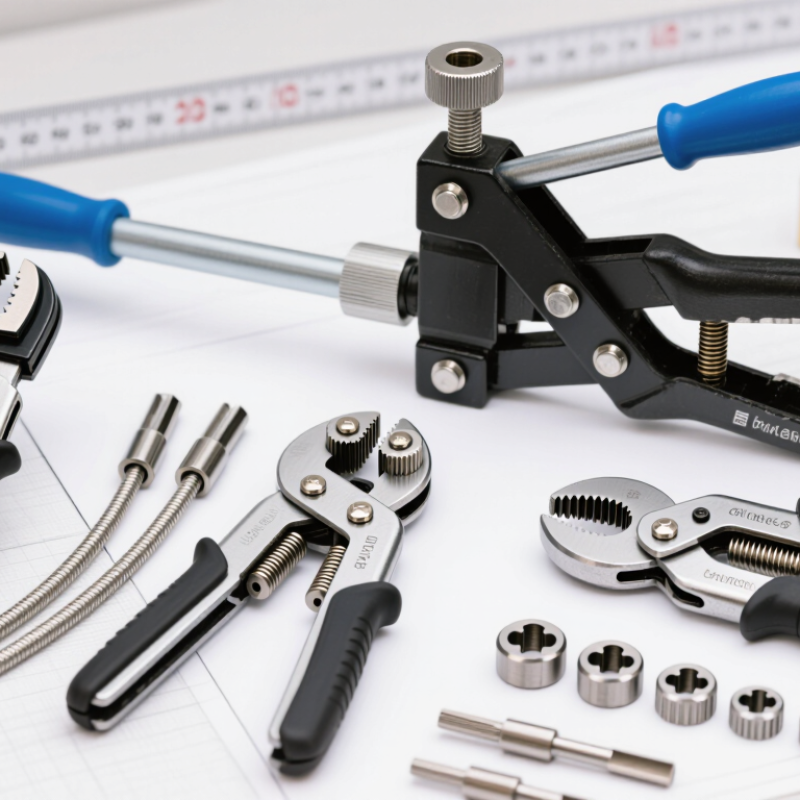
Table of Contents [Hide]
What a Cable Swaging Tool Is and What It Is Used For
A cable swaging tool compresses a metal sleeve, or ferrule, around wire rope to create a fixed termination. The pressure reshapes the sleeve so it grips the cable strands. Not a knot. The result is a compact connection used in railing systems, shade structures, and other cable assemblies. Unlike ordinary pliers, a swager uses shaped dies designed for specific sleeve and cable sizes.
The right tool depends on the cable diameter, sleeve material, and amount of work. A hand-operated model may suit occasional, smaller jobs; hydraulic tools can make repeated swages easier. Check that the dies match the sleeve, since a poor fit can leave the connection loose or damage the wire. Small details matter. Before crimping, keep the cable seated correctly and follow the sleeve maker’s instructions. Afterward, inspect the sleeve for even compression, exposed or broken strands, and movement. A finished connection can look neat and still be weak. Where the assembly carries a load, use the specified inspection or proof-testing method rather than relying on appearance alone. There is some judgment involved, and that is exactly why a quick visual check should never be the whole test.





