


- Home
- A-Z Catalogue
- Products
- Valves
- Cetop
- Manual Directional Valves
- Proportional Valves
- Poppet Valves
- High-Speed Linear Servo Valves
- All High-Speed Linear Servo Valves
- Cetop 10 (NG32) Two Stage Type High Speed Linear Servo Valves – LSVHG-10
- Cetop 10 (NG32) Two Stage Type High Speed Linear Servo Valves – LSVHG-10 (With Fail-Safe)
- Cetop 8 (NG25) Two Stage Type High Speed Linear Servo Valves – LSVHG-06
- Cetop 8 (NG25) Two Stage Type High Speed Linear Servo Valves – LSVHG-06 (With Fail-Safe)
- Cetop 7 (NG16) Two Stage Type High Speed Linear Servo Valves – LSVHG-04
- Cetop 7 (NG16) Two Stage Type High Speed Linear Servo Valves – LSVHG-04 (With Fail-Safe)
- Cetop 5 (NG10) Direct Type High Speed Linear Servo Valves – LSVG-03
- Cetop 5 (NG10) OBE Type Direct Operated Linear Servo Valves – LSVG-03-EH
- Cetop 3 (NG6) OBE Type Direct Operated Linear Servo Valves – LSVG-01-EH
- Pumps
- Pressure control
- Flow Control Valves
- Pressure Control Valves
- All Pressure Control Valves
- Brake Valves
- Direct Relief Valve
- Low Noise Solenoid Controlled Relief Valves
- Low Noise Pilot Operated Relief Valves
- Pilot Operated Relief Valves
- Pressure reducing and relieving valves
- Pressure reducing and check valves
- Pressure control valves
- Remote Control Relief Valves
- Solenoid Controlled Relief Valves – BSG
- Solenoid Controlled Relief Valves – BST
- Unloading relief valves
- Check valves
- Environmental
- Valves
- Hydraulic Systems
- Power pack
- About Us
- Contact
- Blog

7 Best Auto Wrap Vinyl Brands for Buyers
Choosing among the 7 Best Auto Wrap Vinyl Brands for Buyers takes more than comparing colors or prices. Auto Wrap Vinyl must also suit the vehicle’s curves, the installer’s experience, and the owner’s maintenance habits. A glossy sample can look striking under showroom lights, yet reveal seams or surface flaws outdoors. Details matter.
The market is growing quickly. Grand View Research estimated the global automotive wrap films market at about US$4.76 billion in 2023 and projected a 22.2% compound annual growth rate from 2024 to 2030. These are market estimates, not a guarantee that every brand or product will perform equally well. Buyers should check manufacturer technical data, including film thickness, conformability, adhesive type, expected service life, and warranty conditions. Ask how the film behaves around a door handle or a deep bumper recess. Small details can expose big differences.
A fair comparison also considers installer support, color consistency, and removal guidance. Product claims deserve scrutiny; real-world results depend on preparation, climate, and workmanship. Even a premium roll cannot fix poor surface cleaning. And no brand is perfect. The guide that follows compares leading options through practical buying criteria, while recognizing that the best choice depends on the vehicle, budget, and intended finish.
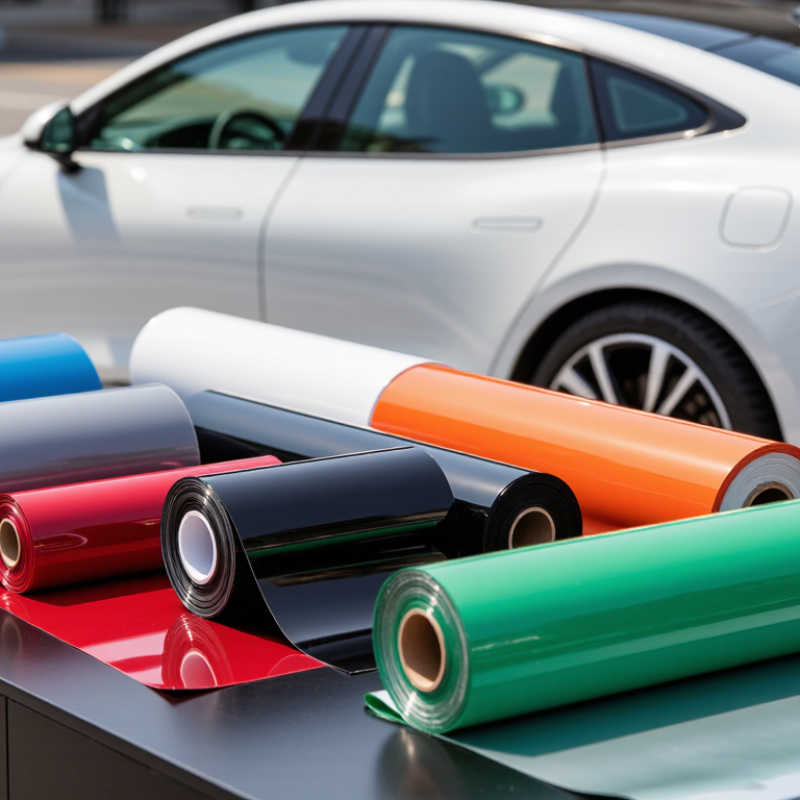
Table of Contents [Hide]
What Auto Wrap Vinyl Is and How It Protects a Vehicle’s Finish
Auto wrap vinyl is a flexible, adhesive-backed film applied over a vehicle’s painted panels. It changes the color or finish while creating a replaceable layer between paint and everyday exposure. A quality installation can reduce fading from sunlight, light scuffs, insect residue, and stains from road grime.
It is not armor. Sharp stones, deep scratches, and collisions can still damage paint. Buyers seeking stronger impact protection should compare wrap film with dedicated paint-protection film rather than assume they do the same job.
Protection depends on more than film thickness. Paint should be clean, sound, and fully cured. Damaged clear coat or poor repairs may lift during application or removal. A careful installer stretches film within its limits, trims around edges, and avoids trapping dust that can show as tiny bumps. Wash with mild soap and a soft cloth, and remove bird droppings promptly. Harsh chemicals and abrasive brushes can shorten the film’s life. Wraps also age unevenly; horizontal surfaces often fade sooner under direct sun. Removal is usually manageable when film is maintained, yet old or repainted surfaces deserve extra caution. That trade-off deserves thought.





