


- Home
- A-Z Catalogue
- Products
- Valves
- Cetop
- Manual Directional Valves
- Proportional Valves
- Poppet Valves
- High-Speed Linear Servo Valves
- All High-Speed Linear Servo Valves
- Cetop 10 (NG32) Two Stage Type High Speed Linear Servo Valves – LSVHG-10
- Cetop 10 (NG32) Two Stage Type High Speed Linear Servo Valves – LSVHG-10 (With Fail-Safe)
- Cetop 8 (NG25) Two Stage Type High Speed Linear Servo Valves – LSVHG-06
- Cetop 8 (NG25) Two Stage Type High Speed Linear Servo Valves – LSVHG-06 (With Fail-Safe)
- Cetop 7 (NG16) Two Stage Type High Speed Linear Servo Valves – LSVHG-04
- Cetop 7 (NG16) Two Stage Type High Speed Linear Servo Valves – LSVHG-04 (With Fail-Safe)
- Cetop 5 (NG10) Direct Type High Speed Linear Servo Valves – LSVG-03
- Cetop 5 (NG10) OBE Type Direct Operated Linear Servo Valves – LSVG-03-EH
- Cetop 3 (NG6) OBE Type Direct Operated Linear Servo Valves – LSVG-01-EH
- Pumps
- Pressure control
- Flow Control Valves
- Pressure Control Valves
- All Pressure Control Valves
- Brake Valves
- Direct Relief Valve
- Low Noise Solenoid Controlled Relief Valves
- Low Noise Pilot Operated Relief Valves
- Pilot Operated Relief Valves
- Pressure reducing and relieving valves
- Pressure reducing and check valves
- Pressure control valves
- Remote Control Relief Valves
- Solenoid Controlled Relief Valves – BSG
- Solenoid Controlled Relief Valves – BST
- Unloading relief valves
- Check valves
- Environmental
- Valves
- Hydraulic Systems
- Power pack
- About Us
- Contact
- Blog

2026 Best Arm Cylinder Types for Global Buyers
Choosing the right Arm Cylinder is a practical decision for global equipment buyers. It affects lifting force, operating speed, stability, maintenance, and total ownership cost. A cylinder that looks suitable on paper may fail in dusty quarries, cold ports, or humid construction sites. Conditions matter.
Hydraulics author Andrew Parr offers a useful engineering principle: “A cylinder is only as reliable as the system around it.” That principle guides this 2026 comparison. Welded cylinders provide compact strength for mobile machinery. Tie-rod cylinders support easier servicing in controlled industrial environments. Telescopic cylinders suit limited installation spaces and long extension requirements. Custom cylinders may solve unusual mounting or stroke demands, but they often require longer lead times and closer technical communication.
Global buyers should examine bore diameter, rod size, stroke length, working pressure, mounting style, seal materials, and surface protection. They should also confirm compatibility with local hydraulic oil, temperature ranges, replacement seals, and available service skills. A low purchase price can become expensive when spare parts travel across borders. Small details become large problems.
This guide compares major Arm Cylinder types through practical selection criteria. It considers real equipment pressures, not only catalogue ratings. Some recommendations may change after field testing. That is worth admitting. Manufacturer data can be incomplete, and installation quality still controls much of the final result. Buyers should verify drawings, pressure limits, certifications, and performance evidence before placing large orders. Reliability begins with careful questions.
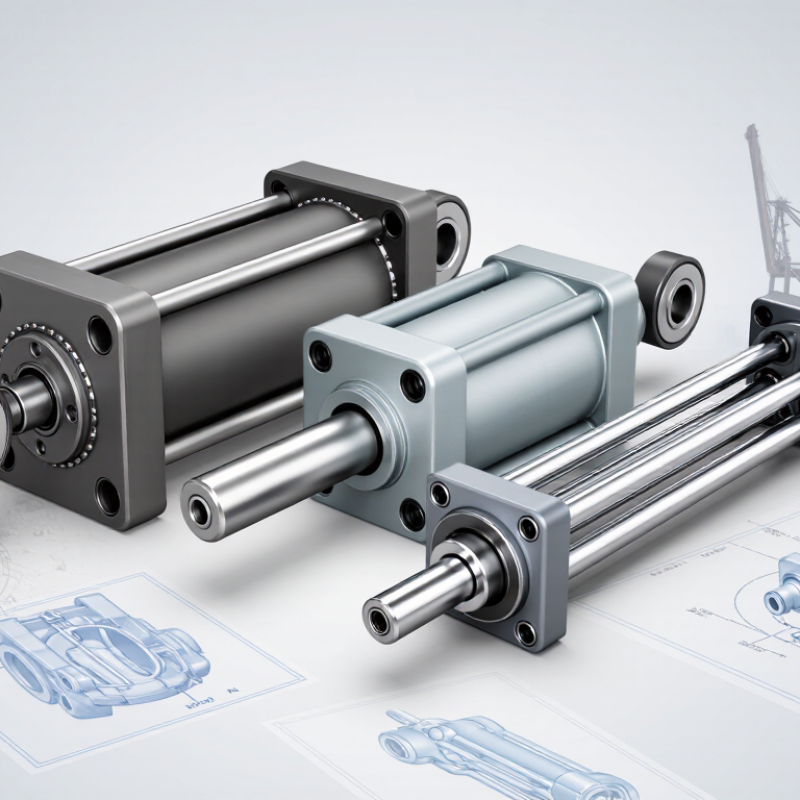
Table of Contents [Hide]
Arm Cylinder Basics and Core Operating Principles
2026 Best Arm Cylinder Types for Global Buyers
Arm Cylinder Basics and Core Operating Principles
An arm cylinder converts hydraulic pressure into controlled linear movement. A pump sends oil through a directional valve. The valve fills one side of the cylinder, pushing the piston and rod outward. Reversing the flow retracts the rod. This is the core operating principle behind most excavator and material-handling arms.
Common designs include welded cylinders, tie-rod cylinders, double-acting cylinders, and cushioned cylinders. Welded models suit heavy equipment because their compact bodies tolerate demanding loads. Tie-rod designs allow easier servicing in lighter applications. Double-acting cylinders provide powered extension and retraction. Cushioning reduces impact when the piston reaches the end of its stroke. However, cushioning cannot correct poor sizing or excessive side loading.
Bore diameter controls pushing force, while rod diameter affects buckling resistance and retraction force. Stroke length determines the arm’s working range. Buyers should check working pressure, pin dimensions, mounting style, seal materials, and oil cleanliness. A clean calculation may still fail in muddy conditions. Field inspections often reveal bent rods, loose pins, or damaged seals before pressure readings show trouble.
Tips: Measure the existing cylinder before ordering. Confirm bore, stroke, rod size, and closed length. Choose corrosion-resistant protection for wet environments. Keep hydraulic oil filtered. Do not judge capacity from appearance alone. A small alignment error can create expensive wear.





