


- Home
- A-Z Catalogue
- Products
- Valves
- Cetop
- Manual Directional Valves
- Proportional Valves
- Poppet Valves
- High-Speed Linear Servo Valves
- All High-Speed Linear Servo Valves
- Cetop 10 (NG32) Two Stage Type High Speed Linear Servo Valves – LSVHG-10
- Cetop 10 (NG32) Two Stage Type High Speed Linear Servo Valves – LSVHG-10 (With Fail-Safe)
- Cetop 8 (NG25) Two Stage Type High Speed Linear Servo Valves – LSVHG-06
- Cetop 8 (NG25) Two Stage Type High Speed Linear Servo Valves – LSVHG-06 (With Fail-Safe)
- Cetop 7 (NG16) Two Stage Type High Speed Linear Servo Valves – LSVHG-04
- Cetop 7 (NG16) Two Stage Type High Speed Linear Servo Valves – LSVHG-04 (With Fail-Safe)
- Cetop 5 (NG10) Direct Type High Speed Linear Servo Valves – LSVG-03
- Cetop 5 (NG10) OBE Type Direct Operated Linear Servo Valves – LSVG-03-EH
- Cetop 3 (NG6) OBE Type Direct Operated Linear Servo Valves – LSVG-01-EH
- Pumps
- Pressure control
- Flow Control Valves
- Pressure Control Valves
- All Pressure Control Valves
- Brake Valves
- Direct Relief Valve
- Low Noise Solenoid Controlled Relief Valves
- Low Noise Pilot Operated Relief Valves
- Pilot Operated Relief Valves
- Pressure reducing and relieving valves
- Pressure reducing and check valves
- Pressure control valves
- Remote Control Relief Valves
- Solenoid Controlled Relief Valves – BSG
- Solenoid Controlled Relief Valves – BST
- Unloading relief valves
- Check valves
- Environmental
- Valves
- Hydraulic Systems
- Power pack
- About Us
- Contact
- Blog

What Is the Best Air Detection Drone from China?
Choosing the best Air Detection Drone from China requires more than comparing camera pixels or advertised flight time. A reliable model should combine stable navigation, accurate sensing, secure data handling, and practical endurance. These features matter during infrastructure inspections, environmental surveys, emergency mapping, and industrial monitoring. Imagine a drone hovering beside a wind turbine, holding its position while sensors examine a narrow blade edge. That small moment reveals more than a specification sheet.
Chinese manufacturers offer many platforms, from compact quadcopters to specialized systems with thermal, optical, and atmospheric sensors. The right choice depends on mission distance, weather conditions, payload needs, operator training, and local aviation requirements. A long battery claim may change in strong wind. A sharp camera may perform poorly through rain or haze. Real field experience matters.
There is no universal winner.
This comparison will examine detection accuracy, flight stability, sensor integration, battery performance, maintenance, software usability, and after-sales support. It will also consider whether manufacturers provide clear technical documentation and responsible data practices. These areas support a more professional and trustworthy evaluation. Still, product testing has limits. Laboratory results cannot fully predict performance beside buildings, power lines, or moving vehicles. Some specifications may require independent verification.
Readers should therefore treat the “best” Air Detection Drone as the best match for a defined, lawful application. Careful testing, trained operation, and compliant data management remain essential. A capable drone helps, but disciplined use makes the difference.
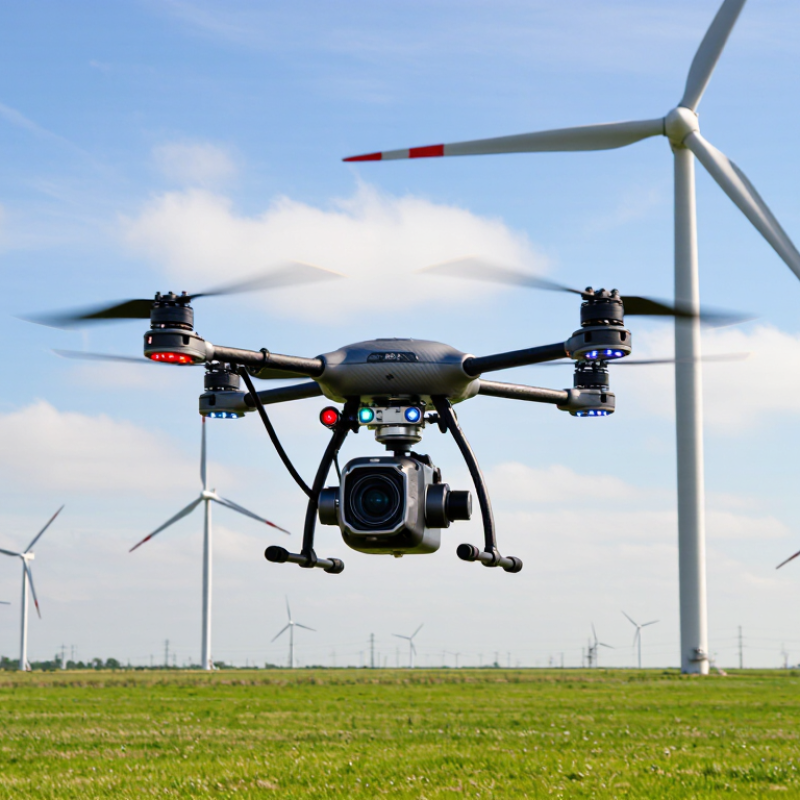
Table of Contents [Hide]
Define Air-Detection Missions: Mapping, Emissions, and Emergency Response
What Is the Best Air Detection Drone from China?
The best air-detection drone depends on the mission, not its advertised flight time. For mapping, prioritize stable positioning, accurate imaging, and reliable terrain coverage. A camera with thermal or multispectral capability can reveal heat patterns, vegetation stress, and uneven surfaces. RTK support improves location accuracy around roads, rooftops, and industrial areas. Weather resistance also matters when wind changes suddenly.
Emissions monitoring needs a different payload. Gas sensors should match the suspected pollutant and the required detection range. A drone may carry sensors for volatile compounds, carbon monoxide, or particulate matter. Calibration before every flight is essential. Sensor readings should be compared with ground instruments. A colorful dashboard is not proof of accurate data. That lesson is easy to forget.
Emergency response requires speed, clear images, and dependable control. Thermal cameras can help locate people during smoke, darkness, or poor visibility. Live mapping can guide crews around blocked roads and damaged structures. Operators should record altitude, time, weather, and sensor status. This creates a useful evidence trail. Batteries may drain faster in cold air, and compact sensors can produce noisy results. These limitations deserve attention, even when the drone performs well in demonstrations. A careful selection process tests the complete system: aircraft, payload, software, training, maintenance, and data security.