


- Home
- A-Z Catalogue
- Products
- Valves
- Cetop
- Manual Directional Valves
- Proportional Valves
- Poppet Valves
- High-Speed Linear Servo Valves
- All High-Speed Linear Servo Valves
- Cetop 10 (NG32) Two Stage Type High Speed Linear Servo Valves – LSVHG-10
- Cetop 10 (NG32) Two Stage Type High Speed Linear Servo Valves – LSVHG-10 (With Fail-Safe)
- Cetop 8 (NG25) Two Stage Type High Speed Linear Servo Valves – LSVHG-06
- Cetop 8 (NG25) Two Stage Type High Speed Linear Servo Valves – LSVHG-06 (With Fail-Safe)
- Cetop 7 (NG16) Two Stage Type High Speed Linear Servo Valves – LSVHG-04
- Cetop 7 (NG16) Two Stage Type High Speed Linear Servo Valves – LSVHG-04 (With Fail-Safe)
- Cetop 5 (NG10) Direct Type High Speed Linear Servo Valves – LSVG-03
- Cetop 5 (NG10) OBE Type Direct Operated Linear Servo Valves – LSVG-03-EH
- Cetop 3 (NG6) OBE Type Direct Operated Linear Servo Valves – LSVG-01-EH
- Pumps
- Pressure control
- Flow Control Valves
- Pressure Control Valves
- All Pressure Control Valves
- Brake Valves
- Direct Relief Valve
- Low Noise Solenoid Controlled Relief Valves
- Low Noise Pilot Operated Relief Valves
- Pilot Operated Relief Valves
- Pressure reducing and relieving valves
- Pressure reducing and check valves
- Pressure control valves
- Remote Control Relief Valves
- Solenoid Controlled Relief Valves – BSG
- Solenoid Controlled Relief Valves – BST
- Unloading relief valves
- Check valves
- Environmental
- Valves
- Hydraulic Systems
- Power pack
- About Us
- Contact
- Blog

What Is Automotive Film and How Does It Work?
Automotive Film is a thin, engineered layer applied to vehicle glass or painted surfaces. It can improve appearance, comfort, privacy, and surface protection. However, its performance depends on the film type, installation quality, and vehicle condition.
For windows, the film contains dyes, metal particles, or ceramic compounds. These materials filter selected light wavelengths, reduce glare, and limit solar heat entering the cabin. Some products also help block ultraviolet radiation. Paint protection film works differently. Its clear polyurethane layer absorbs minor impacts from road debris, while its adhesive bonds closely to the paint.
The difference is visible.
On a sunny afternoon, quality window film can make dark seats feel less heated. A properly installed protection film may prevent small stone chips from marking a glossy hood. Experienced installers first clean the surface, measure each panel, and control dust during application. Small particles can create bubbles, weak edges, or uneven reflections.
Installation matters greatly.
Reliable information should include measurable details, such as visible light transmission, heat rejection, and warranty coverage. Marketing claims can sound impressive, yet results vary between vehicles and climates. Even expensive film cannot repair damaged glass or replace careful maintenance. That limitation deserves attention.
This article explains how Automotive Film works, where it performs well, and what buyers should examine before choosing a product. It also considers durability, maintenance, installation standards, and practical trade-offs. The best decision is not always the darkest or most expensive option. It is the one that matches the vehicle, driving conditions, local requirements, and realistic expectations.
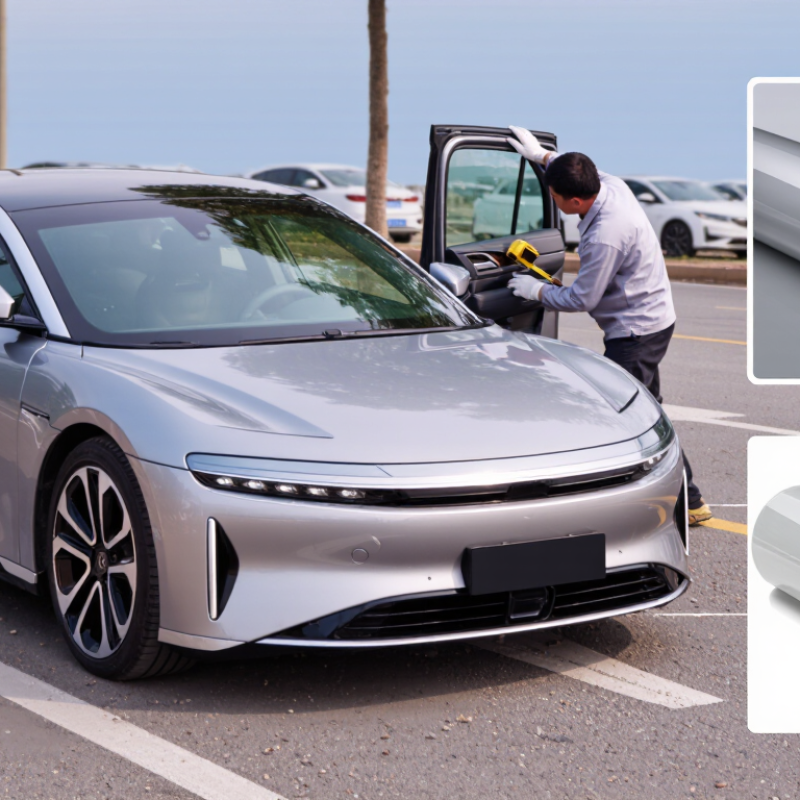
Table of Contents [Hide]
Definition and Purpose of Automotive Film
Automotive film is a thin, flexible layer applied to a vehicle’s glass or painted surfaces. Its purpose depends on the film type. Window film can reduce glare and limit some solar heat entering the cabin, while paint protection film helps shield vulnerable panels from minor chips and scuffs. Decorative films can also change a vehicle’s color or finish without repainting it.
Different films use different materials and construction. Some window films rely on tinted or treated layers; paint protection films are usually clear and designed to absorb small impacts. They are not armor. A sharp object or strong collision can still damage the surface beneath. Choose based on the area you want to protect, your comfort needs, and how the vehicle is used.
Installation matters. Dust trapped under a film may appear as tiny specks, and poorly fitted edges can lift over time. The surface should be clean and dry before application, with careful trimming around curves and seams. I’ve seen people expect film to hide existing scratches; it usually does not. In fact, a clear layer can make flaws easier to notice. A small test area can help set realistic expectations.