


- Home
- A-Z Catalogue
- Products
- Valves
- Cetop
- Manual Directional Valves
- Proportional Valves
- Poppet Valves
- High-Speed Linear Servo Valves
- All High-Speed Linear Servo Valves
- Cetop 10 (NG32) Two Stage Type High Speed Linear Servo Valves – LSVHG-10
- Cetop 10 (NG32) Two Stage Type High Speed Linear Servo Valves – LSVHG-10 (With Fail-Safe)
- Cetop 8 (NG25) Two Stage Type High Speed Linear Servo Valves – LSVHG-06
- Cetop 8 (NG25) Two Stage Type High Speed Linear Servo Valves – LSVHG-06 (With Fail-Safe)
- Cetop 7 (NG16) Two Stage Type High Speed Linear Servo Valves – LSVHG-04
- Cetop 7 (NG16) Two Stage Type High Speed Linear Servo Valves – LSVHG-04 (With Fail-Safe)
- Cetop 5 (NG10) Direct Type High Speed Linear Servo Valves – LSVG-03
- Cetop 5 (NG10) OBE Type Direct Operated Linear Servo Valves – LSVG-03-EH
- Cetop 3 (NG6) OBE Type Direct Operated Linear Servo Valves – LSVG-01-EH
- Pumps
- Pressure control
- Flow Control Valves
- Pressure Control Valves
- All Pressure Control Valves
- Brake Valves
- Direct Relief Valve
- Low Noise Solenoid Controlled Relief Valves
- Low Noise Pilot Operated Relief Valves
- Pilot Operated Relief Valves
- Pressure reducing and relieving valves
- Pressure reducing and check valves
- Pressure control valves
- Remote Control Relief Valves
- Solenoid Controlled Relief Valves – BSG
- Solenoid Controlled Relief Valves – BST
- Unloading relief valves
- Check valves
- Environmental
- Valves
- Hydraulic Systems
- Power pack
- About Us
- Contact
- Blog

2026 Top Walk In Humidity Chamber Types for Global Buyers?
For global buyers, choosing a 2026 Walk In Humidity Chamber is more complex than comparing chamber size and price. Climate testing now supports battery systems, automotive parts, electronics, medical equipment, and renewable-energy components. Each application may require different humidity ranges, temperature transitions, air circulation, and safety controls.
Reliability engineer Dr. Michael Pecht defines reliability as “the probability that a product will perform its intended function under stated conditions for a specified period of time.” This principle should guide every purchasing decision. A chamber is not merely a large insulated room. It is a controlled environment that must reproduce demanding conditions consistently, safely, and repeatedly.
The main chamber types include constant humidity models, temperature-humidity cycling chambers, rapid-change systems, and custom walk-in rooms. Some buyers need stable 85°C and 85% relative humidity exposure. Others need fast transitions that reveal condensation, seal failure, or material fatigue. The correct choice depends on product size, test standards, loading patterns, and future capacity.
Details matter.
A poorly positioned sensor can distort results. An undersized humidifier may struggle during door openings. Service access can also become an expensive afterthought. I have seen specifications look impressive on paper while daily operation felt restrictive. That uncomfortable gap deserves attention.
This guide compares leading Walk In Humidity Chamber types for international buyers in 2026. It examines performance, construction, control systems, energy use, maintenance, customization, and supplier support. The goal is practical clarity, not a perfect-sounding checklist. Conditions vary, and no single chamber fits every laboratory, factory, or testing program.
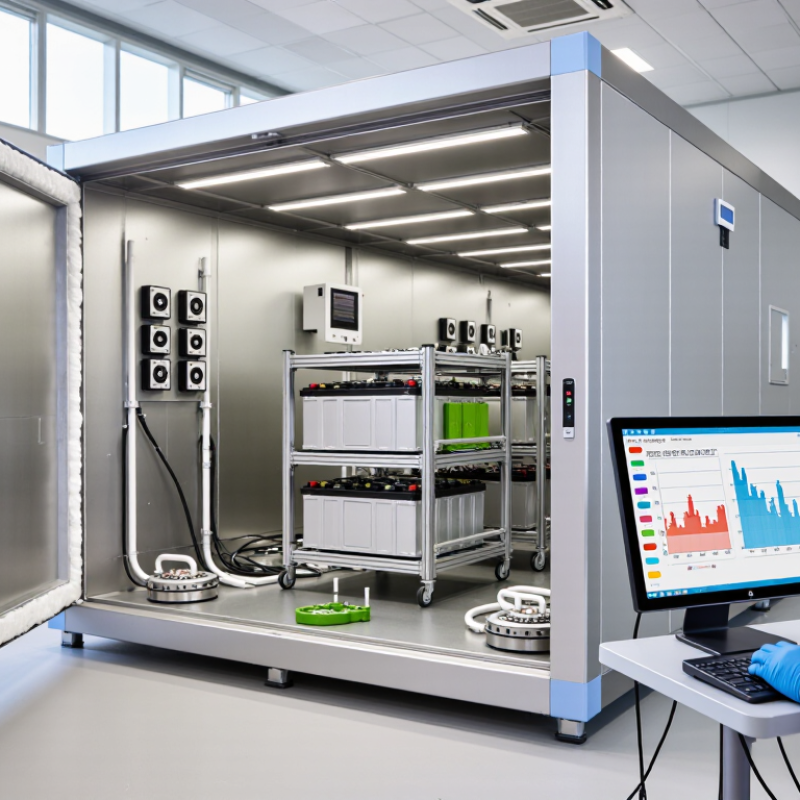
Table of Contents [Hide]
What Is a Walk-In Humidity Chamber and How Does It Work?
A walk-in humidity chamber is a large environmental test room for products, materials, and components. It controls temperature, relative humidity, airflow, and exposure time. Unlike a benchtop unit, it allows technicians, racks, or full-size assemblies inside. MarketsandMarkets’ 2024 Environmental Test Chamber Market analysis estimates industry growth at roughly 6% annually through 2028. Demand is rising with stricter reliability testing.
The working principle is straightforward, but precise control is not. A humidifier adds vapor, while cooling coils remove heat and excess moisture. Fans distribute air across the chamber. Sensors measure temperature and humidity continuously. A controller compares readings with the test profile, then adjusts heating, cooling, or steam output. IEC 60068-2-78 commonly uses 85°C and 85% relative humidity for damp-heat testing. That condition exposes weak seals, insulation, coatings, and electronics quickly.
Walk-in models usually include steady-state humidity, temperature-cycling, stability, and customized production chambers. Global buyers should check usable volume, door access, floor loading, recovery time, and power compatibility. Energy use also matters. ASHRAE’s Handbook—Fundamentals explains that humidity readings change with temperature, even when moisture content stays constant. A small sensor error can therefore distort test results. In practical qualification work, I would verify calibration, airflow mapping, and sample spacing before trusting a long test. The overlooked detail is often the rack layout.