


- Home
- A-Z Catalogue
- Products
- Valves
- Cetop
- Manual Directional Valves
- Proportional Valves
- Poppet Valves
- High-Speed Linear Servo Valves
- All High-Speed Linear Servo Valves
- Cetop 10 (NG32) Two Stage Type High Speed Linear Servo Valves – LSVHG-10
- Cetop 10 (NG32) Two Stage Type High Speed Linear Servo Valves – LSVHG-10 (With Fail-Safe)
- Cetop 8 (NG25) Two Stage Type High Speed Linear Servo Valves – LSVHG-06
- Cetop 8 (NG25) Two Stage Type High Speed Linear Servo Valves – LSVHG-06 (With Fail-Safe)
- Cetop 7 (NG16) Two Stage Type High Speed Linear Servo Valves – LSVHG-04
- Cetop 7 (NG16) Two Stage Type High Speed Linear Servo Valves – LSVHG-04 (With Fail-Safe)
- Cetop 5 (NG10) Direct Type High Speed Linear Servo Valves – LSVG-03
- Cetop 5 (NG10) OBE Type Direct Operated Linear Servo Valves – LSVG-03-EH
- Cetop 3 (NG6) OBE Type Direct Operated Linear Servo Valves – LSVG-01-EH
- Pumps
- Pressure control
- Flow Control Valves
- Pressure Control Valves
- All Pressure Control Valves
- Brake Valves
- Direct Relief Valve
- Low Noise Solenoid Controlled Relief Valves
- Low Noise Pilot Operated Relief Valves
- Pilot Operated Relief Valves
- Pressure reducing and relieving valves
- Pressure reducing and check valves
- Pressure control valves
- Remote Control Relief Valves
- Solenoid Controlled Relief Valves – BSG
- Solenoid Controlled Relief Valves – BST
- Unloading relief valves
- Check valves
- Environmental
- Valves
- Hydraulic Systems
- Power pack
- About Us
- Contact
- Blog

2026 Top Standing Pouch Making Machine Manufacturers
A standing pouch can look simple on a shelf: a flat base, crisp seals, and a zipper that opens cleanly. Making it consistently is more demanding. A Standing Pouch Making Machine must form the pouch, control film tension, create reliable seals, and handle changeovers without wasting excessive material. For buyers, those details matter as much as advertised speed.
The market context is expanding, but broad packaging data should not be mistaken for machine-market figures. Grand View Research estimated the global flexible packaging market at USD 275.2 billion in 2023 and projected a 4.1% compound annual growth rate from 2024 to 2030. That report describes the wider sector, not sales of pouch-making equipment. A useful distinction. This 2026 manufacturer overview therefore focuses on verifiable factors: pouch formats, sealing performance, automation, service support, and documented production capabilities.
Expert insight also deserves careful sourcing. No article or verifiable machine-specific quotation was provided for this request, so attributing a polished line to a named specialist would risk misleading readers. Instead, this guide treats each manufacturer’s published specifications as claims to check against sample runs, references, and technical discussions. Numbers can impress. A stable seal on a real production line is stronger evidence.
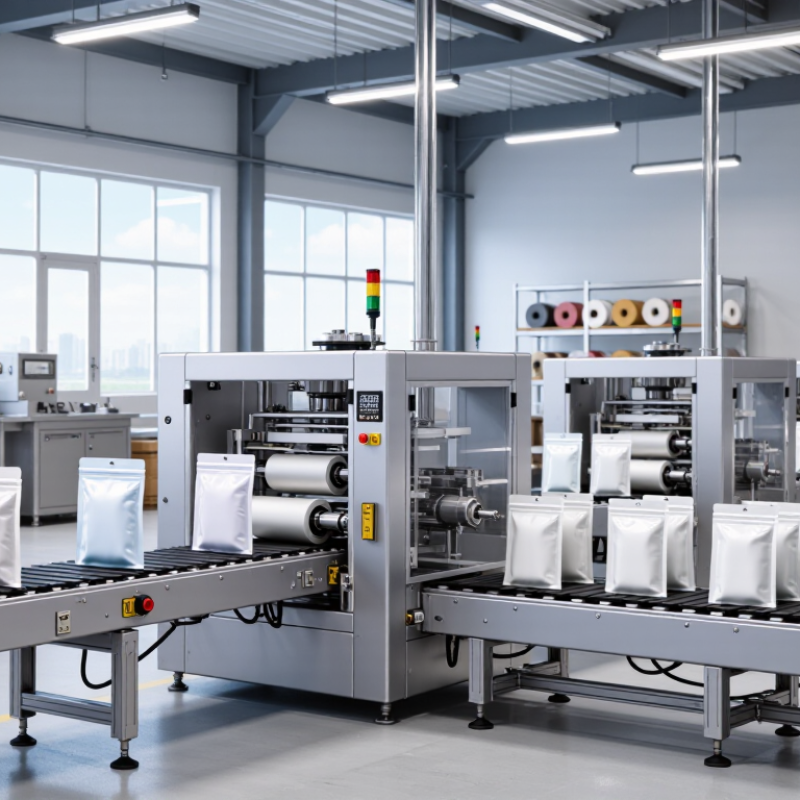
Table of Contents [Hide]
What Is a Standing Pouch Making Machine?
A standing pouch making machine converts flexible packaging film into pouches that can stand upright on a shelf. It typically unwinds a roll, aligns the film, forms gussets, seals the edges, and cuts each pouch to size. Some configurations add zipper tracks or fitment openings, depending on the package design. Not every machine fills the finished pouch; filling may happen on a separate line.
The details matter. Film tension must stay even, or wrinkles can cross the seal area. Heated sealing bars bond the layers under controlled temperature, pressure, and dwell time. A small change in film thickness may require new settings. Operators often inspect pouch width, seal appearance, and cut alignment during production. They may also test samples for leaks or weak seams. Looks can deceive.
Choosing equipment starts with the pouch structure, dimensions, and expected production rate. Ask whether the machine can handle the intended laminate and required features, then verify with production trials. A neat sample can still hide inconsistent seals at higher speeds. Changeovers, cleaning access, and spare-part support deserve attention too. These points are easy to overlook. A machine that runs one pouch format well may need careful adjustment for another.





