


- Home
- A-Z Catalogue
- Products
- Valves
- Cetop
- Manual Directional Valves
- Proportional Valves
- Poppet Valves
- High-Speed Linear Servo Valves
- All High-Speed Linear Servo Valves
- Cetop 10 (NG32) Two Stage Type High Speed Linear Servo Valves – LSVHG-10
- Cetop 10 (NG32) Two Stage Type High Speed Linear Servo Valves – LSVHG-10 (With Fail-Safe)
- Cetop 8 (NG25) Two Stage Type High Speed Linear Servo Valves – LSVHG-06
- Cetop 8 (NG25) Two Stage Type High Speed Linear Servo Valves – LSVHG-06 (With Fail-Safe)
- Cetop 7 (NG16) Two Stage Type High Speed Linear Servo Valves – LSVHG-04
- Cetop 7 (NG16) Two Stage Type High Speed Linear Servo Valves – LSVHG-04 (With Fail-Safe)
- Cetop 5 (NG10) Direct Type High Speed Linear Servo Valves – LSVG-03
- Cetop 5 (NG10) OBE Type Direct Operated Linear Servo Valves – LSVG-03-EH
- Cetop 3 (NG6) OBE Type Direct Operated Linear Servo Valves – LSVG-01-EH
- Pumps
- Pressure control
- Flow Control Valves
- Pressure Control Valves
- All Pressure Control Valves
- Brake Valves
- Direct Relief Valve
- Low Noise Solenoid Controlled Relief Valves
- Low Noise Pilot Operated Relief Valves
- Pilot Operated Relief Valves
- Pressure reducing and relieving valves
- Pressure reducing and check valves
- Pressure control valves
- Remote Control Relief Valves
- Solenoid Controlled Relief Valves – BSG
- Solenoid Controlled Relief Valves – BST
- Unloading relief valves
- Check valves
- Environmental
- Valves
- Hydraulic Systems
- Power pack
- About Us
- Contact
- Blog

2026 Top PCB Micro Switch Manufacturers for Global Buyers?
Choosing a Pcb Micro Switch manufacturer in 2026 involves more than comparing unit prices. Buyers need components that match the board layout, switching load, and expected operating life. A few millimeters matter. So do actuation force, travel distance, terminal style, and contact ratings. These details can affect assembly yield and performance inside a finished product.
This guide helps global buyers assess manufacturers using practical, verifiable criteria. It covers product range, engineering support, sample availability, production capacity, quality documentation, and communication during customization. Ask for current datasheets and test conditions, not only headline cycle-life figures. Confirm that the proposed footprint and soldering method suit your process. If a supplier cannot explain these points clearly, pause before committing to a large order. That is not always easy when schedules are tight.
Manufacturer lists are useful starting points, not guarantees of fit. Capabilities, lead times, and service can change, and a polished website is not proof of consistent production. Request representative samples, compare them against your requirements, and clarify inspection and traceability arrangements. A small pilot order can reveal issues that a product page misses. No shortcut here. The right choice balances technical suitability, dependable delivery, and responsive support, while leaving room to revise assumptions when testing reveals a mismatch.
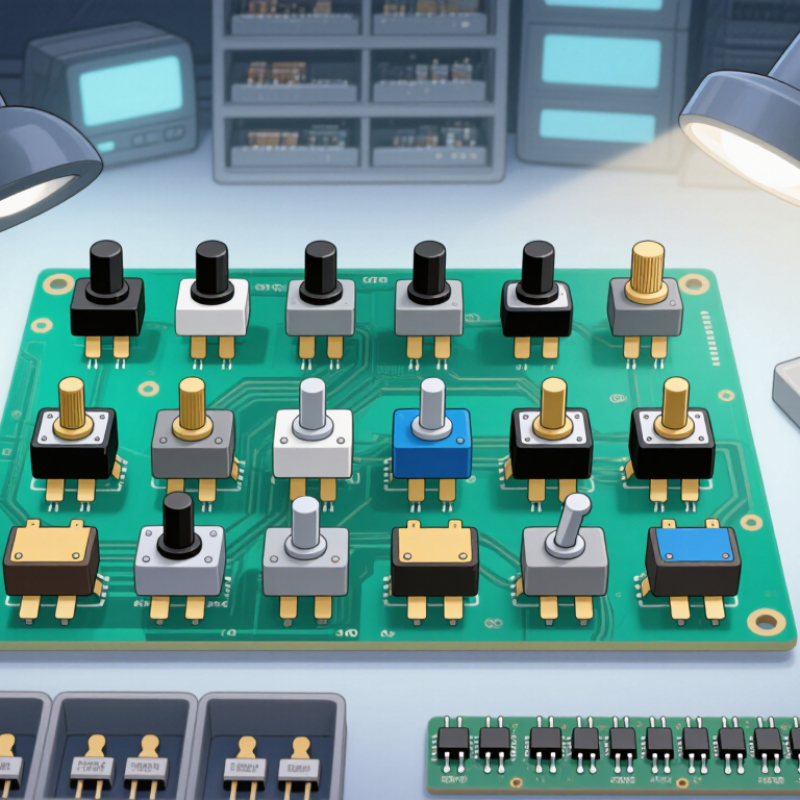
Table of Contents [Hide]
What PCB Micro Switches Are and How They Work
PCB micro switches are compact electromechanical components mounted directly on a printed circuit board. They let a user or moving part open or close an electrical circuit with a small press. You may find them in control panels, appliances, and handheld devices. Their small size saves space, but leaves little room for careless layout.
Inside, an actuator presses a spring-loaded contact mechanism. At a set point, the contacts snap between positions, changing the circuit state. Many versions are normally open, while others are normally closed. The sharp action can produce a noticeable click. That click matters. It can help confirm operation, but it does not guarantee a reliable electrical signal. Contact bounce may briefly create several transitions, so a circuit may need debounce handling. A loose fit or excessive force can also affect service life.
Tips: Check the datasheet for pin layout, operating force, travel, and electrical ratings before choosing a part. Match the footprint carefully; even small spacing errors can make assembly difficult. Keep soldering heat within the specified limits. In a dusty or frequently pressed device, consider sealing and endurance requirements. A switch may look simple, but its mounting details deserve a second look.





