


- Home
- A-Z Catalogue
- Products
- Valves
- Cetop
- Manual Directional Valves
- Proportional Valves
- Poppet Valves
- High-Speed Linear Servo Valves
- All High-Speed Linear Servo Valves
- Cetop 10 (NG32) Two Stage Type High Speed Linear Servo Valves – LSVHG-10
- Cetop 10 (NG32) Two Stage Type High Speed Linear Servo Valves – LSVHG-10 (With Fail-Safe)
- Cetop 8 (NG25) Two Stage Type High Speed Linear Servo Valves – LSVHG-06
- Cetop 8 (NG25) Two Stage Type High Speed Linear Servo Valves – LSVHG-06 (With Fail-Safe)
- Cetop 7 (NG16) Two Stage Type High Speed Linear Servo Valves – LSVHG-04
- Cetop 7 (NG16) Two Stage Type High Speed Linear Servo Valves – LSVHG-04 (With Fail-Safe)
- Cetop 5 (NG10) Direct Type High Speed Linear Servo Valves – LSVG-03
- Cetop 5 (NG10) OBE Type Direct Operated Linear Servo Valves – LSVG-03-EH
- Cetop 3 (NG6) OBE Type Direct Operated Linear Servo Valves – LSVG-01-EH
- Pumps
- Pressure control
- Flow Control Valves
- Pressure Control Valves
- All Pressure Control Valves
- Brake Valves
- Direct Relief Valve
- Low Noise Solenoid Controlled Relief Valves
- Low Noise Pilot Operated Relief Valves
- Pilot Operated Relief Valves
- Pressure reducing and relieving valves
- Pressure reducing and check valves
- Pressure control valves
- Remote Control Relief Valves
- Solenoid Controlled Relief Valves – BSG
- Solenoid Controlled Relief Valves – BST
- Unloading relief valves
- Check valves
- Environmental
- Valves
- Hydraulic Systems
- Power pack
- About Us
- Contact
- Blog

2026 Best GI Pipe Length in Feet What Is Standard?
Choosing the right Gi Pipe Length In Feet affects transport, cutting waste, joint placement, and installation time. Yet “standard length” is not one fixed number across every supplier or market. ASTM A53/A53M, a widely used specification for black and hot-dipped galvanized steel pipe, describes recognized delivery-length practices. Single random lengths commonly fall within a specified range, while double random lengths are longer. Exact availability depends on the ordered product and mill.
That distinction matters. For many U.S. projects, buyers encounter pipe near 20 feet, but a catalog listing does not establish a universal requirement. ASTM A53/A53M provides a better technical reference than an unverified sales claim. ASTM A123/A123M covers zinc coating requirements; it does not set one standard pipe length. Keep those topics separate when comparing quotations.
The practical check is simple: confirm the listed length, tolerance, nominal size, and whether the supplier measures each piece or bundles. A few inches can affect a tight layout. Not always. A project schedule, truck limits, and available stock may matter as much as the nominal figure. This is easy to overlook, and I would verify it before ordering. The guide below explains common lengths in feet, how standards describe them, and what to confirm with a supplier before cutting or installation.
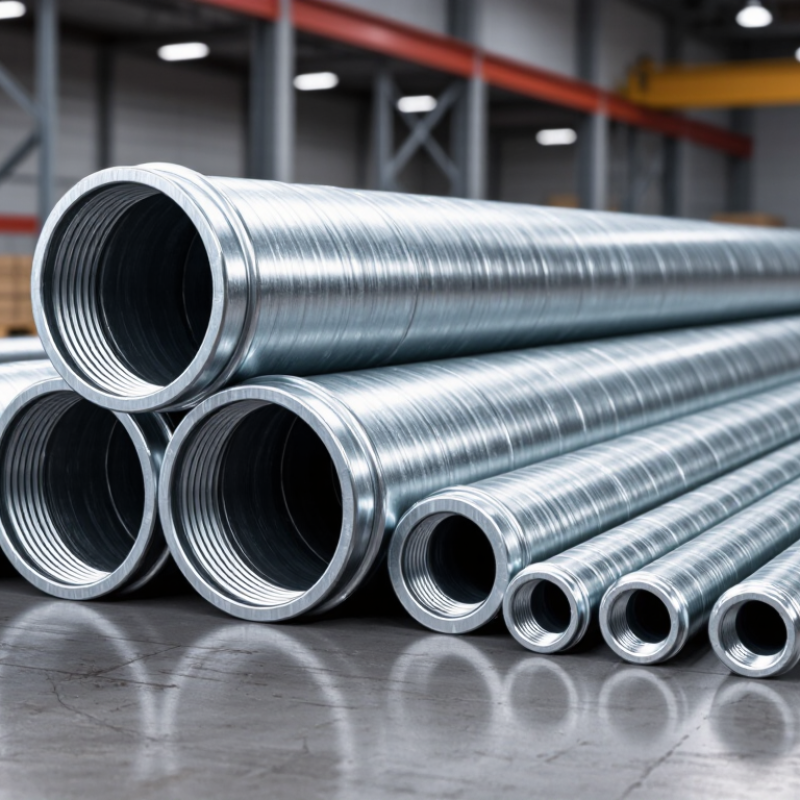
Table of Contents [Hide]
What GI Pipe Means: Galvanized Steel Pipe Coated with Zinc
GI pipe means galvanized iron pipe, but most modern GI pipes are steel coated with zinc. The zinc layer helps protect the steel from moisture and corrosion. It can also provide limited protection where small scratches expose the surface. That protection has limits. Deep cuts, damaged coatings, and persistently wet conditions can still lead to rust. In practical terms, check the coating and pipe condition, not just the “GI” label.
For length, about 20 feet (6 metres) is a common stock size in many markets. It is not a universal rule. Suppliers may offer shorter or longer sections, and project specifications can set a different length. “Standard” may also refer to pipe dimensions or wall thickness, rather than overall length. Measure the route, allow for fittings, and confirm the actual supplied length before ordering. A few inches can matter when several sections meet.
Tips: Ask whether the stated length is exact or nominal. Inspect cut ends and coating for chips before installation. Keep pipes dry during storage, with space between them for airflow. A detail that is easy to overlook. Check local availability, too.





