


- Home
- A-Z Catalogue
- Products
- Valves
- Cetop
- Manual Directional Valves
- Proportional Valves
- Poppet Valves
- High-Speed Linear Servo Valves
- All High-Speed Linear Servo Valves
- Cetop 10 (NG32) Two Stage Type High Speed Linear Servo Valves – LSVHG-10
- Cetop 10 (NG32) Two Stage Type High Speed Linear Servo Valves – LSVHG-10 (With Fail-Safe)
- Cetop 8 (NG25) Two Stage Type High Speed Linear Servo Valves – LSVHG-06
- Cetop 8 (NG25) Two Stage Type High Speed Linear Servo Valves – LSVHG-06 (With Fail-Safe)
- Cetop 7 (NG16) Two Stage Type High Speed Linear Servo Valves – LSVHG-04
- Cetop 7 (NG16) Two Stage Type High Speed Linear Servo Valves – LSVHG-04 (With Fail-Safe)
- Cetop 5 (NG10) Direct Type High Speed Linear Servo Valves – LSVG-03
- Cetop 5 (NG10) OBE Type Direct Operated Linear Servo Valves – LSVG-03-EH
- Cetop 3 (NG6) OBE Type Direct Operated Linear Servo Valves – LSVG-01-EH
- Pumps
- Pressure control
- Flow Control Valves
- Pressure Control Valves
- All Pressure Control Valves
- Brake Valves
- Direct Relief Valve
- Low Noise Solenoid Controlled Relief Valves
- Low Noise Pilot Operated Relief Valves
- Pilot Operated Relief Valves
- Pressure reducing and relieving valves
- Pressure reducing and check valves
- Pressure control valves
- Remote Control Relief Valves
- Solenoid Controlled Relief Valves – BSG
- Solenoid Controlled Relief Valves – BST
- Unloading relief valves
- Check valves
- Environmental
- Valves
- Hydraulic Systems
- Power pack
- About Us
- Contact
- Blog

2026 Top MIG TIG Welder Types How to Choose the Best?
Choosing welding equipment in 2026 requires more than comparing amperage, price, and brand names. A Mig Tig Welder can support fabrication, automotive repair, stainless steel work, and light industrial production. However, MIG and TIG solve different problems. MIG offers faster deposition and easier continuous welding. TIG provides cleaner control, sharper heat management, and better results on thin or visible joints.
Industry data supports careful equipment selection. The American Welding Society estimates that the United States may need 330,000 new welding professionals by 2028. This labor shortage increases interest in machines that reduce setup time and simplify operator training. Fortune Business Insights also projects continued growth in the global welding equipment market through the early 2030s. These trends encourage manufacturers to develop inverter machines, dual-process platforms, pulse controls, and more efficient power systems. Yet market growth does not make every machine suitable for every workshop.
Standards still matter. ISO 4063 identifies MIG and TIG processes as distinct welding methods, while OSHA guidance emphasizes ventilation, electrical safety, eye protection, and fire prevention. A reliable choice should match material thickness, duty cycle, wire or tungsten requirements, input power, and service support. A small garage may value portability and a 120-volt option. A fabrication shop may need stable three-phase output and a higher duty cycle. I would not claim one machine is universally best. That is where many buying guides become too confident. The right decision comes from real workpieces, measured power needs, operator skill, and the quality of the manufacturer’s technical support.
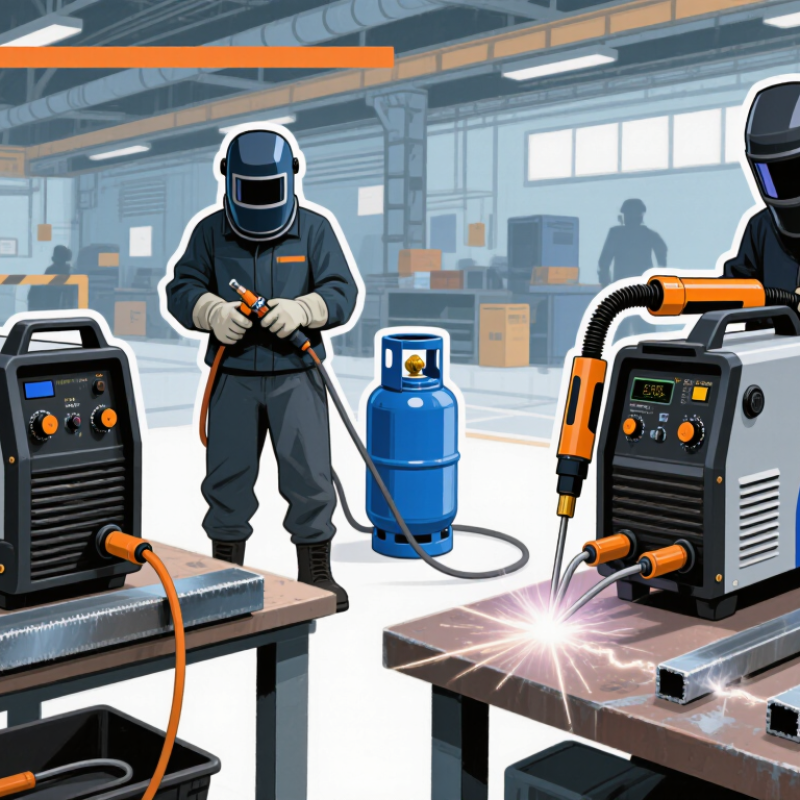
Table of Contents [Hide]
What Are MIG and TIG Welders, and How Do They Differ?
MIG and TIG welders create strong joints, but they work in noticeably different ways. MIG welding uses a continuously fed wire electrode. The wire melts into the joint while shielding gas protects the hot weld pool. This method is fast, practical, and easier for many beginners.
TIG welding uses a non-consumable tungsten electrode. The operator controls the arc with a torch and adds separate filler metal when needed. This gives excellent control over heat, bead shape, and appearance. TIG suits thin stainless steel, aluminum, and detailed repair work. It is slower, though. The process also demands steadier hands and cleaner surfaces.
A practical comparison makes the difference clearer. MIG feels like guiding a small, controlled stream of metal along the joint. TIG feels more like drawing with heat. MIG often handles production work and thicker steel efficiently. TIG rewards patience on delicate parts. Material thickness, joint position, surface cleanliness, and required appearance should guide the choice.
I have found that speed can hide poor preparation. A fast weld is not automatically a reliable weld. Beginners may also underestimate gas flow and torch angle. Small setting changes can affect penetration, spatter, and distortion. Checking a test piece first remains a sensible habit.
Good ventilation, suitable protective equipment, and correct machine settings are essential for every welding process.





