


- Home
- A-Z Catalogue
- Products
- Valves
- Cetop
- Manual Directional Valves
- Proportional Valves
- Poppet Valves
- High-Speed Linear Servo Valves
- All High-Speed Linear Servo Valves
- Cetop 10 (NG32) Two Stage Type High Speed Linear Servo Valves – LSVHG-10
- Cetop 10 (NG32) Two Stage Type High Speed Linear Servo Valves – LSVHG-10 (With Fail-Safe)
- Cetop 8 (NG25) Two Stage Type High Speed Linear Servo Valves – LSVHG-06
- Cetop 8 (NG25) Two Stage Type High Speed Linear Servo Valves – LSVHG-06 (With Fail-Safe)
- Cetop 7 (NG16) Two Stage Type High Speed Linear Servo Valves – LSVHG-04
- Cetop 7 (NG16) Two Stage Type High Speed Linear Servo Valves – LSVHG-04 (With Fail-Safe)
- Cetop 5 (NG10) Direct Type High Speed Linear Servo Valves – LSVG-03
- Cetop 5 (NG10) OBE Type Direct Operated Linear Servo Valves – LSVG-03-EH
- Cetop 3 (NG6) OBE Type Direct Operated Linear Servo Valves – LSVG-01-EH
- Pumps
- Pressure control
- Flow Control Valves
- Pressure Control Valves
- All Pressure Control Valves
- Brake Valves
- Direct Relief Valve
- Low Noise Solenoid Controlled Relief Valves
- Low Noise Pilot Operated Relief Valves
- Pilot Operated Relief Valves
- Pressure reducing and relieving valves
- Pressure reducing and check valves
- Pressure control valves
- Remote Control Relief Valves
- Solenoid Controlled Relief Valves – BSG
- Solenoid Controlled Relief Valves – BST
- Unloading relief valves
- Check valves
- Environmental
- Valves
- Hydraulic Systems
- Power pack
- About Us
- Contact
- Blog

2026 Best Spray Gun for Global Buyers?
Choosing the 2026 best Spray Gun for global buyers requires more than comparing prices and polished product photos. A reliable choice must match the coating, workspace, compressor, maintenance habits, and local purchasing conditions. A small workshop in Canada may need different airflow performance than a furniture maker in Southeast Asia. That difference matters.
This guide examines HVLP, LVLP, and conventional Spray Gun designs through practical buying criteria. We consider transfer efficiency, nozzle options, air consumption, spray pattern control, cup capacity, cleaning effort, and replacement-part availability. Experienced users know that a comfortable trigger can prevent hand fatigue during long sessions. They also know that a perfect finish depends on preparation, dilution, pressure, and technique. The gun cannot correct every mistake.
No single model wins every workshop. That assumption needs testing. We compare manufacturer specifications with realistic use, including primer application, automotive refinishing, cabinetry, and general repairs. Safety remains essential, so readers should follow product instructions, use suitable ventilation, and check regional requirements for coatings and protective equipment. We avoid unsupported claims and highlight trade-offs instead of naming a universal winner. Some conclusions may change as new models, parts, and testing data appear. That is worth admitting. Global buyers need clear information, dependable service, and a Spray Gun that performs consistently after the first project.
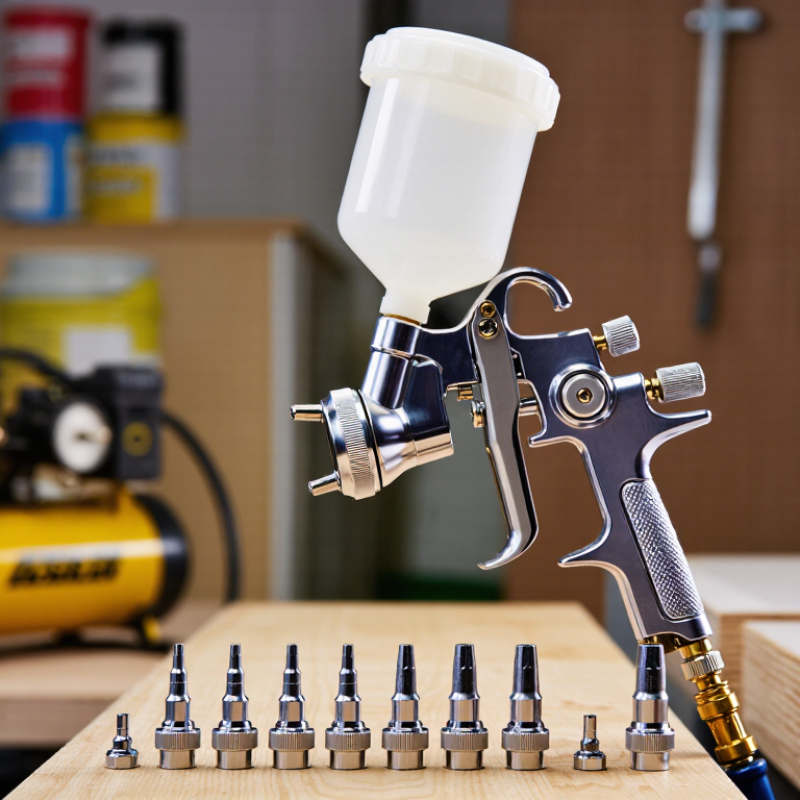
Table of Contents [Hide]
2026 Spray Gun Market: HVLP, LVLP, Airless, and Compliant Technologies
The 2026 spray gun market is becoming more specialized. Global buyers now compare transfer efficiency, pressure control, maintenance, and local compliance requirements. HVLP systems use higher air volume and lower pressure, helping reduce overspray during controlled coating work. They suit furniture, vehicle panels, and detailed finishing when operators can accept slower application.
LVLP guns require less air than HVLP models. That difference matters in small workshops with limited compressors. From practical testing, LVLP equipment can feel easier to control, but atomization may change with thick coatings or long air hoses. Airless systems move faster by using fluid pressure instead of compressed air. They handle large walls, structural surfaces, and heavier materials efficiently. However, overspray management and tip selection demand serious attention.
Compliant technologies are also shaping purchasing decisions. Buyers should examine fluid transfer efficiency, emissions data, pressure ratings, spare-part access, and instructions in the working language. Local regulations can differ, even between nearby markets. A gun that performs well in one workshop may disappoint elsewhere. I have found that advertised efficiency rarely replaces a controlled spray test. Check the fan pattern on a sample panel. Measure coating use, surface coverage, drying behavior, and cleanup time. Small details matter. No system is perfect. Compressors fluctuate, filters clog, and operators make inconsistent passes. That is why experienced buyers should judge complete systems, not the spray gun alone.